Why Concrete Settles or Becomes Uneven in Palm Beach County
What Uneven Concrete Can Reveal About Settlement, Support & Movement
A driveway, patio, walkway, slab, or other concrete surface can become uneven when the support beneath one area changes relative to the surrounding sections. The result may appear as a sunken panel, raised joint, tilted slab, depression, changing transition, or noticeable difference in elevation between adjoining sections.
The visible height difference does not always reveal exactly what moved. One section may have settled, another may have shifted or lifted, or changing support conditions may have affected several areas differently. Cracking, standing water, erosion, exposed slab edges, gaps beneath the concrete, and changes around landscaping or adjoining hardscape can provide additional context.
Palm Beach Concrete helps route settled or uneven concrete project requests to independent local concrete contractors or service providers who may review the affected surface, visible movement, drainage, support conditions, surrounding property features, intended use, and project goals before discussing available options and next steps.
Understanding
where the movement has occurred and what may have changed beneath or around the slab is more useful than assuming every uneven section needs the same repair.
Request an Estimate
If settlement, sinking, uneven joints, tilted concrete, cracking, or changing elevations are affecting a driveway, patio, walkway, slab, or other exterior concrete area, providing photos and project details can help support a more useful review.
Include where the elevation change appears, how long it has been noticeable, whether the movement seems to be changing, any cracking or standing water nearby, and whether landscaping, drainage, utility work, or adjoining surfaces have recently changed.
Have photos, drawings, or project notes? You can attach them through the form or send additional details to
We will get back to you as soon as possible.
Please try again later.
Why Does Concrete Settle or Become Uneven?
Concrete flatwork depends on relatively consistent support beneath the slab. When that support changes from one area to another, sections can move at different rates and create visible differences in elevation.
Inadequate or Uneven Base Compaction
Concrete placed over poorly compacted or inconsistently prepared material can have uneven support beneath different parts of the slab.
If one area compresses or settles more than another over time, the concrete above it may drop relative to adjoining sections. The amount of movement can depend on the depth and condition of the supporting material, the slab size, intended use, drainage, and loads placed on the surface.
Erosion & Loss of Support Beneath the Slab
Water moving along slab edges, through joints, or beneath concrete can carry away or redistribute supporting material.
Where enough support is lost, a gap or void can develop beneath part of the slab. The unsupported area may then settle, tilt, crack, or move differently from concrete that remains firmly supported.
Changing Soil or Base Moisture
Supporting soils and fill can change as moisture conditions change.
Drying, repeated wetting, drainage problems, irrigation, roof runoff, or other moisture changes can affect the material beneath or beside concrete. The practical concern is not moisture alone, but whether those changes cause the support under one area to behave differently from another.
Previously Disturbed Ground or Fill
Utility trenches, earlier construction, removed landscaping, old structures, filled areas, and previous property work can leave sections of ground with different compaction or support conditions.
Settlement may therefore appear along a narrow route, near an addition, beside a utility area, or where the slab crosses between differently prepared ground.
Drainage, Runoff & Edge Washout
Concentrated runoff can affect the material beside or beneath slab edges, particularly where water repeatedly follows the same path.
Settlement that appears together with exposed edges, washed-out soil, recurring ponding, or changing drainage should be considered as both a concrete-movement issue and a site-drainage issue.
Loads & Changing Surface Use
Vehicle traffic, equipment, storage, and other loads place different demands on concrete surfaces.
Loading does not automatically cause settlement, but it can reveal or worsen areas where the supporting material is already inconsistent or inadequate for the way the surface is being used.
Once the likely support conditions are considered, the pattern of the movement can provide additional clues. The location of the low section, the shape of the elevation change, and what is happening around adjoining joints and edges can help distinguish localized settlement from broader movement.
Common Concrete Settlement & Uneven-Slab Patterns to Look For
Uneven concrete is often easier to understand by looking at how adjoining sections relate to each other rather than focusing on a single crack or low spot.
One Slab Sitting Lower Than the Next
A noticeable step at a joint can occur when one section loses elevation relative to the adjoining slab.
The condition may involve settlement, support loss, erosion, previous site preparation, or movement in the neighboring section. The surrounding grade and whether the difference is increasing can provide useful context.
A Slab Tilting Toward One Edge
Concrete does not always settle evenly across its entire surface.
One side may remain relatively stable while another edge drops, creating a tilted panel. This can alter drainage, create an uneven transition, or cause water to begin collecting where the surface previously drained.
A Low Area or Depression That Holds Water
A depression can become noticeable because rainfall, irrigation, or washing begins collecting in an area that previously drained.
The water is a visible symptom of the changed elevation, although the cause may involve settlement, original slope, drainage changes, or several factors together.
Cracking With Vertical Displacement
Where one side of a crack is visibly higher or lower than the other, the condition involves more than the crack line itself.
The concrete has moved relative to the adjoining area, so settlement, lifting, support conditions, drainage, roots, or another site factor may need to be considered before treating the crack as an isolated surface repair.
Exposed Edges, Gaps or Washed-Out Material
A visible gap beneath a slab edge or loss of soil/base material nearby can indicate that the concrete no longer has the same support it originally had.
Not every visible edge gap means the slab will continue to move, but it provides useful evidence about the surrounding support condition.
Several Adjacent Sections at Different Elevations
When multiple panels or sections show changing elevations, the issue may extend beyond one isolated low area.
The pattern should be considered together with drainage, grade, previous construction, base conditions, intended use, and whether movement appears active or stable.
The practical significance of these patterns also depends on
where the settlement occurs. A small elevation change in an unused edge area can create a different concern from movement at a driveway transition, entry walkway, equipment slab, or heavily used patio.
Where Concrete Settlement & Uneven Surfaces Commonly Appear
Driveways, patios, walkways, and slabs interact with different loads, edges, drainage paths, structures, and adjoining surfaces. Those differences can affect both how settlement develops and how noticeable it becomes.
Driveways can show settlement at garage transitions, driveway joints, widened parking areas, slab edges, street or apron connections, and areas exposed to regular vehicle loading.
Movement should be considered together with parking use, drainage, base support, cracking, and whether the elevation difference affects vehicle access.
Patios can become uneven where slabs meet the home, landscaping, pool areas, walkways, additions, or other hardscape.
Changes in surrounding grade, irrigation, roof runoff, landscape work, and base support can all be relevant when one patio section settles relative to another.
Even relatively small elevation differences can become noticeable along a pedestrian route.
Walkways may settle near driveway connections, entries, landscape beds, roots, irrigation areas, utility lines, or transitions between differently prepared sections.
Utility, shed, garage, equipment, and other slabs should be considered in relation to what they support.
Settlement that changes the slab elevation, creates cracking, or affects equipment, doors, adjoining structures, or drainage may require a different evaluation from an isolated exterior walkway panel.
Poolside & Landscape-Adjacent Concrete
Concrete beside pools, planting beds, lawns, palms, irrigation systems, and other landscape features can experience changing moisture, runoff, roots, grade conditions, and edge support.
The direction of movement matters because an uneven surface may result from one section settling, another section lifting, or both occurring in different areas.
Regardless of the surface, settlement deserves more attention when the elevation difference is changing, interfering with normal use, collecting water, exposing support loss, or occurring together with cracking or broader movement.
When Should Settled or Uneven Concrete Be Looked at More Closely?
A small elevation difference does not automatically mean the entire surface has failed. Some movement may remain localized and stable.
Closer evaluation becomes more useful when:
- the height difference appears to be increasing;
- several sections are moving or sitting at different elevations;
- one side of a crack is higher or lower than the other;
- standing water has developed because the surface changed elevation;
- soil or base material is washing away from an edge;
- a visible gap or unsupported area appears beneath the concrete;
- movement affects a garage, doorway, gate, step, equipment area, or other transition;
- an uneven section interferes with normal pedestrian or vehicle use;
- cracking repeatedly returns after repair;
- a previously leveled or repaired area begins moving again;
- the condition developed after drainage, landscaping, utility, or other property work.
The objective is to understand whether the movement is
localized and stable or connected to an ongoing support, drainage, or site condition before selecting a surface treatment or repair.
How Palm Beach County Conditions Can Influence Concrete Settlement
Settlement should be evaluated around the actual property rather than attributed to one countywide soil or weather condition. The strongest local relationships involve heavy rainfall, relatively flat grades, runoff, drainage, landscaping, irrigation, and the support beneath individual concrete surfaces.
Because those conditions differ by property, identifying the likely cause comes before deciding how the concrete should be corrected. The next question is whether the existing slab remains suitable for leveling or localized work, or whether the support condition and extent of movement point toward broader replacement.
Heavy Seasonal Rainfall & Saturated Conditions
Strong rainfall can change the amount and direction of water moving around driveways, patios, walkways, and slabs.
Where concentrated runoff reaches slab edges or supporting material, erosion or changing moisture conditions can become part of the settlement pattern.
Rainfall itself does not mean concrete will settle. The important question is how water moves through the specific property and whether it is affecting support beneath or around the slab.
Flat or Low-Gradient Properties
Relatively small changes in elevation can have a noticeable effect on runoff across flatter properties.
A settled slab can therefore create a new low area, while a drainage change can also concentrate water near the section that later moves. Settlement and drainage may reinforce each other even though they are separate conditions.
Variable, Filled or Previously Disturbed Ground
Supporting conditions can vary significantly between properties and even between different areas of the same property.
Original soil, imported fill, earlier excavation, utility work, landscape changes, demolished structures, additions, and previous hardscape can all create different support conditions beneath connected concrete surfaces.
The condition of the actual site matters more than applying one soil description to all Palm Beach County properties.
Irrigation, Landscaping & Roof Runoff
Sprinklers, planting beds, palms, trees, downspouts, gutters, roof valleys, mulch, soil additions, and landscape grading can change where water reaches slab edges.
These features can also change after the concrete has been installed, which helps explain why settlement or erosion may appear later even when the concrete surface itself has not been altered.
Connected Hardscape & Property Changes
Driveways, patios, walkways, pool decks, curbs, pavers, garages, additions, and other hardscape often meet at different elevations.
New surfaces, utility work, driveway widening, landscape improvements, or drainage changes can alter both support and runoff around older concrete. Movement near those transitions should therefore be considered within the wider property layout.
Can Settled or Uneven Concrete Be Corrected?
Often, but the appropriate approach depends on why the concrete moved, how much of the surface is affected, and whether the underlying condition can be addressed.
Addressing Drainage or Erosion First
Where concentrated runoff, edge washout, or another water source is contributing to support loss, correcting only the slab elevation may leave the same underlying condition in place.
The drainage path and surrounding grade may therefore need to be considered as part of the project.
Slab Leveling or Lifting Where Appropriate
Some settled slabs that remain otherwise suitable may be candidates for a leveling or lifting approach that raises the concrete and fills unsupported areas beneath it.
Suitability depends on the slab condition, cause and extent of settlement, surrounding elevations, access, intended use, and whether the supporting conditions can provide a stable result.
Leveling the concrete does not automatically correct an underlying poor soil or drainage condition.
Repairing Localized Damage
Settlement may also cause cracking, damaged edges, joint problems, or other localized deterioration.
Where the surrounding concrete remains suitable,
Concrete Repair & Resurfacing may be part of the corrective scope, but surface work should account for the movement that contributed to the damage.
Replacing Individual Failed Sections
Partial replacement may be considered where one or several sections have moved significantly while adjoining concrete remains suitable.
Removal also creates an opportunity to evaluate and correct the support, grade, drainage, and transition beneath the affected section before new concrete is placed.
Considering Broader Replacement
Full or broader replacement becomes more relevant when settlement affects multiple sections, support conditions require extensive correction, elevations need substantial changes, deterioration is widespread, or the existing layout no longer works for the property.
The decision should be based on the extent of the problem rather than settlement alone.
The important distinction is between correcting the visible elevation and correcting the condition that allowed the movement to develop. Where both can be addressed within a limited scope, preserving suitable concrete may remain practical; broader movement may require a larger project.
How to Reduce Avoidable Concrete Settlement
Not every future movement can be prevented, particularly where property conditions change after installation. Good preparation and drainage can, however, reduce avoidable support problems.
Prepare & Compact the Supporting Area
Stable concrete begins with relatively uniform support.
Excavation, grading, compaction, fill placement, and base preparation should reflect the existing ground, project type, intended load, and site conditions rather than treating every surface the same way.
Plan Drainage Before Concrete Is Placed
Slope, runoff, roof water, adjoining hardscape, landscaping, and drainage routes should be considered before a driveway, patio, walkway, or slab is installed.
Keeping concentrated water away from vulnerable edges can help reduce avoidable erosion and support loss.
Coordinate Utility & Property Work
Utility trenches, landscape construction, additions, irrigation work, driveway widening, and other projects can disturb supporting ground near existing concrete.
Where these projects cross or border concrete areas, restoring appropriate support and drainage should be part of the work.
Protect Slab Edges & Surrounding Grade
Changes beside concrete can matter as much as changes directly underneath it.
Washout, erosion, excavation, landscape removal, and changing grade along slab edges should be addressed before unsupported areas become more extensive.
Watch for Early Elevation & Drainage Changes
New ponding, widening gaps, exposed edges, changing joints, or small differences in slab elevation can provide early evidence that conditions around the surface are changing.
Routine observation cannot stop active settlement, but it can help identify the issue before repeated cosmetic repairs hide the underlying pattern.
Helpful Resources for Understanding Settled & Uneven Concrete
Once settlement is recognized, the next step depends on whether the main question involves repair, replacement, cracking, drainage, installation conditions, or project cost.
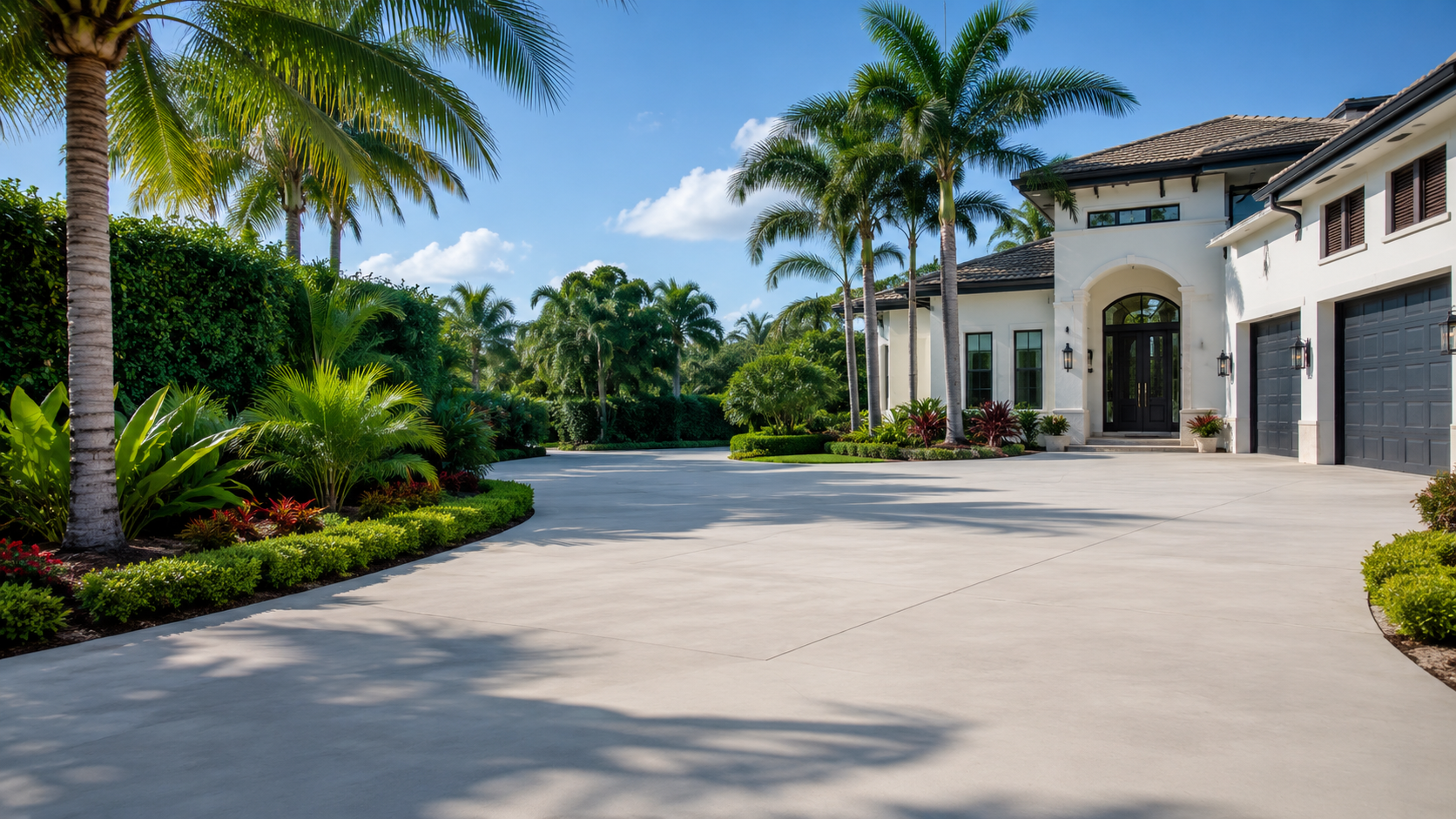
If settlement has caused cracking, damaged joints, edge deterioration, or an uneven usable surface, review the available repair and resurfacing paths and when localized corrective work may be appropriate.
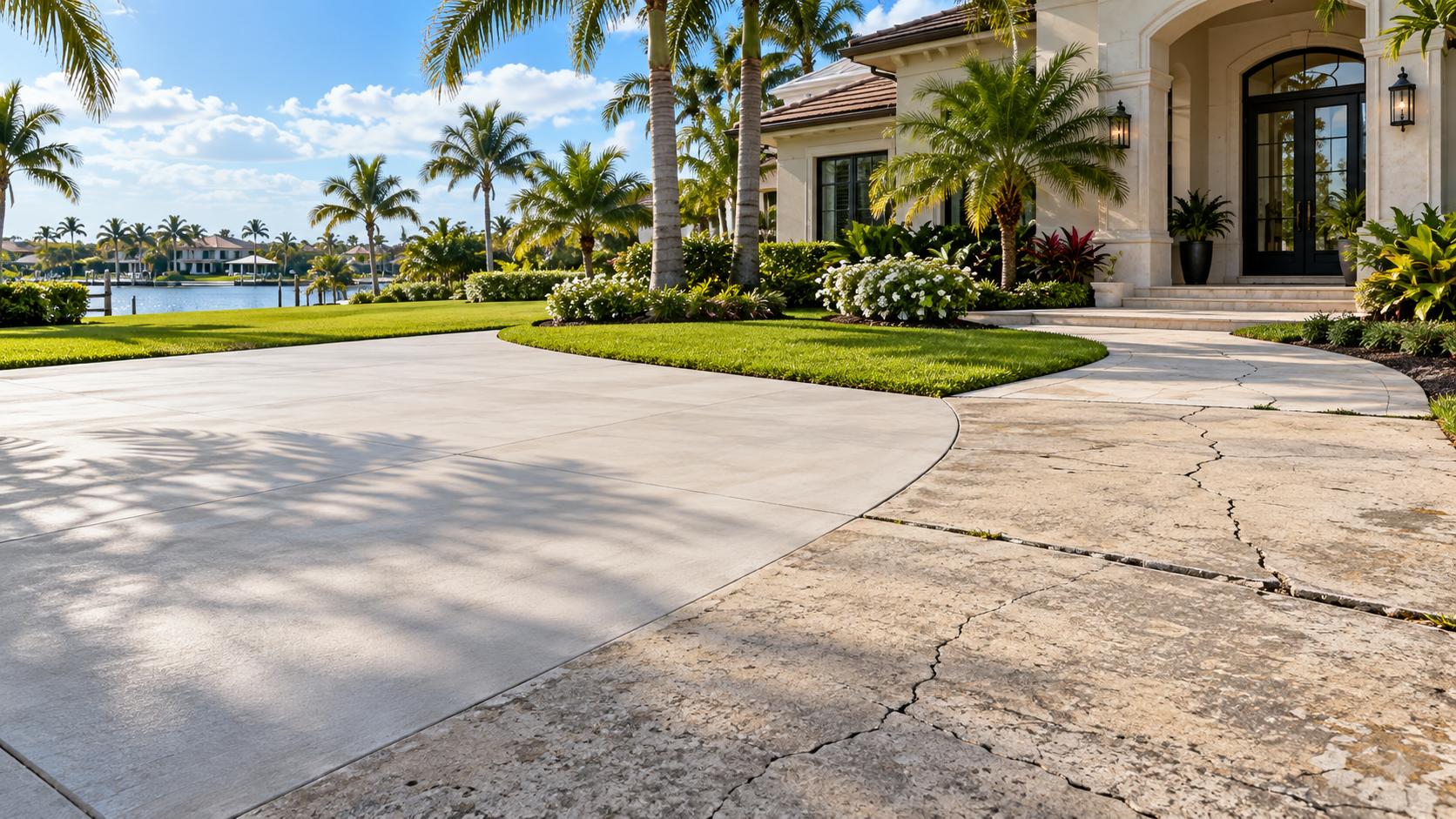
When one or several sections have moved, the next decision is often whether suitable concrete can be preserved or whether the extent of settlement, support problems, drainage, or deterioration makes partial or full replacement more practical.
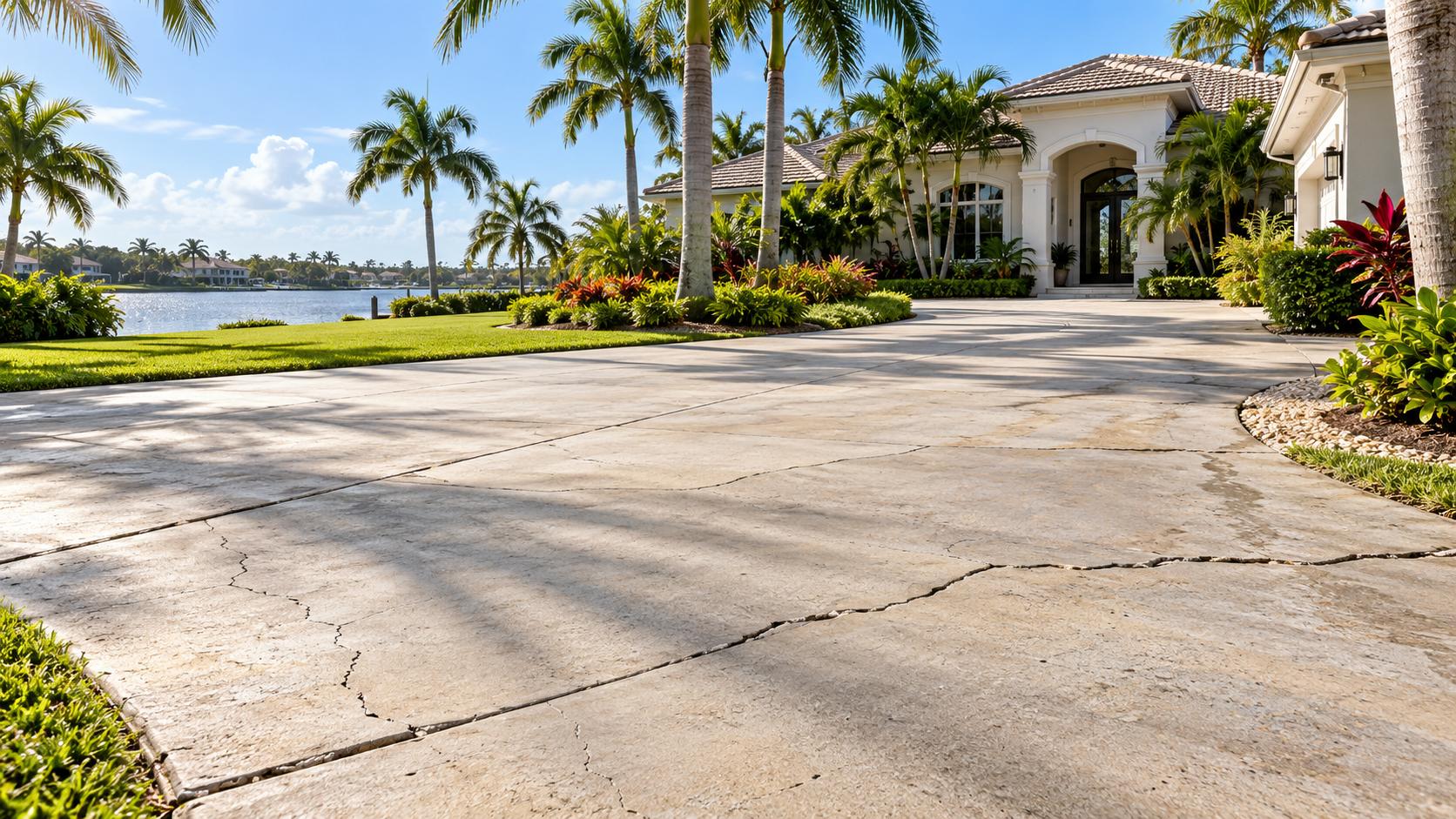
Settlement and cracking often appear together, but the crack pattern can provide additional context about movement, support, joints, and surrounding conditions before a repair approach is chosen.
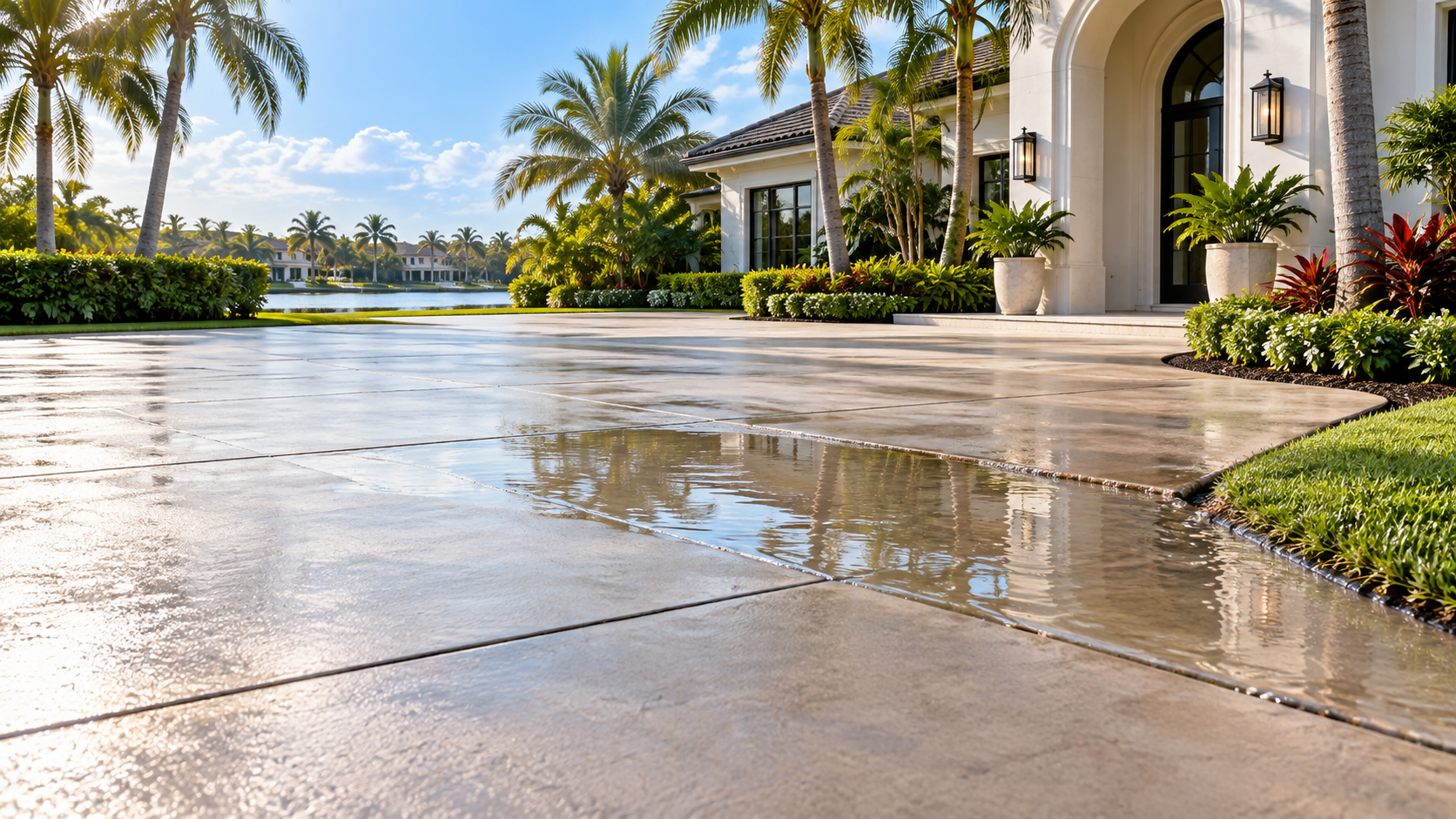
If settlement has created low spots—or if runoff and erosion may have contributed to the movement—review how standing water, slope, drainage paths, and edge washout can interact with concrete support.
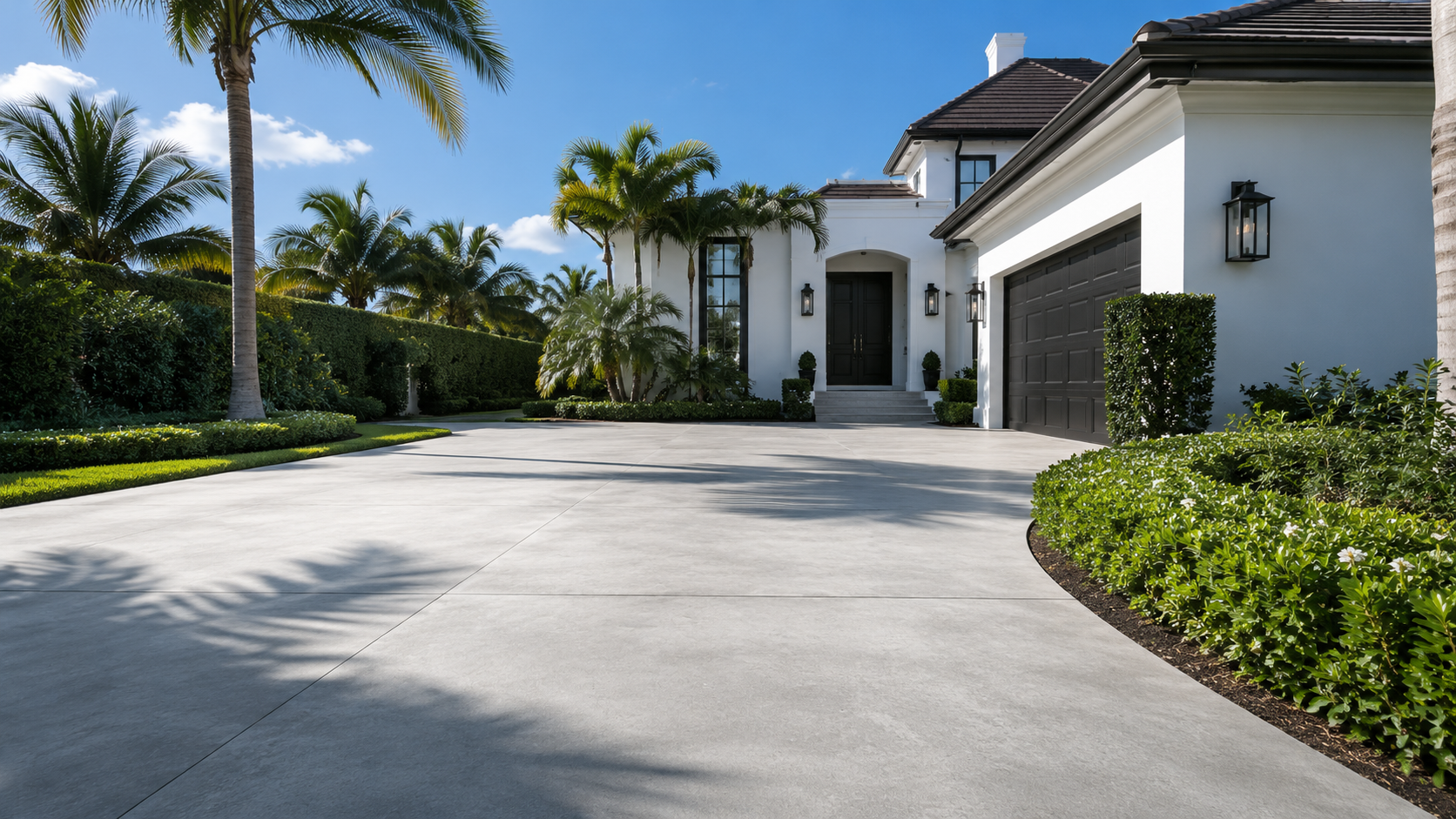
If replacement is becoming the likely direction, review how grading, base preparation, compaction, drainage, concrete placement, jointing, and curing fit into a new installation before the affected section is rebuilt.

Settlement can lead to very different project scopes, from localized repair or leveling to drainage correction, partial replacement, or broader reconstruction. Review the factors that can affect pricing before defining the work.
Request a Concrete Estimate for Settled or Uneven Concrete in Palm Beach County
Understanding why a concrete surface has moved can help narrow the possible next steps, but the appropriate scope depends on the actual property. The amount of settlement, affected area, cracking, drainage, support conditions, previous repairs, surface use, access, adjoining hardscape, and whether the movement appears to be continuing can all influence the project.
Review concrete services in Boca Raton, concrete services in Boynton Beach, concrete services in Delray Beach, concrete services in Jupiter, concrete services in Lake Worth Beach, concrete services in Palm Beach Gardens, concrete services in Royal Palm Beach, concrete services in Wellington, and concrete services in West Palm Beach, or explore all Palm Beach County concrete service locations.
If settlement, sinking, uneven joints, cracking, erosion, or changing elevations are affecting an exterior concrete surface, submit your project details to have the request routed to an independent local concrete contractor or service provider who may contact you about availability, possible corrective options, project scope, pricing factors, and next steps.
Concrete Settlement & Uneven-Slab FAQs for Palm Beach County Properties
What causes a concrete slab to sink?
Concrete can sink when the support beneath part of the slab settles, shrinks, erodes, washes out, or was not uniformly compacted. Drainage, disturbed ground, fill, previous utility work, and changing site conditions can also affect the material supporting the concrete.
Does uneven concrete always mean the lower section has settled?
No. One section may have settled, another may have lifted, or adjoining areas may have moved differently. The surrounding grade, cracks, joints, roots, drainage, edges, and property conditions should be considered before assuming which section moved.
Can poor drainage cause concrete to settle?
It can contribute. Repeated runoff, erosion, water movement, or changing moisture conditions can affect supporting soil or base material beneath and around a slab. Where settlement appears together with standing water, washout, or exposed edges, both the drainage pattern and the concrete movement should be reviewed.
Can settled concrete be leveled instead of replaced?
Sometimes. Certain slabs that remain otherwise suitable may be candidates for a leveling or lifting approach. The condition of the concrete, amount of movement, underlying support, drainage, access, and intended use all influence whether leveling, localized repair, partial replacement, or full replacement is more practical.
Does resurfacing fix a settled or uneven slab?
Resurfacing can improve an appropriate concrete surface, but it does not correct active settlement or restore missing support beneath a slab. Movement and elevation differences should be addressed before a surface treatment is treated as the main solution.
Why would only one section of concrete settle?
Individual sections can sit over different support conditions. Differences in compaction, fill, moisture, drainage, edge erosion, utility trenches, loads, or previous site work can cause one slab to move while an adjoining section remains relatively stable.
Does settled concrete always need to be replaced?
No. Localized settlement may be suitable for leveling, repair, or selective section replacement when the surrounding concrete remains usable and the contributing condition can be addressed. Broader settlement, repeated movement, widespread damage, or extensive support problems may make replacement more practical.