Concrete Patio Installation in Palm Beach
Concrete Patios for Outdoor Living, Poolside Areas & Backyard Improvements
Palm Beach Concrete helps route patio project requests to independent local concrete contractors or service providers who may review outdoor-living goals, available space, furniture placement, pool proximity, access, drainage, existing surfaces, finish preferences, and how the patio should connect with the home and surrounding hardscape.
A concrete patio may be planned as a new outdoor-living area, an expansion or replacement, a poolside surface, a covered patio, an outdoor-kitchen area, or part of a larger backyard improvement. Layout, shade, furniture use, surface texture, decorative or stamped finishes, walkways, and transitions to adjoining areas can all affect the design.
Site conditions are also important. Grade changes, base preparation, rainfall, drainage, pool-area moisture, strong sun, heat, and any HOA, setback, or local approval requirements may influence how the patio should be prepared, finished, and maintained over time.
Request an Estimate
Have photos, drawings, or project notes? You can attach them through the form or send additional details to estimates@palmbeachconcrete.net
We will get back to you as soon as possible.
Please try again later.
What a Concrete Patio Project Can Help You Accomplish
Concrete patio installation is commonly used to:
Create a more functional outdoor living or entertaining area
Improve the appearance of a backyard, pool area, entry, or garden space
Expand usable space for dining, seating, grilling, or recreation
Replace aging, uneven, or outdated patio surfaces
Support a renovation, landscaping project, or outdoor feature installation
Add durable finishes, textures, borders, or colors that complement the home
Increase long-term property appeal and usability
The right patio solution depends on your property layout, intended use, budget, preferred appearance, drainage needs, and long-term objectives.
Related Concrete Options for Patio and Outdoor-Living Projects
Every patio project has different functional and design requirements. Palm Beach property owners can choose a straightforward concrete patio or coordinate it with other concrete services for a more complete exterior upgrade.
Patio projects often benefit from reviewing connected surfaces, outdoor-living features, decorative finishes, drainage needs, and maintenance expectations before finalizing the layout.
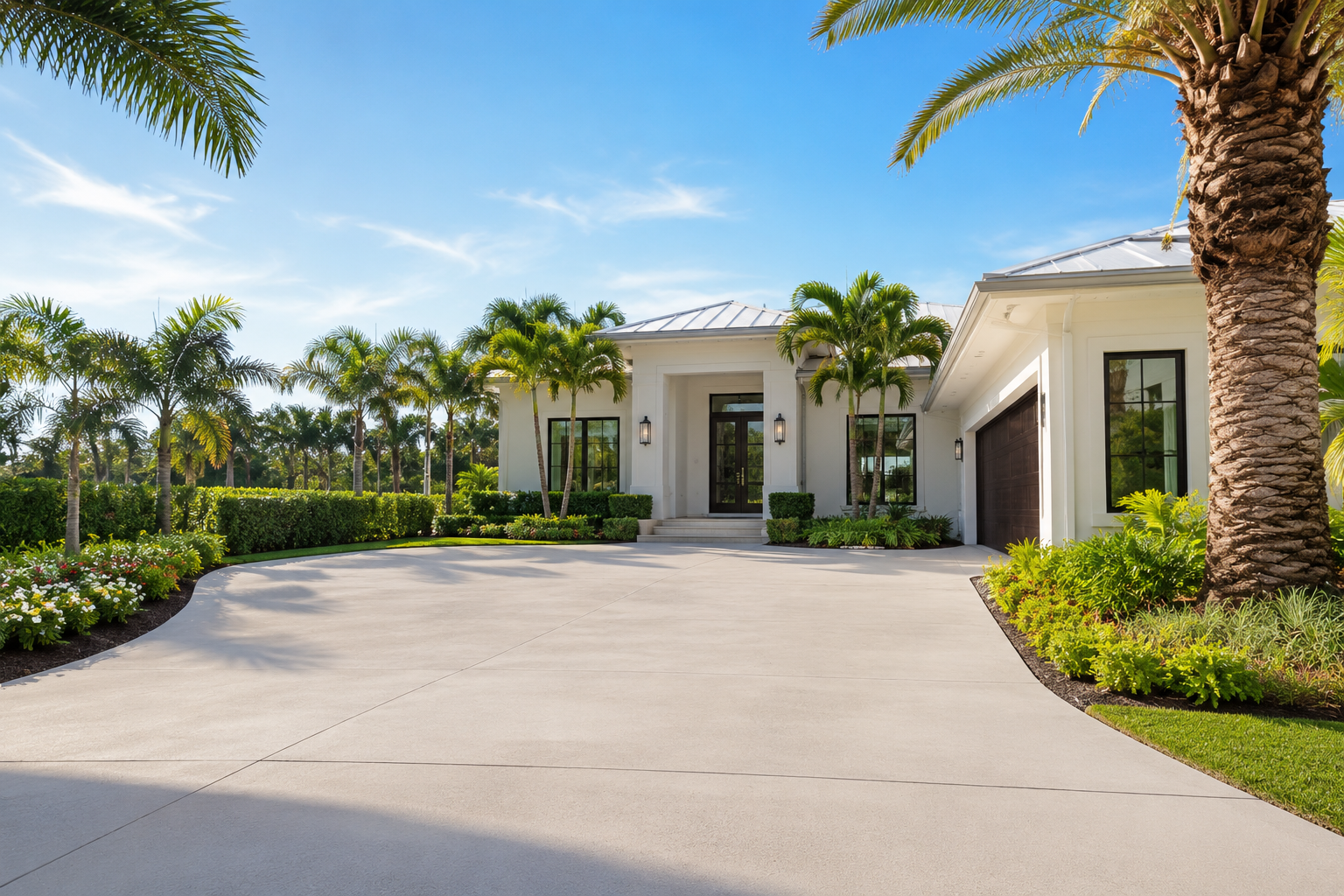
A patio project may be part of a broader exterior improvement that also includes the driveway, entry area, or connecting walkways. Coordinating these surfaces can help address grades, drainage, pedestrian access, hardscape transitions, and how the outdoor areas relate to one another.
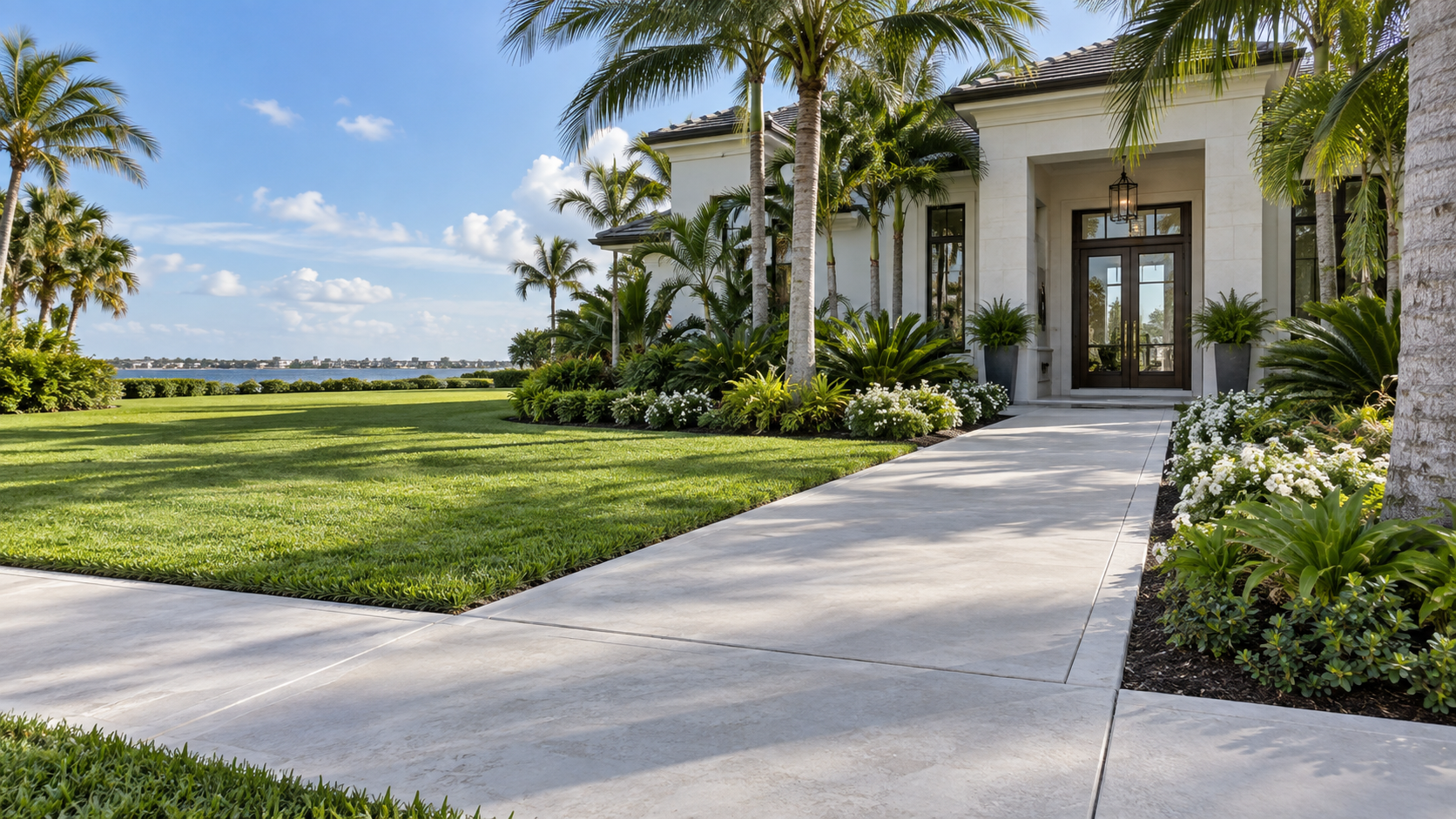
Walkways can connect a patio with the home, pool area, side yard, garden, driveway, or other outdoor spaces. Planning the connected surfaces together can help coordinate grades, drainage, pedestrian movement, finish choices, and surrounding hardscape.
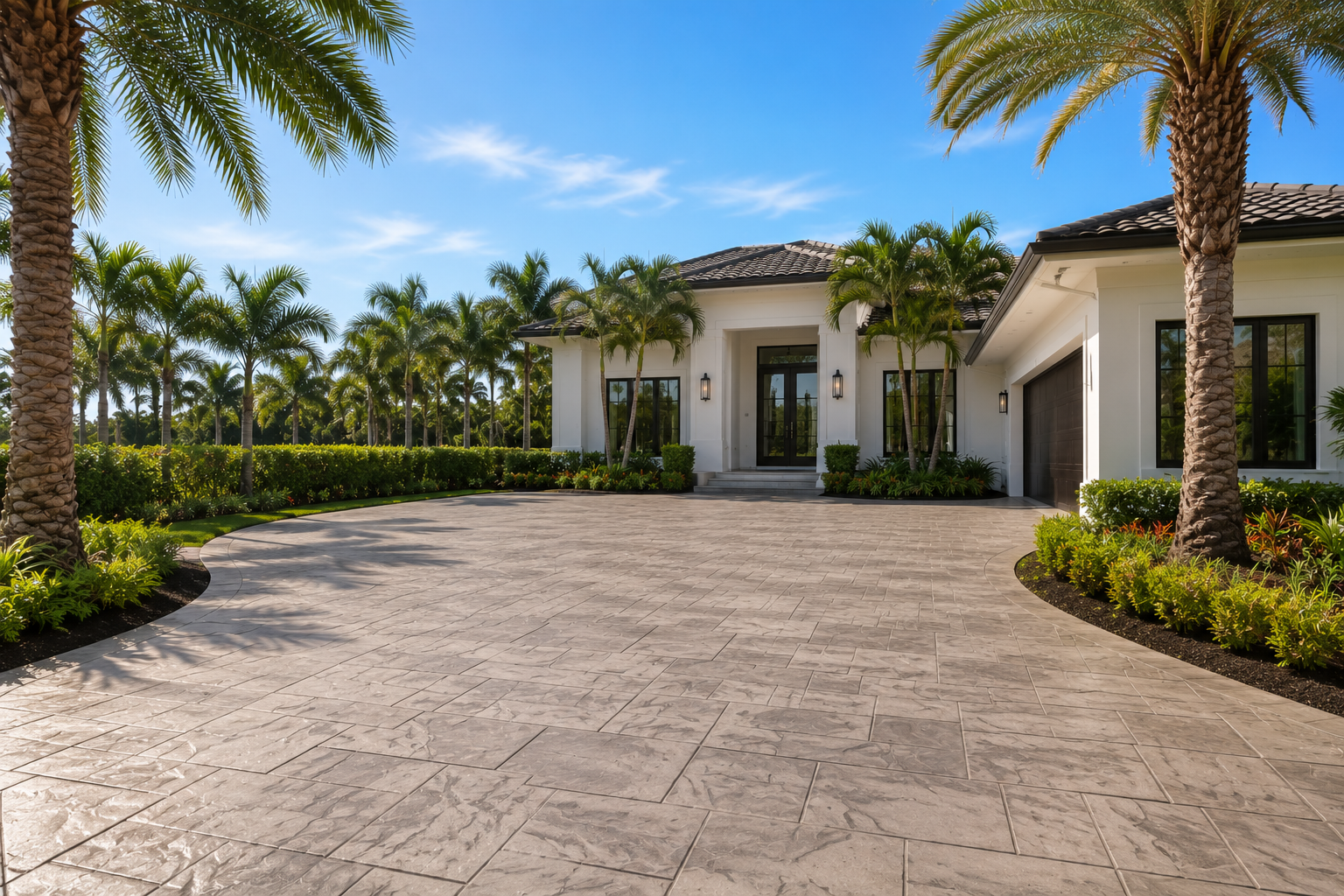
Stamped concrete can add pattern and texture to patios used for dining, seating, entertaining, poolside areas, and other outdoor-living spaces. Pattern, color, traction, drainage, sun exposure, and sealing should be considered alongside the patio layout and everyday use.
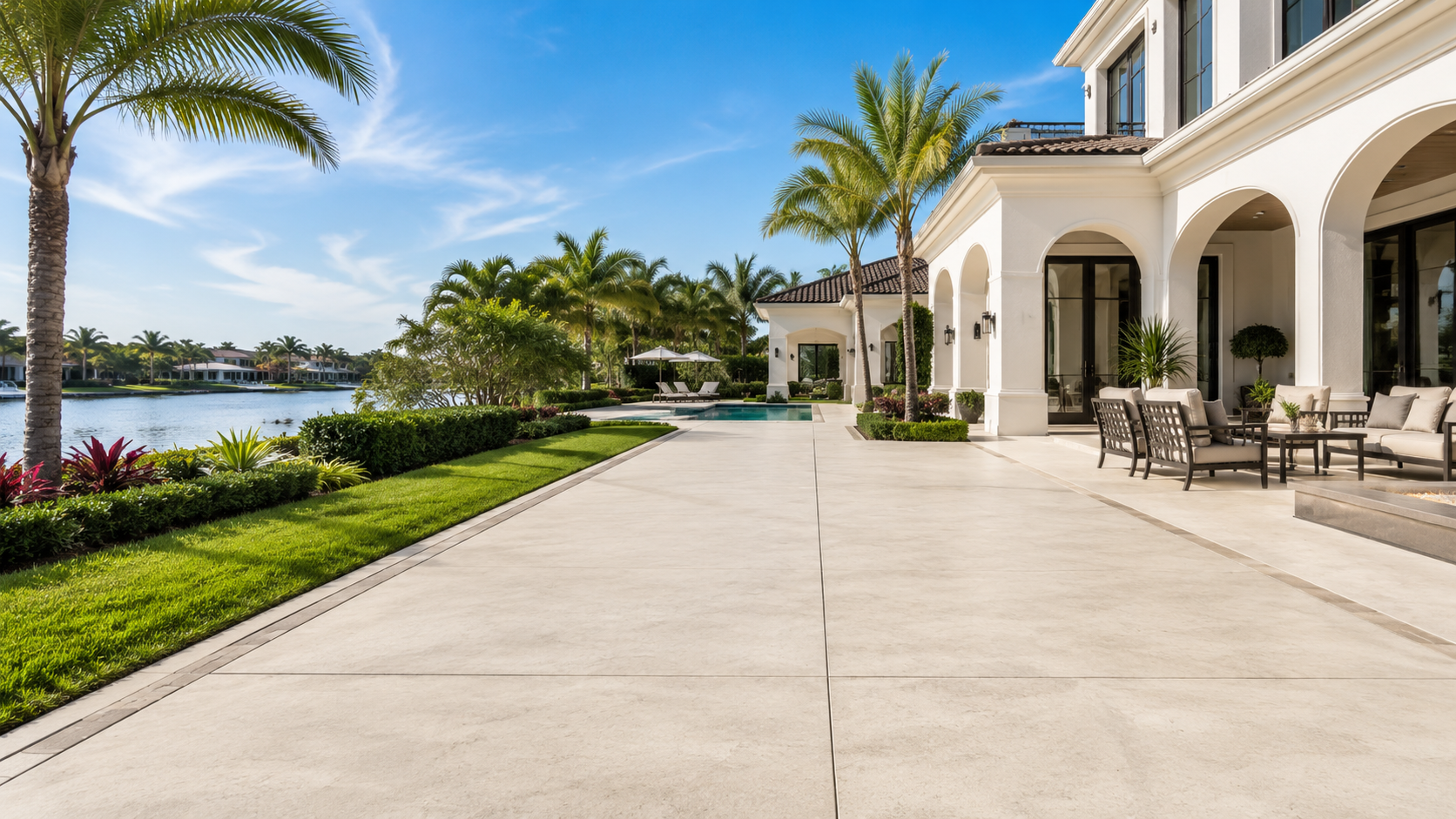
Decorative concrete expands the patio design options beyond a standard finish through color, scoring, borders, texture, and other surface details. These finishes can help coordinate the patio with the home, pool area, landscaping, walkways, and surrounding hardscape.
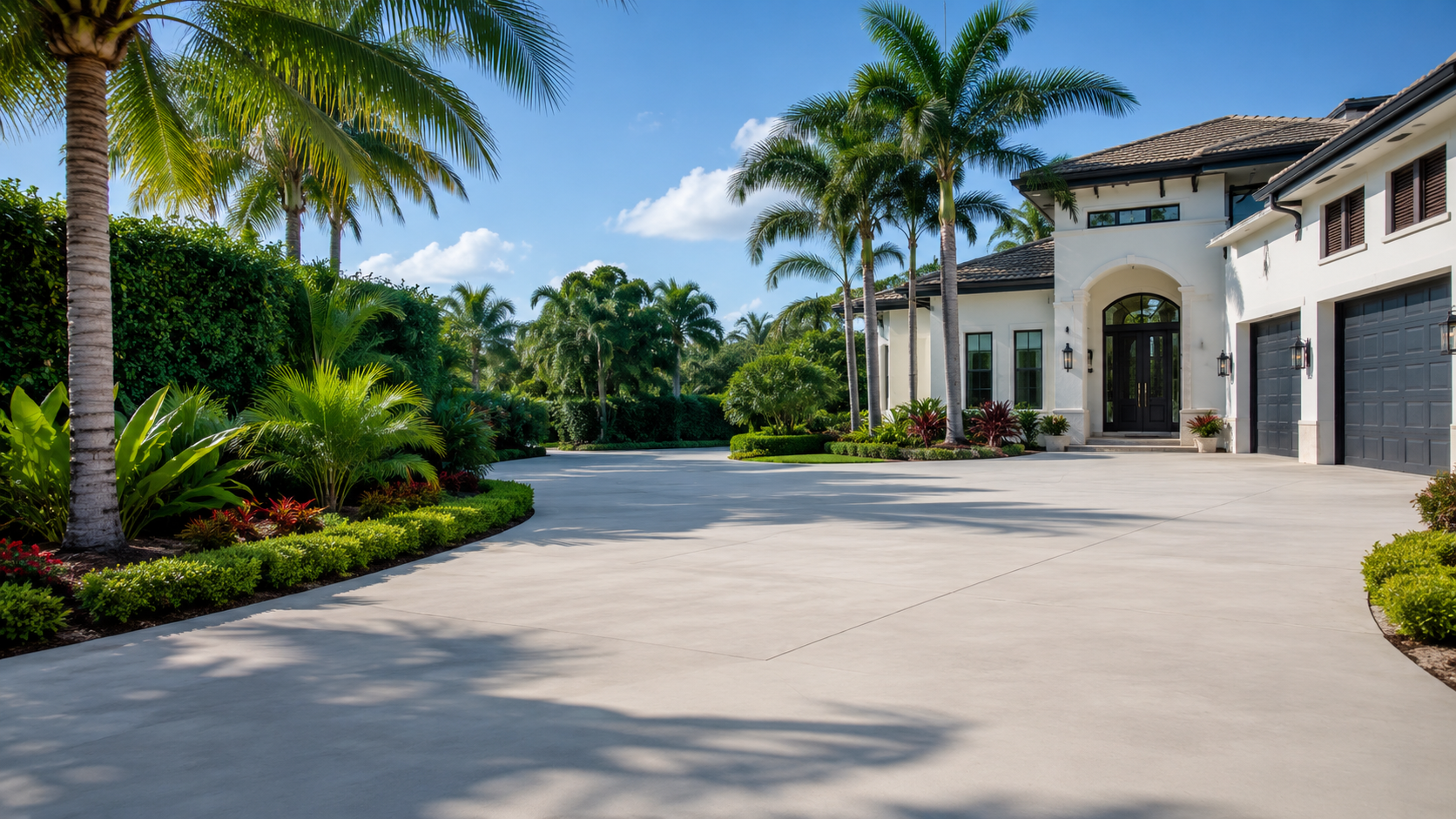
If an existing patio is worn, cracked, uneven, or outdated, the surface should be evaluated before assuming full replacement is necessary. Repair or resurfacing may be appropriate depending on movement, drainage, surface condition, base support, and the desired finish.
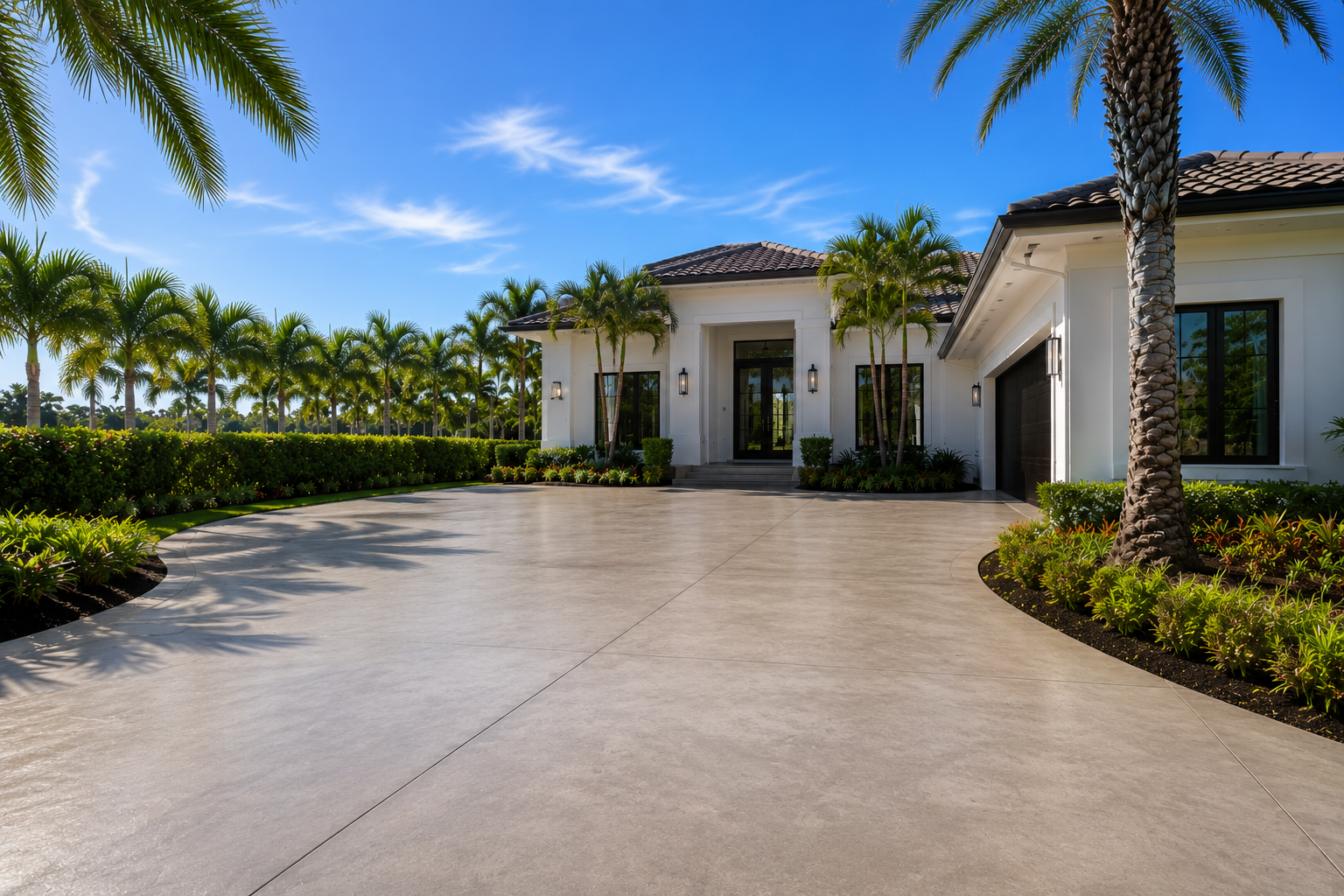
Patio maintenance may include cleaning, sealing, joint care, drainage awareness, stain treatment, and attention to surface wear. The appropriate care plan depends on the finish, furniture and foot traffic, pool or moisture exposure, sun, rainfall, and how the outdoor space is used.
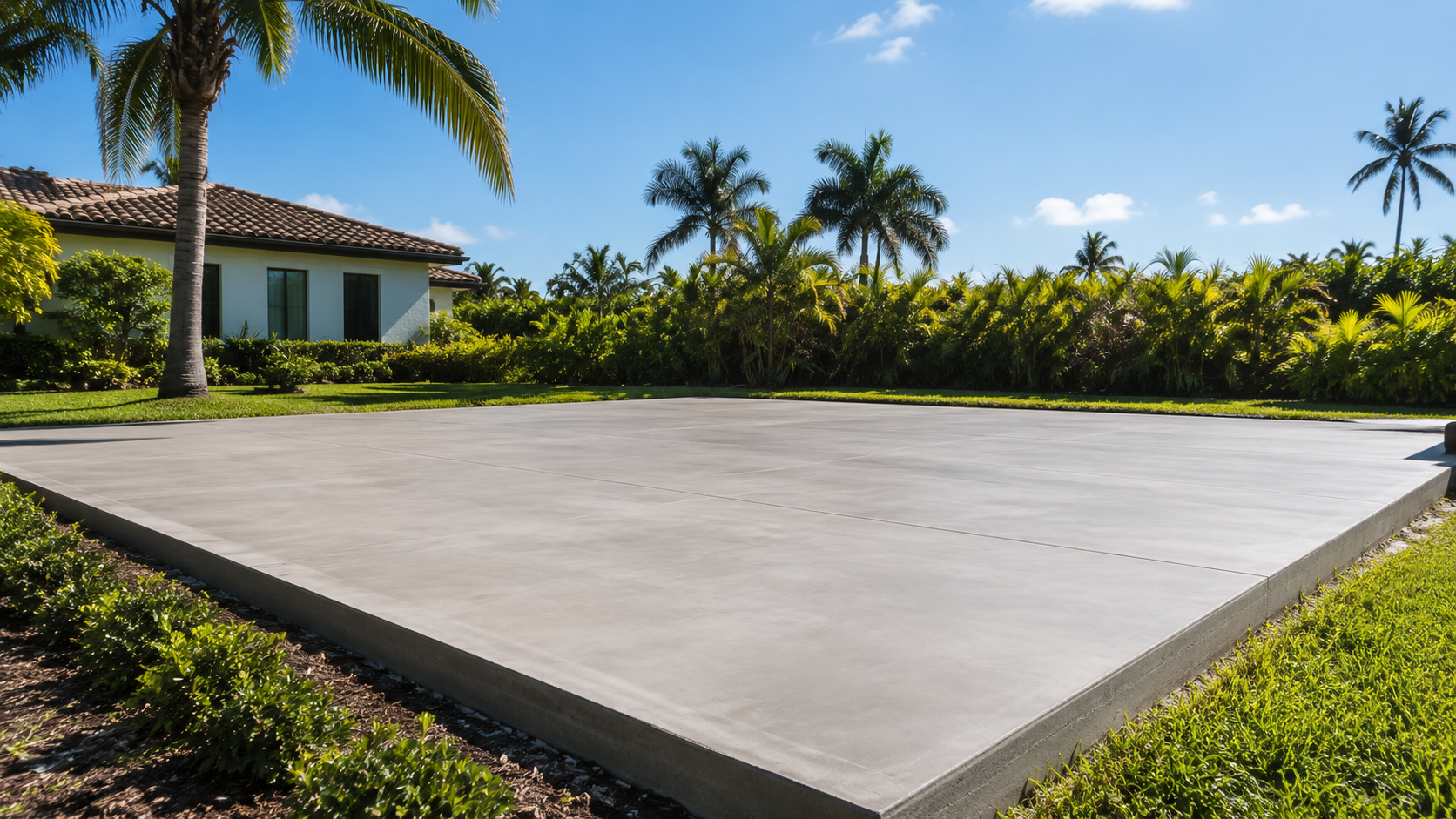
Outdoor improvements sometimes require a functional concrete slab in addition to a patio, such as a base for equipment, storage, a shed, or another structure elsewhere on the property.
02
04
How Concrete Patio Installation Is Planned
A concrete patio should be planned around how the outdoor space will be used and how it connects with the home, yard, pool area, or surrounding hardscape. Layout, site access, drainage, surface finish, and preparation all help shape the installation.
Outdoor-Living Goals and Patio Layout Planning
The project begins with a discussion of your outdoor-living goals, preferred patio size, layout, features, finish options, budget range, and expected timeline. This helps determine whether the project is a new installation, replacement, expansion, or decorative upgrade.
Patio Area, Drainage, and Access Review
The property is reviewed for measurements, site access, utilities, existing surfaces, grade changes, drainage considerations, and other conditions that may influence the work. Proper evaluation helps identify the preparation required before concrete is placed.
Patio Shape, Finish, Border, and Feature Selection
Recommendations are developed based on:
- Property requirements and available outdoor space
- Intended use, including seating, dining, poolside use, or entertaining
- Budget considerations and preferred finish options
- Local environmental conditions
- Drainage and site-preparation needs
- Applicable codes, permitting, or HOA requirements
This stage may include decisions about patio shape, thickness, reinforcement, edge details, finish type, decorative borders, patterns, colors, and connections to existing hardscape features.
Concrete Patio Placement, Finishing, Jointing, and Curing
The patio is completed using appropriate equipment, quality materials, and industry-standard installation methods. This typically includes site preparation, forming, base work, reinforcement where appropriate, concrete placement, finishing, jointing, curing, and final cleanup.
Patio Review, Furniture Timing, and Care Guidance
The completed work is reviewed for appearance, functionality, and overall quality. You should also receive clear guidance about curing, outdoor furniture placement, cleaning, sealing, and ongoing patio care.
How Palm Beach Conditions Affect Concrete Patio Installation
Concrete patio projects in Palm Beach should be planned around outdoor-living use, furniture placement, shade, drainage, surface comfort, pool-area exposure, and year-round weather conditions.
Heat, Humidity, and Patio Surface Comfort
Palm Beach heat and humidity can affect patio scheduling, finishing, curing, and how comfortable the finished surface feels during everyday outdoor use. Finish selection, shade, surface texture, and long-term maintenance should all be considered when planning a patio for year-round use.
Sandy or Variable Soil Conditions
Concrete patios need proper base preparation because sandy or variable soil conditions can affect support beneath the surface. Compaction, grading, slab thickness, and reinforcement considerations can help create a more stable patio area for furniture, foot traffic, grills, and outdoor-living features.
Heavy Rainfall, Slope, and Patio Drainage
Heavy rainfall and seasonal storms can affect how water moves across a patio and away from the home, pool area, landscaping, or walkways. Proper slope and drainage planning can help reduce standing water, surface wear, edge erosion, and moisture-related problems around the patio area.
Pool-Area Moisture and Coastal Exposure
Patios near pools, coastal areas, or waterfront properties may need extra attention to moisture exposure, salt air, surface texture, and maintenance expectations. These conditions can influence finish selection, traction, sealing needs, and how the patio should be cared for over time.
HOA, Setback, and Local Project Requirements
Some concrete patio projects may involve HOA review, setback requirements, drainage rules, municipal permitting, or property-specific approval considerations. Reviewing these items early can help avoid delays and make sure the patio layout fits the property, surrounding structures, and local requirements.
Reviewing these factors early can help create a concrete patio that feels comfortable, drains properly, supports everyday outdoor use, and fits the surrounding landscape, pool area, or outdoor-living space.
Is Concrete Patio Installation Right for Your Property?
Many property owners consider a concrete patio when they want to:
Create a more usable outdoor living area
Improve the look and function of a backyard or poolside space
Replace an aging, worn, or outdated patio surface
Add space for furniture, dining, grilling, or entertaining
Coordinate a patio with walkways, driveways, landscaping, or outdoor features
Complete a renovation, home addition, or new construction project
Reduce future maintenance concerns with a durable hardscape surface
An estimate request can help clarify whether a new patio, expansion, replacement, decorative finish, repair, or connected outdoor-living improvement is the best fit for the space.
Types of Concrete Patio Projects We Help Facilitate
Patio projects may involve new installation, replacement, expansion, poolside surfaces, decorative finishes, or connected outdoor-living improvements.
New Concrete Patio Installation
A new concrete patio should be planned around outdoor-living goals, available space, furniture placement, shade, drainage, and the desired finish. Proper layout and site preparation help create a patio that feels useful, comfortable, and well integrated with the rest of the property.
Patio Replacement and Expansion Projects
Patio replacement or expansion may be appropriate when an existing patio is too small, outdated, poorly positioned, or no longer fits how the outdoor space is used. These projects can improve layout, surface condition, drainage, and the connection between the home, yard, pool area, or outdoor kitchen.
Backyard Patio Construction
Backyard patios are often designed for relaxing, entertaining, dining, grilling, and everyday use. The best layout depends on the size of the yard, sun exposure, landscaping, access from the home, and how the space will be used throughout the year.
Covered Patio and Outdoor Kitchen Areas
Concrete patios may also be planned for covered outdoor spaces, grill areas, outdoor kitchens, pergolas, and connected backyard features. These projects should account for furniture placement, utility access, drainage, shade, finish texture, and how the patio connects with the home and surrounding landscape.
Poolside Concrete Patios
Poolside concrete patios should be planned with comfort, drainage, slip resistance, surface temperature, and long-term exposure in mind. In Palm Beach County, heat, humidity, rain, and pool-water exposure can all influence finish selection and maintenance recommendations.
Decorative or Stamped Concrete Patios
Decorative and stamped concrete can add more visual interest to a patio through texture, color, borders, scoring, or pattern options. These upgrades are often considered when homeowners want an outdoor surface that supports both function and a more finished design.
Patio Walkways and Outdoor Living Connections
Concrete patio projects may also include walkways, side-yard connections, entry paths, or transitions to pool areas, gardens, driveways, or outdoor structures. These details help make the outdoor space easier to use while improving flow, access, and overall property organization.
The right patio approach should account for outdoor-living goals, furniture placement, shade, drainage, pool proximity, finish preferences, and how the space connects to the home or yard.
Cost Factors for Concrete Patio Installation
Concrete patio pricing can vary depending on:
Total patio size and layout
Drainage, grading, or site-correction needs
Material, reinforcement, and finish selections
Decorative features such as stamping, color, borders, or custom scoring
Site access and preparation requirements
Equipment needs and work-area accessibility
Demolition or removal of an existing surface
Permitting, inspections, HOA approval, or local requirements that apply to the property
Because patio projects depend on size, layout, drainage, finish selection, access, and outdoor-living goals, pricing can vary significantly by property.
Benefits of Professional Concrete Patio Installation
Professionally completed patio projects often provide:
- Improved outdoor appearance and property appeal
- More functional space for dining, relaxing, and entertaining
- Greater durability for year-round outdoor use
- Flexible design options that complement the home
- Better long-term performance under local weather conditions
- Potentially increased home or property value
- Reduced maintenance concerns through proper installation and care
A well-designed concrete patio can create a more functional outdoor-living area while improving how the space connects with the home, pool, landscaping, and surrounding hardscape. Thoughtful planning for layout, drainage, finish, furniture use, shade, and maintenance can help the patio remain practical and visually consistent with the rest of the property.
Concrete Patio Service Areas in Palm Beach County
Concrete patio project requests are accepted across Palm Beach County, including the communities below. Planning may vary by city, property type, access, drainage, HOA requirements, site conditions, and project scope.
Explore city-specific concrete patio planning information:
- Concrete Patio Services in Boca Raton
- Concrete Patio Services in Boynton Beach
- Concrete Patio Services in Delray Beach
- Concrete Patio Services in Greenacres
- Concrete Patio Services in Jupiter
- Concrete Patio Services in Lake Worth Beach
- Concrete Patio Services in North Palm Beach
- Concrete Patio Services in Palm Beach Gardens
- Concrete Patio Services in Riviera Beach
- Concrete Patio Services in Royal Palm Beach
- Concrete Patio Services in Wellington
- Concrete Patio Services in West Palm Beach
Helpful Resources for Patio and Outdoor-Living Projects
Use these resources to compare patio finishes, stamped or decorative options, cost factors, and maintenance needs before planning an outdoor-living project.
Explore stamped concrete if pattern and texture are important to the patio design. This resource helps connect finish choices with traction, drainage, poolside or outdoor-living use, sealing, and long-term surface care.
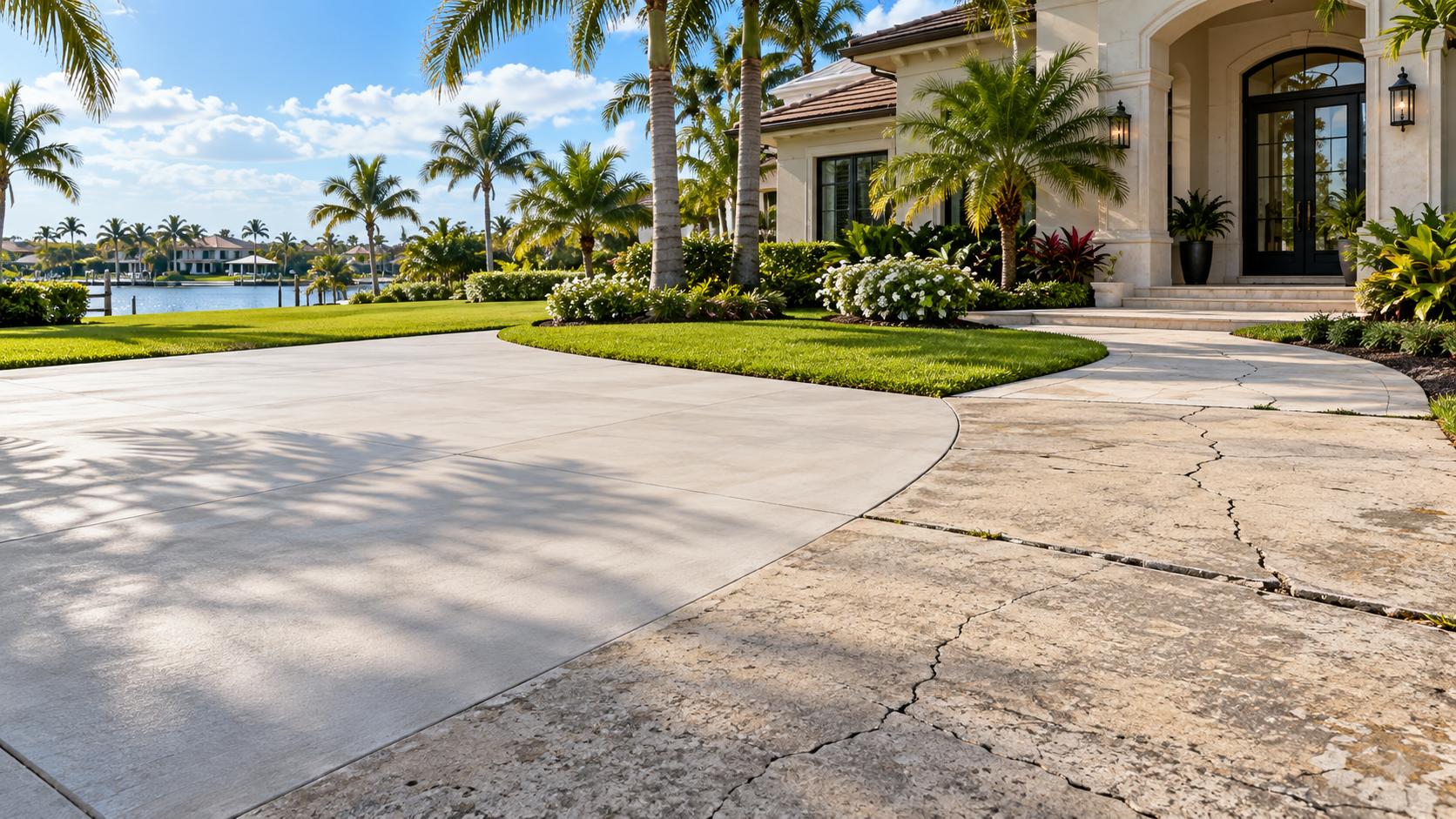
Existing patios may be candidates for localized repair, resurfacing, partial replacement, or a complete rebuild depending on cracking, settlement, drainage, surface condition, and future outdoor-living plans. Compare these factors before deciding whether to preserve the current patio or replace it.
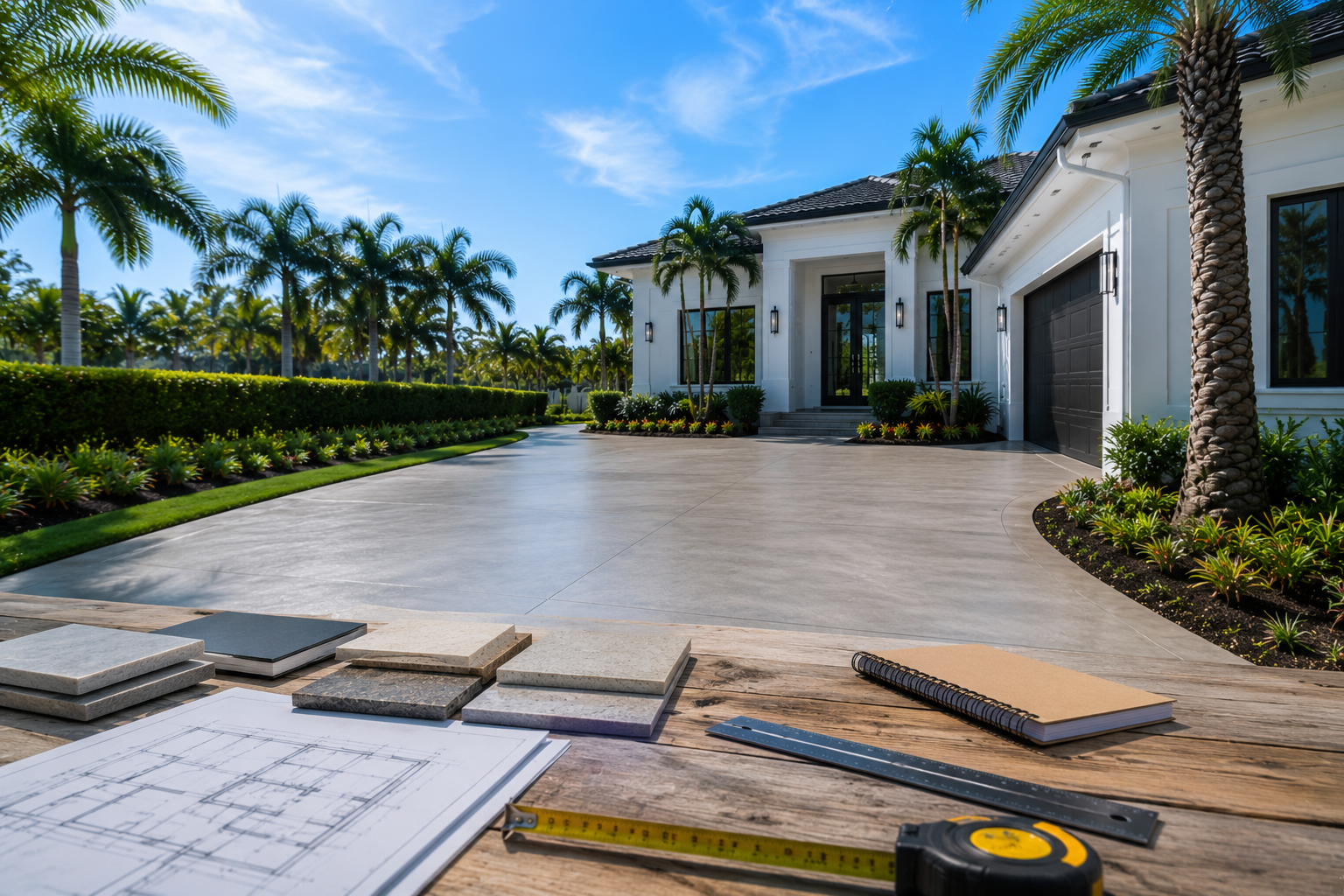
Review the factors that can affect patio pricing, including square footage, site preparation, access, demolition, drainage, base work, finish selection, decorative upgrades, and related outdoor features.
Use this resource to understand how cleaning, sealing, drainage, joint care, and surface protection fit into long-term patio care. It is especially relevant for stamped, decorative, poolside, and heavily used outdoor-living surfaces.
Request a Concrete Patio Estimate in Palm Beach
A project-specific estimate can help clarify the size, layout, preparation needs, drainage, finish options, and other factors that may affect a concrete patio project. Whether the goal is a new patio, an extension, a poolside surface, a covered outdoor area, or part of a larger backyard improvement, the scope should reflect how the space will be used and how it connects with the surrounding property.
Submit a request to have your project details routed to an independent local concrete contractor or service provider who may contact you about availability, options, and next steps.
Concrete Patio FAQs for Palm Beach Properties
What can a concrete patio be used for?
Concrete patios can be used for outdoor seating, dining, grilling, entertaining, poolside areas, garden spaces, walkways, and connections to other exterior features. The best layout depends on how you plan to use the space and the available area on your property.
Can a concrete patio be customized?
Yes. Concrete patios can be customized with different shapes, sizes, textures, colors, borders, stamped patterns, scoring, and decorative finishes. Design choices should balance appearance, intended use, traction needs, maintenance expectations, and budget.
Can a new patio be installed beside an existing driveway or walkway?
Yes. A patio can often be planned alongside a driveway, walkway, entry area, or other hardscape feature. Coordinating these surfaces during the planning stage can create a more consistent layout and help address transitions, drainage, and overall design.
How do I choose between a standard, stamped, or decorative concrete patio?
A standard concrete patio is usually best for a clean, practical, budget-conscious surface. Stamped and decorative concrete are stronger choices when visual impact, texture, color, or coordination with the home’s design is a priority.
How should a concrete patio be maintained?
Regular sweeping, occasional washing, keeping joints clear, managing nearby runoff, and considering appropriate sealing can help preserve the surface. The best maintenance schedule depends on the patio finish, sun exposure, outdoor use, and surrounding conditions.
Can a concrete patio be installed for a covered patio or outdoor kitchen?
Yes, a concrete patio can often be installed for a covered patio, grill area, outdoor kitchen, pergola, seating area, or connected outdoor-living space. These projects should be planned around furniture placement, shade, drainage, utility access, surface texture, and how the patio connects with the home, yard, pool area, or walkway.
For outdoor kitchen areas, the concrete may need to support heavier features such as counters, appliances, grill stations, storage, or covered structures. The right layout, thickness, finish, and preparation approach depends on how the space will be used and what features are planned.