Concrete Walkway & Sidewalk Installation in Palm Beach
Concrete Walkways for Entries, Side Yards & Outdoor Connections
Palm Beach Concrete helps route walkway and sidewalk project requests to independent local concrete contractors or service providers who may review the intended route, foot traffic, property layout, access, existing surfaces, drainage, landscaping, finish preferences, and whether the project involves new installation, replacement, expansion, or another pedestrian-surface improvement.
Concrete walkways can connect driveways with front entrances, patios with backyard areas, side yards with gates or utility spaces, and outdoor-living areas with pools, gardens, sheds, or other parts of the property. Layout, width, base preparation, grading, joint placement, surface texture, and transitions to adjoining concrete all influence how comfortably the walkway fits the property.
Palm Beach County conditions can also affect the project. Heavy rainfall, variable soil and base conditions, strong sun, irrigation, established landscaping, coastal exposure in some areas, and property-specific HOA, municipal, accessibility, or right-of-way requirements may need to be considered before the final layout is determined.
Request an Estimate
Have photos, drawings, or project notes? You can attach them through the form or send additional details to estimates@palmbeachconcrete.net
We will get back to you as soon as possible.
Please try again later.
The right solution depends on the property layout, intended use, aesthetics, site conditions, local requirements, and long-term maintenance expectations.
What a Concrete Walkway Project Can Help You Accomplish
Concrete walkway installation may be considered when you want to:
Create a defined route between the driveway and front entrance
Add a side-yard or backyard pedestrian path
Connect patios, pool areas, gardens, sheds, gates, or other outdoor features
Replace an aging, uneven, poorly positioned, or outdated walkway
Improve transitions between different concrete or hardscape surfaces
Coordinate a walkway with a new driveway, patio, or broader exterior improvement
Add a standard, stamped, colored, bordered, or otherwise decorative concrete finish
The right walkway should be planned around where people need to move, how the route connects with the property, how water travels across the area, and what surface texture and finish make sense for everyday use.
Concrete Services That Connect With Walkway Projects
Walkways rarely function as isolated surfaces. They often connect driveways, patios, entries, side yards, outdoor-living areas, and other improvements, so adjoining grades, finishes, drainage, and transitions should be considered together.
These related services can become relevant when a walkway is part of a larger exterior improvement, connects with other concrete surfaces, includes decorative finishes, or involves an existing path that may need repair or replacement. Considering those relationships early can help coordinate layout, drainage, transitions, finish choices, and the overall project scope.
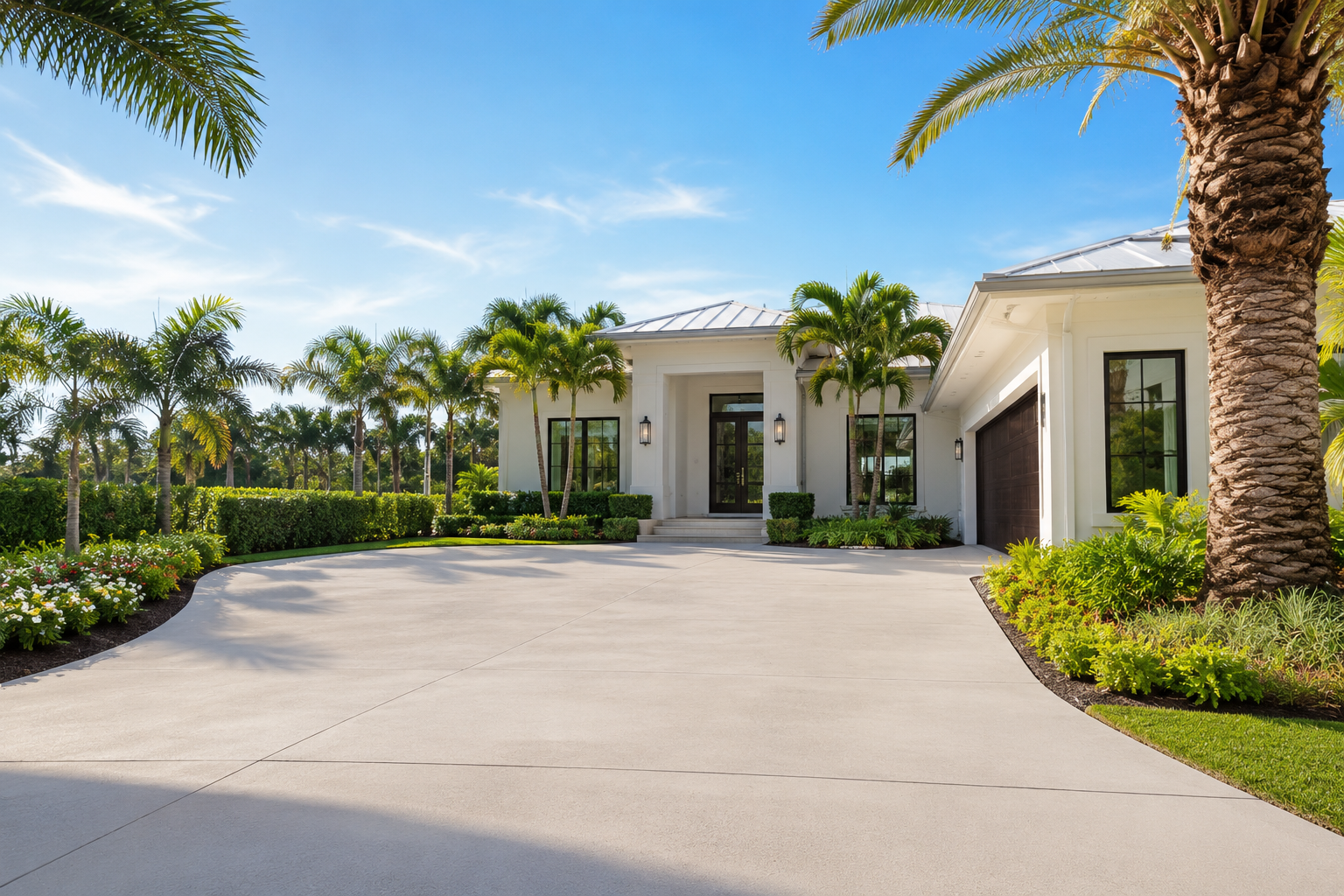
A new walkway often connects directly with a driveway, parking area, garage approach, or front entry. Reviewing the driveway and walkway together can help coordinate elevation changes, drainage, pedestrian access, finishes, and the transition between vehicle and foot-traffic areas.
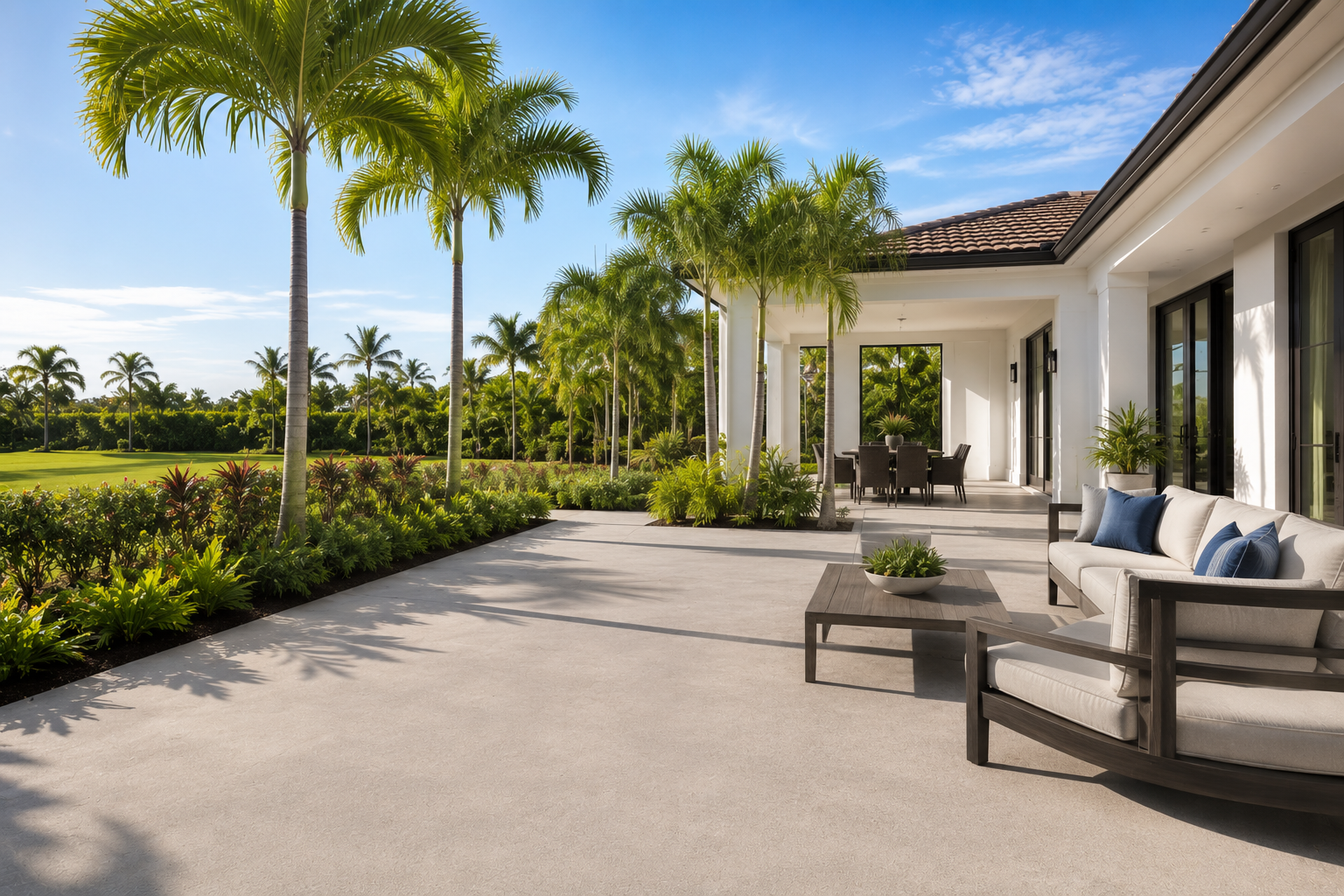
Walkways can create practical connections between the home, patio, pool area, garden, side yard, or other outdoor-living spaces. Coordinating the surfaces can help align grades, drainage, finish choices, and how people move through the property.
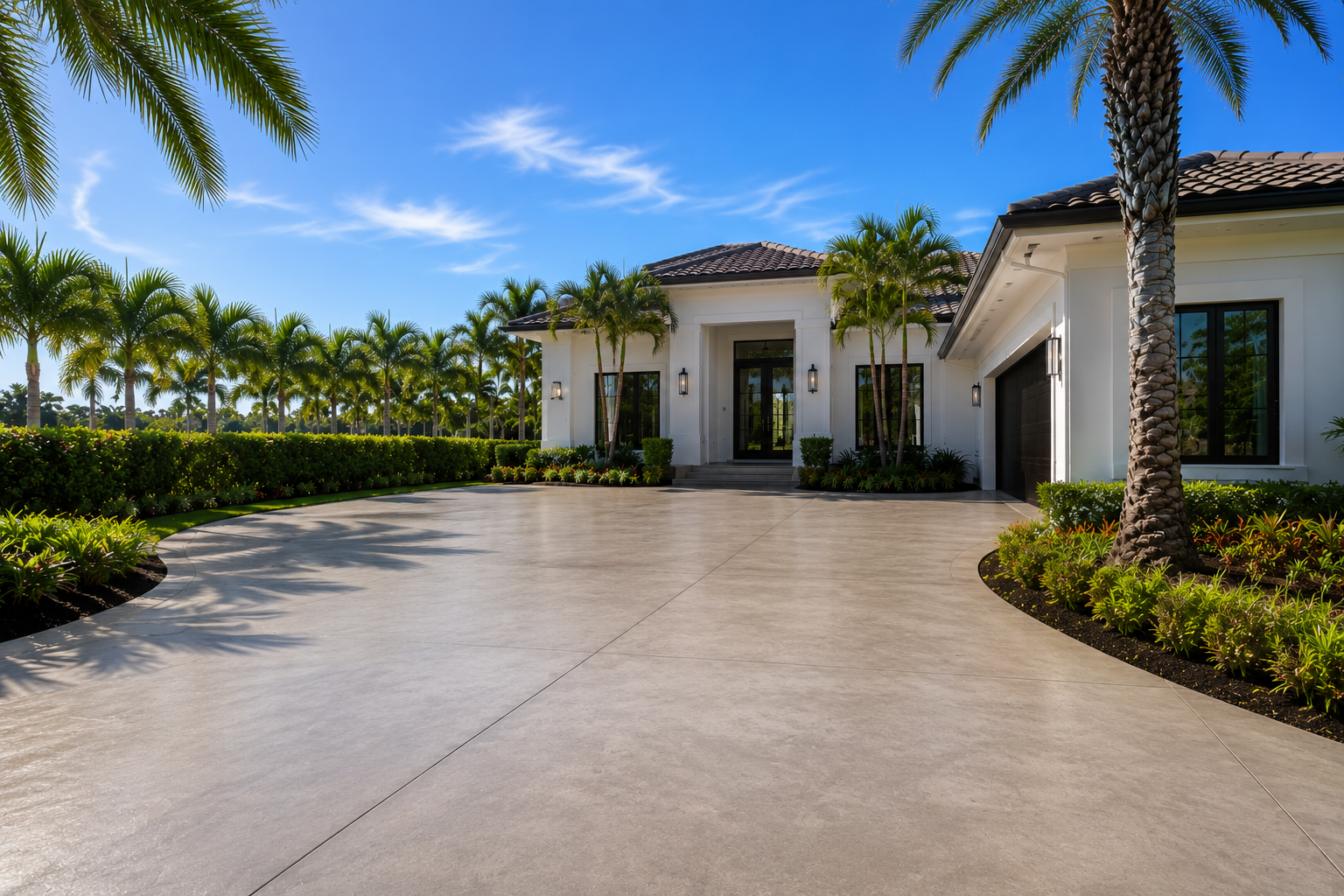
Walkway maintenance may include cleaning, drainage awareness, joint care, stain treatment, sealing where appropriate, and monitoring for cracking, movement, or surface wear. The right approach depends on the walkway’s finish, foot traffic, exposure, surrounding landscaping, and overall surface condition.
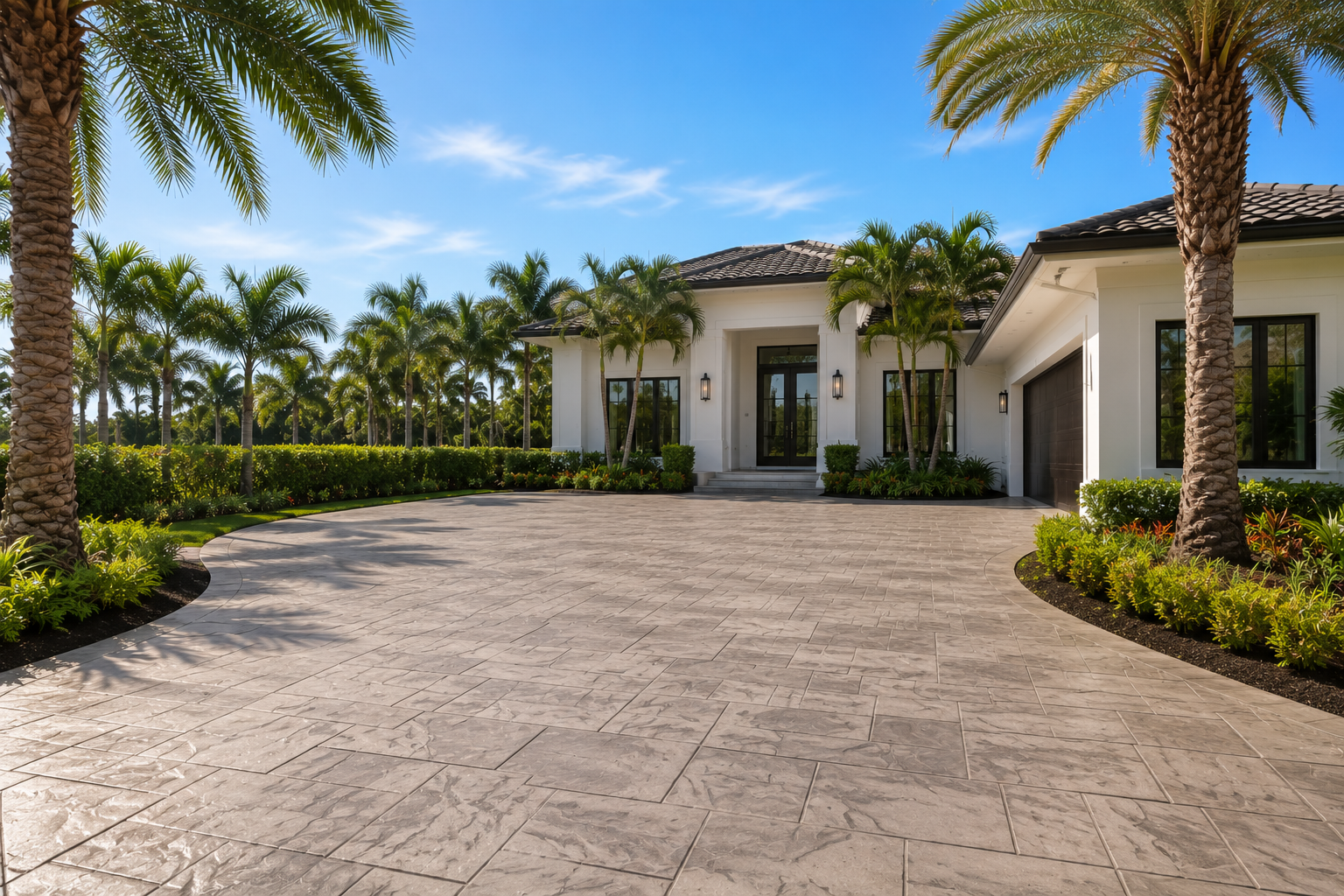
Stamped concrete may be considered when a walkway should provide more pattern or texture than a standard finish. Pattern scale, color, traction, drainage, joint placement, sealing, and connections to patios or entry areas should all be considered as part of the design.
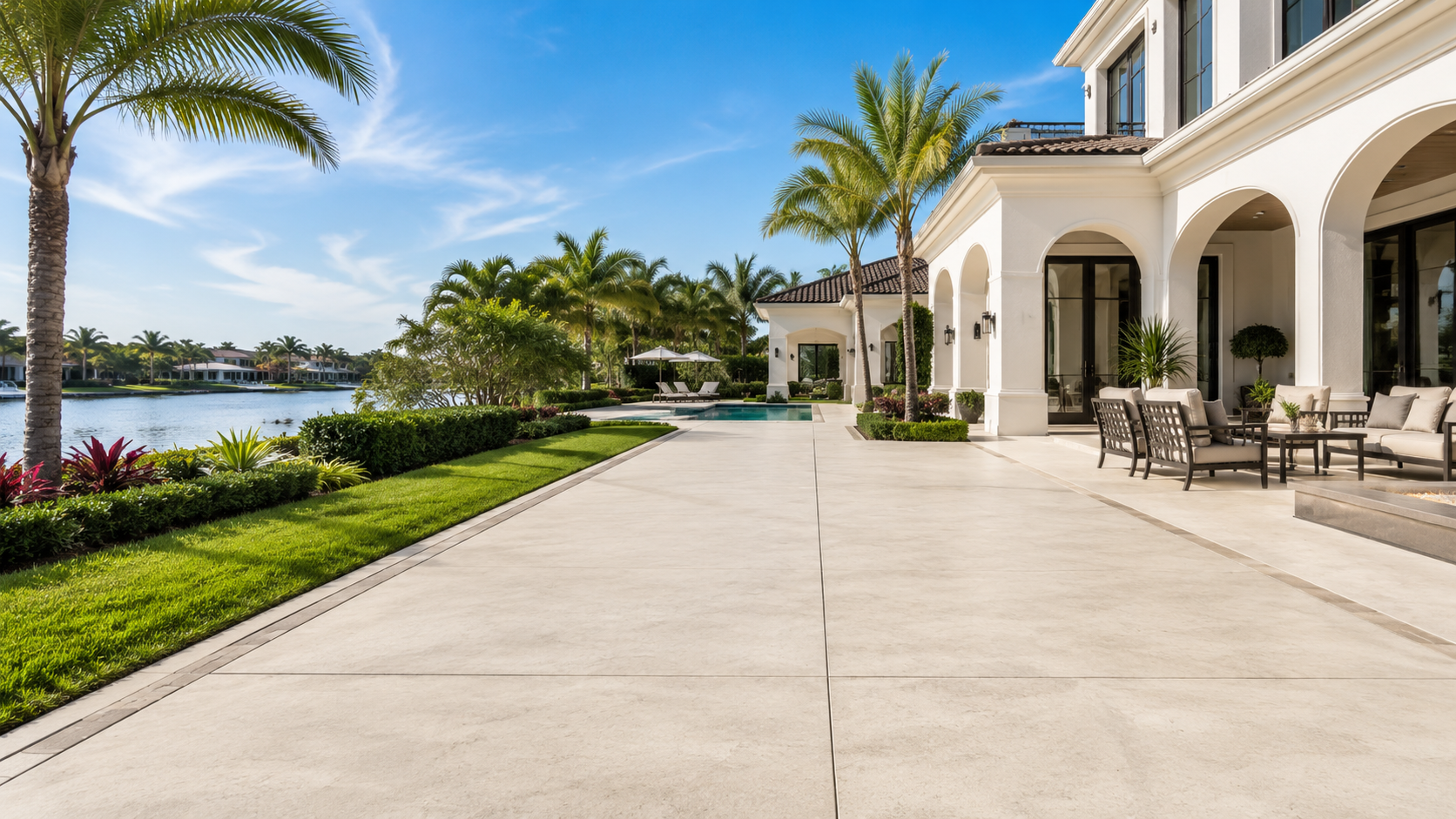
Decorative concrete can add color, scoring, borders, texture, or other visual details to an entry walk or connecting path. These options can help coordinate the walkway with the home, driveway, patio, landscaping, or other visible hardscape.
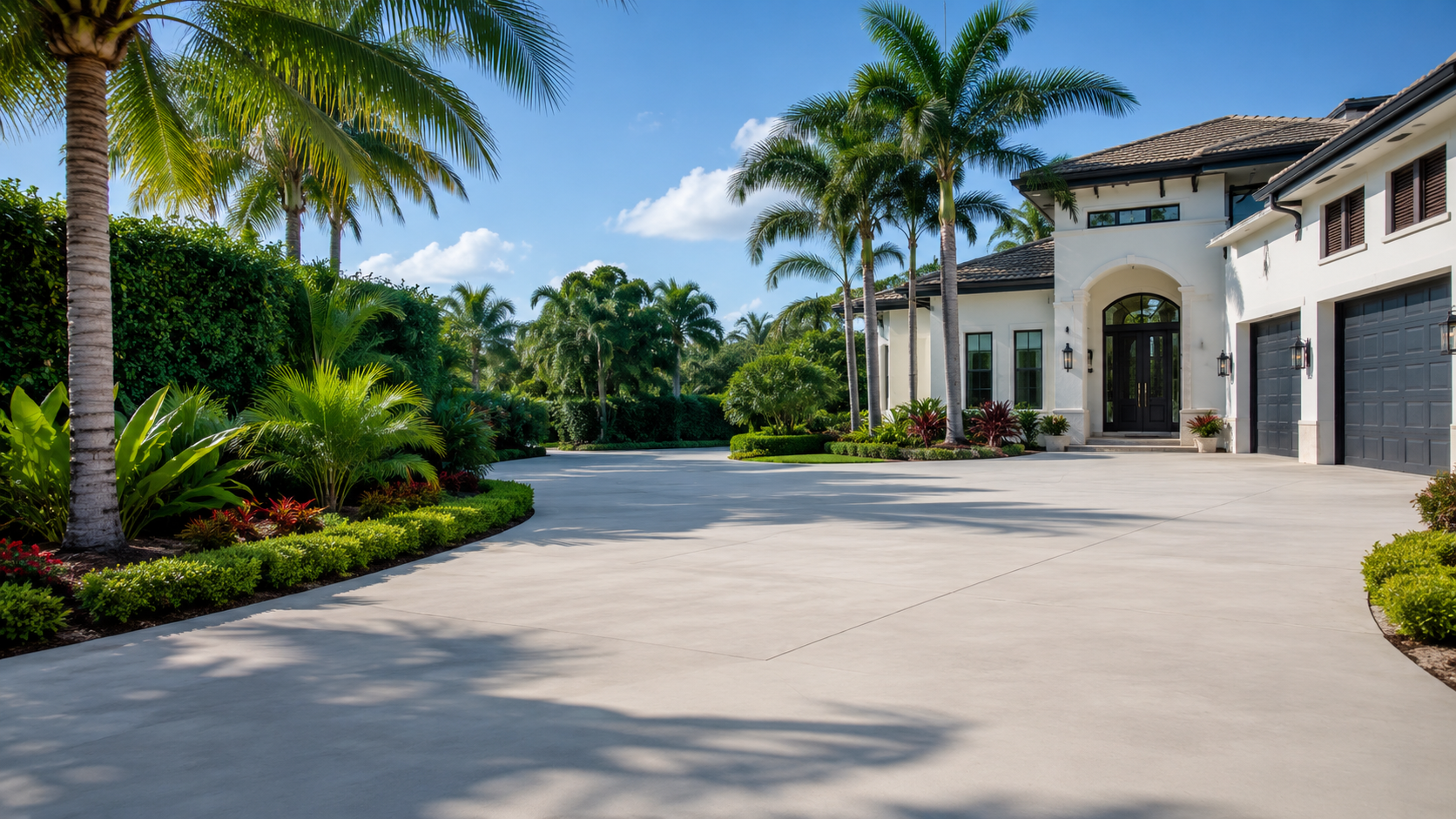
If an existing walkway is cracked, worn, uneven, stained, or deteriorated, repair or resurfacing may be worth evaluating before full replacement. The practical option depends on movement, settlement, drainage, base support, surface condition, and how much of the walkway is affected.
02
How Concrete Walkway & Sidewalk Installation Is Planned
A concrete walkway should be planned around where people need to travel and how the route fits the surrounding property. Layout, grade, drainage, base preparation, transitions, surface texture, joint placement, and finish selection can all affect everyday use and long-term surface performance.
Walkway Purpose, Route & Connection Planning
The project begins by defining where the walkway needs to start and finish, how it will be used, and which parts of the property it should connect. Entry access, driveway connections, gates, patios, pool areas, sheds, gardens, side yards, and other destinations can all influence the most practical route and layout.
Site Access, Grade, Drainage & Existing-Surface Review
The proposed route is reviewed for measurements, existing concrete, grade changes, drainage, landscaping, irrigation, utilities, access, and nearby structures or hardscape. These conditions help determine what site preparation may be required before concrete is placed.
Walkway Width, Layout, Finish & Transition Selection
The walkway can then be planned around available space, foot traffic, route shape, connections, surface texture, finish preferences, and any property-specific requirements. Straight, curved, narrow, wider, standard, stamped, or decorative layouts may require different preparation and finishing considerations.
Site Preparation, Forming, Placement, Jointing & Curing
Installation may include removal of an existing surface, excavation or grading, preparation of the supporting base, form setting, reinforcement where appropriate, concrete placement, surface finishing, jointing, curing, and cleanup.
Joint layout and surface texture are particularly important for exterior walkways because they help accommodate expected concrete movement and provide a practical surface for regular foot traffic.
Final Review, Use Timing & Maintenance
After installation, the finished walkway should be reviewed for transitions, drainage, surface condition, connections, and overall use. Appropriate curing and use timing should be followed before regular foot traffic begins, with ongoing care based on the finish, exposure, drainage, and surrounding property conditions.
How Palm Beach County Conditions Affect Concrete Walkways
Concrete walkways in Palm Beach County should be planned around rainfall, drainage, soil and base conditions, exterior exposure, landscaping, and the way the route connects with surrounding surfaces.
Heavy Rainfall, Runoff & Walkway Drainage
A walkway can change how water moves through a front yard, side yard, landscape bed, or outdoor-living area. Grade, surface slope, adjoining soil, downspouts, irrigation, patios, and driveway runoff should be reviewed so the new path does not unnecessarily contribute to standing water or poor transitions.
Soil, Base Support & Uneven Surfaces
Proper preparation below a walkway is important because settlement or loss of support can contribute to uneven sections and cracking. Existing soil conditions, previous fill, drainage, nearby edges, and the condition of adjoining concrete may all affect preparation requirements.
Heat, Sun Exposure & Curing
Strong sun and warm conditions can affect concrete placement, finishing, curing, and when a newly installed walkway should be used. Installation timing and curing practices should reflect the actual weather and project conditions.
Landscaping, Roots, Irrigation & Access
Front and side-yard walkways often pass close to lawn areas, planting beds, mature landscaping, irrigation components, fences, gates, or utilities. The route should be planned around those features so the walkway fits the property without creating unnecessary conflicts.
HOA, Right-of-Way & Accessibility Considerations
Approval requirements depend on the property and project. A private walkway located fully within a residential property is different from sidewalk work extending into a public right-of-way or a route subject to accessibility requirements.
Taking these local conditions into account can help a walkway fit the property more effectively and reduce avoidable issues with drainage, transitions, surrounding landscaping, and long-term surface performance. The appropriate approach depends on the actual site, intended route, and any property-specific approval or access requirements.
Is Concrete Walkway Installation Right for Your Property?
Concrete walkways may be a practical option when you want to:
Create a clearer route from the driveway or street-side area to the home
Improve access through a side yard or between gates
Connect a patio, pool area, garden, shed, or outdoor structure
Expand or reconfigure an existing driveway layout
Replace stepping stones, worn paths, or deteriorated concrete
Coordinate several concrete surfaces during the same property improvement
Add a more defined entry area
Use stamped or decorative finishes to coordinate a walkway with nearby hardscape
An estimate request can help clarify whether the project calls for a new walkway, replacement, repair, layout change, standard finish, decorative treatment, or another concrete approach.
Types of Concrete Walkway & Sidewalk Projects We Help Facilitate
Walkway projects may involve new pedestrian routes, entry paths, side-yard connections, backyard paths, private sidewalks, replacement work, decorative upgrades, or connections between other concrete surfaces.
Front Entry Walkways
Front walkways connect driveways, parking areas, gates, or other approach points with the home's primary entrance. Layout, width, drainage, steps, landscape beds, surface texture, and transitions should all be considered so the route feels natural within the property.
Driveway-to-Entry Connections
Some properties need a dedicated pedestrian connection between the driveway and front door rather than relying on the vehicle surface itself. These paths should be coordinated with driveway drainage, elevation changes, garage access, landscaping, and entry-area design.
Side-Yard & Backyard Paths
Concrete paths can provide defined access through side yards, gates, gardens, utility areas, sheds, patios, and backyard spaces. Narrow access, fencing, irrigation, landscaping, drainage, and equipment access can influence how these routes are planned and installed.
Patio, Pool & Outdoor-Living Connections
Walkways can connect patios, pool areas, outdoor kitchens, garden spaces, and other exterior features. Surface texture, drainage, moisture exposure, foot traffic, landscaping, and transitions to the adjoining concrete should be considered together.
Walkway Replacement & Layout Improvements
Replacement may be appropriate when an existing walkway is extensively cracked, settled, poorly positioned, or no longer fits how the property is used. A replacement project also creates an opportunity to reconsider route, width, drainage, transitions, and finish.
Stamped & Decorative Concrete Walkways
Stamped patterns, color, borders, scoring, and other decorative treatments can give visible entry paths and outdoor connections more design character. Finish choices should still be evaluated around traction, drainage, exposure, surrounding surfaces, and long-term maintenance.
The right walkway design depends on how the path will be used, what areas it needs to connect, and how it fits the surrounding property. Route, width, drainage, grade changes, landscaping, adjoining concrete, surface finish, and maintenance expectations should be considered together before the project scope is finalized.
Private Walkways vs. Public Sidewalk Work
Not every concrete pedestrian surface has the same project requirements.
A walkway located entirely within a residential property may function as a private connection between the driveway, home, patio, side yard, pool area, garden, or another feature.
A sidewalk or walkway that extends into a public right-of-way can involve different ownership, dimensional, drainage, accessibility, inspection, or permitting requirements. In Palm Beach County, right-of-way authority can belong to the County, a municipality, the State of Florida, or a private owner, so the applicable requirements should be confirmed for the actual project location.
This page is primarily focused on private-property concrete walkways and sidewalk-style pedestrian surfaces. Projects involving public sidewalks, roadway connections, or required accessible routes should be reviewed individually before the scope is defined.
Cost Factors for Concrete Walkway Installation
Concrete walkway pricing can vary depending on:
Total walkway length, width, and area
Straight, curved, angled, or more complex layouts
Excavation, demolition, grading, or base-preparation requirements
Drainage corrections or elevation changes
Site access and equipment limitations
Landscaping, irrigation, utilities, gates, or other nearby features
Connections to driveways, patios, steps, entries, or existing concrete
Standard, stamped, colored, bordered, or other decorative finishes
Repair or removal of an existing walkway
HOA, accessibility, permitting, right-of-way, or other project-specific requirements where applicable
Because walkway projects differ in route, access, preparation, drainage, finish, and surrounding property conditions, pricing should be based on the actual scope rather than walkway length alone.
Benefits of a Well-Planned Concrete Walkway
A properly planned concrete walkway can create a more defined and practical way to move between different parts of a property.
Potential benefits include:
- A stable pedestrian surface between important property areas
- Better-defined entry and side-yard routes
- Cleaner connections between driveways, patios, gates, pools, gardens, or outdoor structures
- Flexible straight, curved, standard, stamped, or decorative layouts
- Surface textures appropriate for regular foot traffic
- Better coordination of grade, drainage, transitions, and surrounding landscaping
- A concrete surface that can be maintained alongside other exterior hardscape
A successful walkway project depends on matching the route, preparation, drainage, jointing, finish, and maintenance approach to how the surface will actually be used.
Concrete Walkway Service Areas in Palm Beach County
Concrete walkway and sidewalk project requests are accepted across Palm Beach County, including the communities below. Project considerations may vary by property layout, drainage, landscaping, community requirements, access, and whether the proposed route remains entirely on private property.
Explore city-specific concrete driveway planning information:
- Concrete Walkway Services in Boca Raton
- Concrete Walkway Services in Boynton Beach
- Concrete Walkway Services in Delray Beach
- Concrete Walkway Services in Jupiter
- Concrete Walkway Services in Palm Beach Gardens
- Concrete Walkway Services in Royal Palm Beach
- Concrete Walkway Services in Wellington
- Concrete Walkway Services in West Palm Beach
Helpful Resources for Planning a Concrete Walkway Project
Use these resources to understand project cost, installation requirements, alternative surface systems, and long-term surface care before finalizing a walkway or sidewalk project.
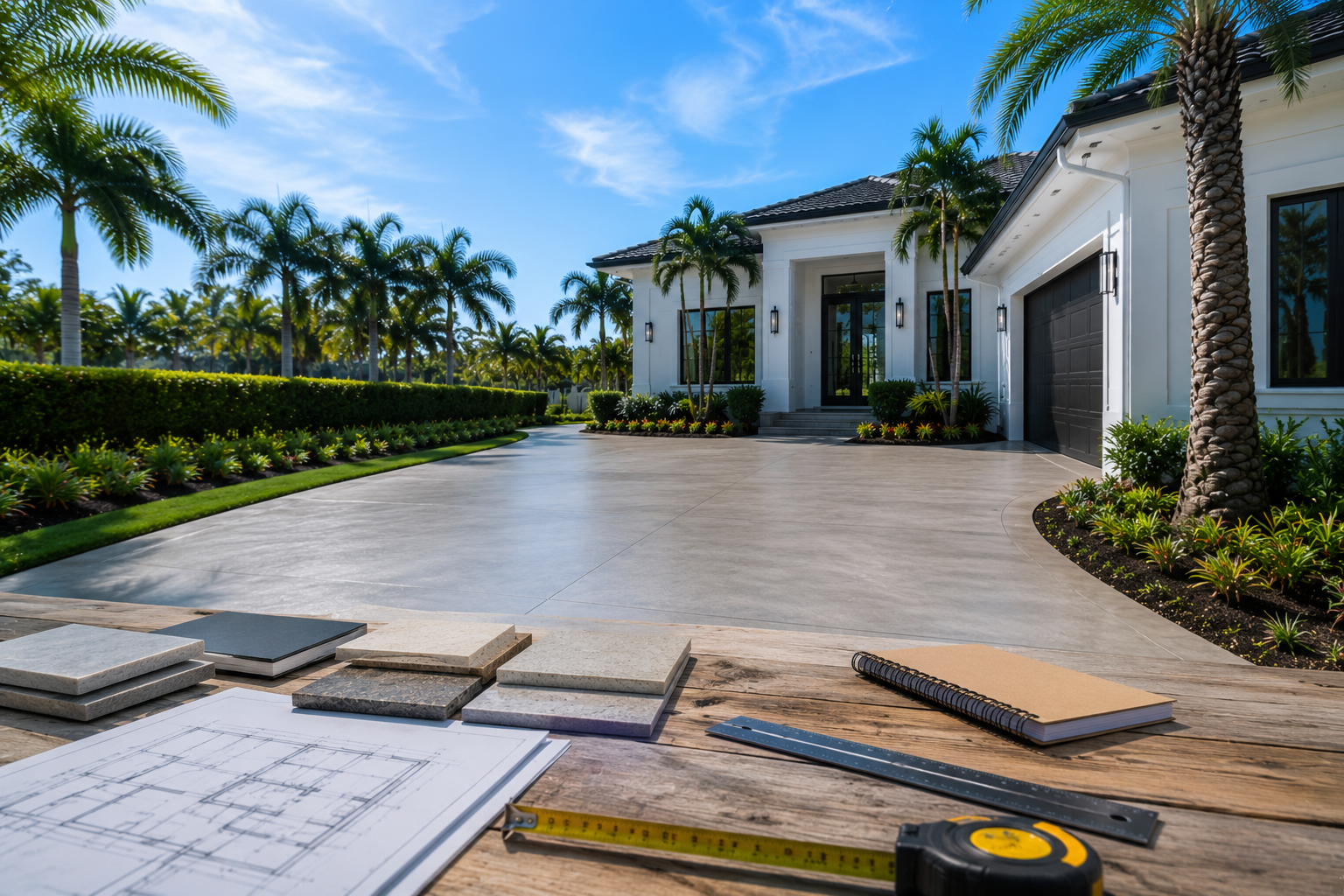
Review the factors that can affect walkway pricing, including project size, demolition, grading, drainage, base preparation, access, finish selection, and local requirements. This is the logical next resource when the route is known but the scope and budget still need to be defined.
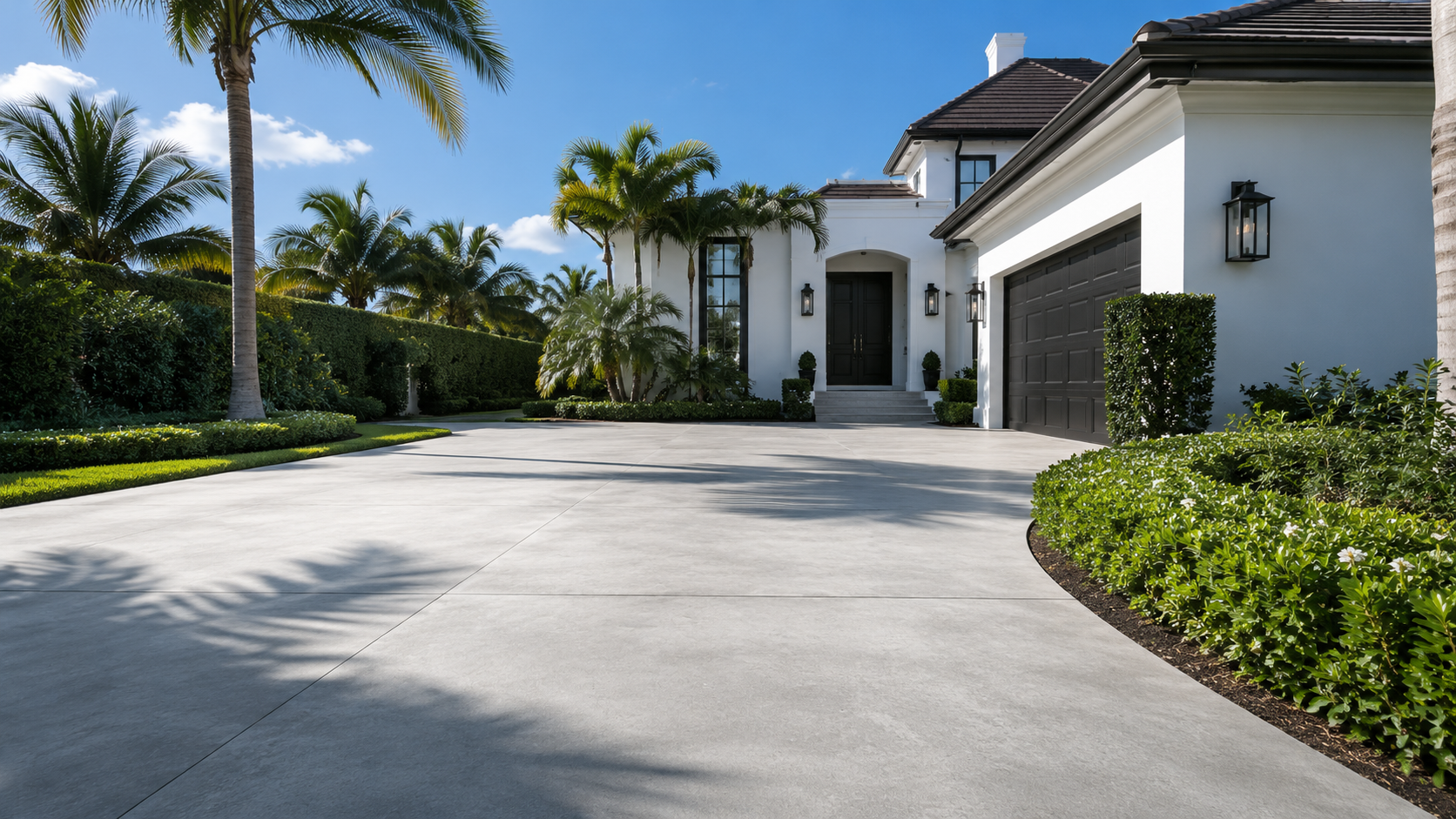
See how exterior concrete projects move from site evaluation and preparation through forming, placement, finishing, jointing, curing, and final use. This provides more detail on the installation stages that also affect a walkway project.
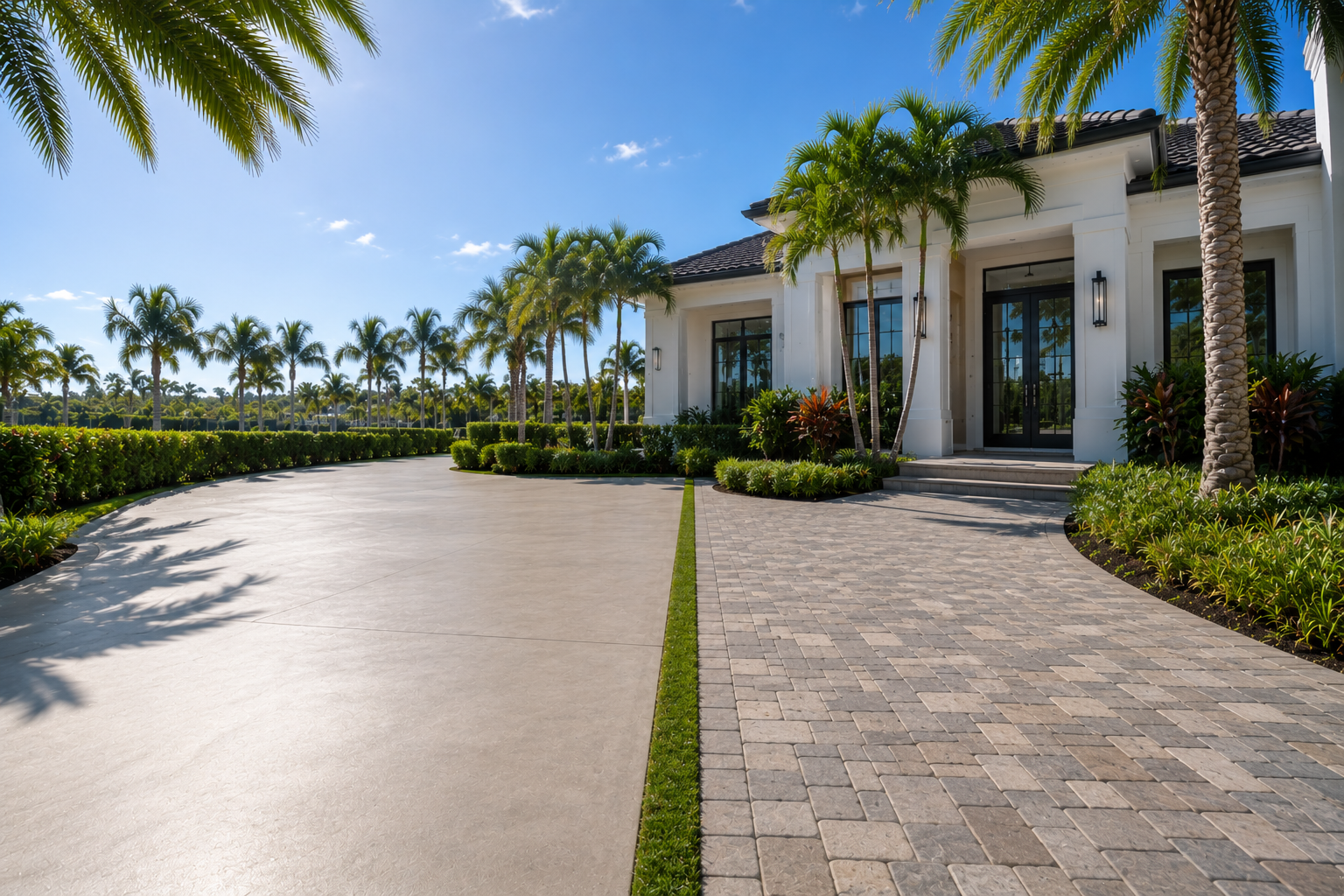
Compare poured concrete and pavers when the walkway surface has not yet been chosen. The guide covers differences in installation, drainage, maintenance, localized repair, design flexibility, and cost for pedestrian and other outdoor hardscape areas.
Review cleaning, joint care, drainage, surface protection, sealing where appropriate, and repair-before-sealing considerations for an installed walkway. Maintenance needs depend on finish, traffic, exposure, surface condition, and surrounding property conditions.
Request a Concrete Walkway Estimate in Palm Beach
A project-specific estimate can help clarify the walkway route, layout, preparation needs, drainage, existing surfaces, finish options, connections, and other factors that may affect installation.
Whether you are planning a front-entry walkway, side-yard path, driveway connection, patio or pool connection, replacement walkway, or decorative pedestrian surface, the project should be evaluated around how the area will be used and how it fits the surrounding property.
Submit a request to have your project details routed to an independent local concrete contractor or service provider who may contact you about availability, options, and next steps.
This is the text area for this paragraph.To change it, simply click and start typing. Once you've added your content, you can customize its design by using different colors,fonts, font sizes and bullets. Just highlight the words you want to design and choose from the various options in the text editing bar.
Add your title here

Concrete Walkway & Sidewalk FAQs for Palm Beach Properties
What can a concrete walkway connect?
Concrete walkways can connect driveways with entrances, patios with backyard or pool areas, gates with side yards, and homes with gardens, sheds, utility areas, or other outdoor features. The best route depends on the property layout, intended use, drainage, landscaping, and existing hardscape.
How should the width and layout of a concrete walkway be planned?
Walkway dimensions should reflect how the path will be used, the available space, nearby structures and landscaping, connections at each end, and any property-specific requirements. A front-entry route may have different layout needs from a narrow side-yard path or a walkway that forms part of an accessible route.
What finishes are available for concrete walkways?
Options may include standard broom or textured finishes, color, borders, scoring, stamped patterns, and other decorative treatments. The appropriate finish should balance appearance with foot traffic, traction, drainage, surrounding concrete, exposure, and maintenance expectations.
Can a walkway connect directly with an existing driveway or patio?
Yes. Walkways frequently connect driveways, patios, entry areas, pool spaces, and other concrete surfaces. The transition should be planned around grade, drainage, joint locations, existing-surface condition, and how the areas will be used.
Should a cracked or uneven concrete walkway be repaired or replaced?
It depends on the cause and extent of the problem. Localized deterioration may be suitable for repair when the surrounding concrete remains stable, while broader settlement, movement, drainage problems, extensive cracking, or a poor existing layout may make partial or full replacement more practical.
Do concrete walkway or sidewalk projects require permits?
Requirements depend on the property, location and scope. Private walkways located fully within a residential property can differ from work involving a public right-of-way, community requirements, drainage systems, or an accessible route. The appropriate local jurisdiction should be confirmed before work begins when any of those conditions apply. Palm Beach County specifically notes that right-of-way permitting depends on roadway ownership and jurisdiction.