Concrete vs. Pavers in Palm Beach
Concrete vs. Pavers for Driveways, Patios & Walkways
If you are comparing concrete and pavers for a driveway, patio, walkway, entry area, or outdoor-living surface, the decision usually involves more than appearance. Upfront cost, site preparation, drainage, maintenance, repair options, finish flexibility, and how the surface will be used can all affect which approach fits the property.
Concrete creates a continuous poured surface that can range from standard broom finishes to colored, scored, decorative, or stamped designs. Pavers create a segmented surface made from individual units, allowing greater variation in patterns, borders, colors, and localized replacement.
Palm Beach Concrete helps route concrete project requests to independent local concrete contractors or service providers who may review the property layout, intended use, existing surfaces, drainage, access, finish preferences, and site conditions. This guide is intended to help property owners understand the practical differences before deciding whether a poured concrete surface or a paver system better matches the project goals.
Request an Estimate
Have photos, drawings, or project notes? You can attach them through the form or send additional details to
We will get back to you as soon as possible.
Please try again later.
What Is Concrete?
Concrete is a poured surface made from a mixture of cement, aggregates, water, and other materials selected for the project. Once placed, finished, and cured, it forms a continuous surface that can be adapted for practical or decorative uses.
Concrete is commonly selected by property owners who want:
- A durable, solid surface for regular use
- A clean, streamlined appearance
- A lower-maintenance option for larger areas
- Flexible choices ranging from standard finishes to decorative upgrades
It is often used for:
- Concrete driveways
- Concrete patios
- Concrete slabs
- Concrete walkways and entry areas
- Garage floors and equipment pads
- Decorative outdoor surfaces
Many Palm Beach property owners choose concrete because it can provide an effective balance of performance, appearance, cost, and long-term durability when the project is properly planned.
What Are Pavers?
Pavers are individual paving units, commonly made from concrete, clay or brick, or natural stone, that are installed over a prepared base with joints between the units. Depending on the material and installation system, they can be arranged in a wide range of colors, shapes, sizes, patterns, borders, and layouts.
Pavers are often selected when homeowners prioritize:
- A segmented, design-focused appearance
- Pattern and color flexibility
- The ability to replace individual units when needed
- A surface style that complements landscaping, pool areas, or upscale outdoor spaces
It is commonly used for:
- Patios and poolside areas
- Walkways and garden paths
- Driveways and parking areas
- Courtyards and entry features
- Outdoor-living and landscape-design projects
Conventional interlocking pavers and permeable interlocking paver systems should not be treated as the same installation. Permeable systems use specially designed joints and open-graded aggregate layers that allow water to move through the pavement assembly, while conventional paver surfaces still depend on appropriate grading, drainage, base preparation, joint material, and edge restraint.
Depending on project goals, pavers may offer advantages related to visual customization, isolated repairability, and design flexibility. Their long-term performance, however, depends heavily on proper excavation, base preparation, edge restraint, drainage, joint material, and ongoing maintenance.
For the comparisons below, “pavers” refers primarily to conventional segmented or interlocking paver installations used for residential driveways, patios, walkways, poolside areas, courtyards, and similar hardscape projects.
Side-by-Side Comparison
| Feature | Concrete | Pavers |
|---|---|---|
| Surface Structure | Continuous poured surface with planned joints | Individual units installed over a prepared base with joints and edge restraint |
| Installation | Base preparation, forming, placement, reinforcement where appropriate, finishing, jointing, and curing | Excavation, base preparation, compaction, bedding, unit placement and cutting, edge restraint, joint filling, and final compaction |
| Design Options | Standard, broom-finished, colored, scored, decorative, textured, or stamped finishes | Multiple unit colors, sizes, shapes, patterns, borders, and modular layouts |
| Maintenance | Cleaning, joint and crack monitoring, drainage awareness, and sealing where appropriate for the surface or finish | Cleaning, joint-material care, edge review, and localized resetting where movement occurs; sealing may be used for some systems |
| Localized Repair | Repairs are possible, although matching older concrete or decorative finishes may be difficult in some cases | Individual units can often be lifted, reset, or replaced after the underlying cause is addressed |
| Drainage Approach | Typically relies on surface slope, grading, runoff direction, and site drainage | Conventional pavers still require grading and drainage; permeable paver systems are a separate design intended to allow infiltration |
| Common Applications | Driveways, patios, walkways, slabs, equipment areas, and decorative outdoor surfaces | Driveways, patios, walkways, courtyards, entry areas, poolside surfaces, and landscape-integrated hardscapes |
| Major Cost Drivers | Size, demolition, base preparation, thickness, reinforcement, layout, finish, drainage, and access | Size, excavation, base system, unit material, pattern, cuts, borders, edge restraint, drainage, and access |
This comparison provides a general overview. Actual performance depends on installation quality, intended use, site conditions, drainage, maintenance practices, and the specific product or finish selected.
Benefits and Considerations of Concrete and Pavers
Benefits of Concrete
Common advantages of concrete include:
- A continuous surface that works well for driveways, patios, slabs, and walkways
- Practical pricing for many standard installations
- A continuous surface without surface-wide joint-sand maintenance
- Flexible finish options, including broom-finished, decorative, colored, and stamped concrete
- Strong performance for vehicle-access areas when properly designed for the expected load
- A clean, streamlined appearance that works with many Palm Beach home styles
Concrete Considerations
- Concrete requires appropriate joint placement, base preparation, drainage planning, and curing
- Repairs may be more noticeable on older surfaces or decorative finishes
- A plain concrete surface offers less pattern variation than individually placed pavers
- Decorative concrete requires finish-specific maintenance to preserve its appearance
These factors may influence whether concrete is the best fit for a particular property or project.
Benefits of Pavers
Common advantages of pavers include:
- Extensive pattern, color, size, and layout options
- A segmented appearance that can complement landscaping and outdoor-living designs
- Individual units can often be replaced when localized settlement or damage occurs
- Good flexibility for curved walkways, borders, and detailed outdoor layouts
- A strong design-oriented option for patios, courtyards, entries, and select driveways
Paver Considerations
- Upfront installation costs can be higher than a basic concrete installation
- Long-term performance depends heavily on excavation, base compaction, edge restraint, drainage, and joint maintenance
- Joint material may need cleaning or replenishment over time, particularly where traffic, runoff, or surface debris affects the joints.
- Localized settlement or movement may require individual units to be lifted and reset if the base, edge restraint, or surrounding site conditions change.
- Weeds or organic growth can develop in joints from windblown seeds and accumulated surface material, so joint cleaning may form part of routine maintenance.
- Certain paver styles can require more cleaning and maintenance to preserve their appearance
Understanding both strengths and limitations can help ensure a more informed decision.
How Concrete and Pavers Fit Different Project Goals
The right choice often depends on budget, design preferences, maintenance expectations, intended use, and long-term plans for the property.
Concrete May Be a Better Fit When:
- You want a clean, unified surface for a driveway, patio, slab, or walkway
- You prefer a continuous surface with fewer joints to manage across the project area
- You are planning a larger practical surface and prefer a straightforward poured-concrete approach
- You want the option to upgrade with decorative color, scoring, borders, or stamped finishes
- Your project requires a solid surface designed for regular vehicle, foot, or equipment use
Pavers May Be a Better Fit When:
- You place a high priority on individual patterns, colors, and modular design flexibility
- You are creating a landscape-focused patio, courtyard, entry, or walkway
- You want individual units to be easier to replace if a localized area needs adjustment
- You prefer a segmented, textured appearance that complements the home and landscaping
- You are prepared for the additional installation detail and ongoing maintenance that may be required
How Palm Beach County Conditions Affect Concrete and Paver Projects
Concrete and paver projects across Palm Beach County should be compared in the context of the actual property rather than treated as interchangeable hardscape installations. Surface use, drainage, soil and base conditions, exposure, surrounding hardscape, maintenance expectations, and community or municipal requirements can all influence which system fits the site.
Heat, Humidity, and Installation Timing
Palm Beach heat and humidity can affect concrete placement, finishing, curing, and outdoor construction scheduling. Paver installations are also affected by weather because excavation, base preparation, compaction, joint filling, and edge restraint all need stable site conditions.
Heavy Rainfall, Slope, and Drainage
Seasonal rainfall and summer thunderstorms make drainage planning important for both concrete and paver projects. Concrete needs proper slope and runoff direction, while pavers still require a well-prepared base, joint stability, edge support, and water-management planning.
Sandy Soil, Base Preparation, and Long-Term Stability
Sandy or variable soil conditions can affect how well either surface performs over time. Concrete projects may require careful grading, compaction, base preparation, thickness, reinforcement, and joint planning, while paver projects depend heavily on excavation depth, compacted base layers, bedding material, and edge restraint.
Coastal Moisture, Salt Exposure, and Surface Protection
Properties closer to coastal or waterfront areas may need to account for humidity, salt air, moisture exposure, staining, and long-term surface wear. These conditions can influence whether a standard concrete finish, stamped concrete, decorative concrete, or a paver surface is easier to maintain for the property.
Hardscape Transitions and Existing Surfaces
Where new concrete or pavers meet an existing driveway, patio, walkway, poolside surface, curb, entry path, landscaping edge, or other hardscape, elevations and transitions should be reviewed as part of the project. The selected surface should work with existing grades, drainage paths, adjoining materials, access points, and the way people or vehicles move between the connected areas.
HOA, Municipal, and Site-Approval Considerations
Some projects may involve HOA review, municipal requirements, right-of-way coordination, driveway apron details, drainage rules, setback concerns, or community design standards. These requirements can affect whether concrete, stamped concrete, decorative concrete, or pavers are practical for the specific project.
Comparing these factors can help narrow the choice based on actual site conditions, intended use, drainage, maintenance expectations, and design goals rather than appearance or upfront price alone.
Cost Differences Between Concrete and Pavers
Both concrete and pavers can vary widely in cost based on size, site conditions, demolition, drainage, access, layout, materials, and finish selection.
Concrete
Concrete cost depends on project size, existing-surface removal, grading and base preparation, thickness, reinforcement where appropriate, access, drainage, layout, and finish selection. Standard poured finishes generally have a simpler scope than stamped or highly decorative concrete, while custom shapes, borders, colors, surface treatments, and protective sealing can increase the overall project cost.
Pavers
Paver cost depends on the unit material, excavation and base requirements, project layout, pattern complexity, cutting, borders, edge restraint, joint material, drainage, and site access. Detailed patterns, premium units, curved layouts, extensive borders, difficult access, or additional base work can increase both material and installation requirements.
Maintenance Considerations
Concrete typically requires cleaning, joint care, runoff awareness, and sealing when appropriate for the surface and finish.
Pavers may require cleaning, joint-sand maintenance, edge review, weed control, and occasional resetting of individual areas if movement occurs.
For more detail about project pricing, site preparation, finish options, and local cost factors, review the Palm Beach concrete cost guide.
Comparing Long-Term Cost, Maintenance & Performance
Initial installation price is only one part of the comparison between concrete and pavers. Long-term considerations depend on how the surface is installed, how it is used, how water moves across the property, and what maintenance or repair the system may require over time.
Useful factors to compare include:
- Upfront project cost
- Intended use and traffic level
- Base preparation and drainage
- Cleaning and routine maintenance
- Joint or edge maintenance
- Localized repairability
- Repair, resurfacing, or replacement needs over time
- Appearance retention and finish care
- Design flexibility
- Compatibility with surrounding hardscape and landscaping
A lower initial price does not automatically mean lower long-term cost, and a higher-priced surface is not automatically the better choice. Concrete may suit a property where a continuous poured surface, simpler joint layout, or decorative finish is preferred, while pavers may suit a project where modular patterns, individual-unit replacement, or a segmented hardscape appearance is a higher priority.
The more useful comparison is whether the installation, maintenance, repair, design, and drainage characteristics of the surface match the actual property and intended use.
Helpful Resources for Choosing Between Concrete and Pavers
Use these resources to compare driveway, patio, walkway, stamped-concrete, pricing, and installation considerations before deciding which surface approach best fits the property.
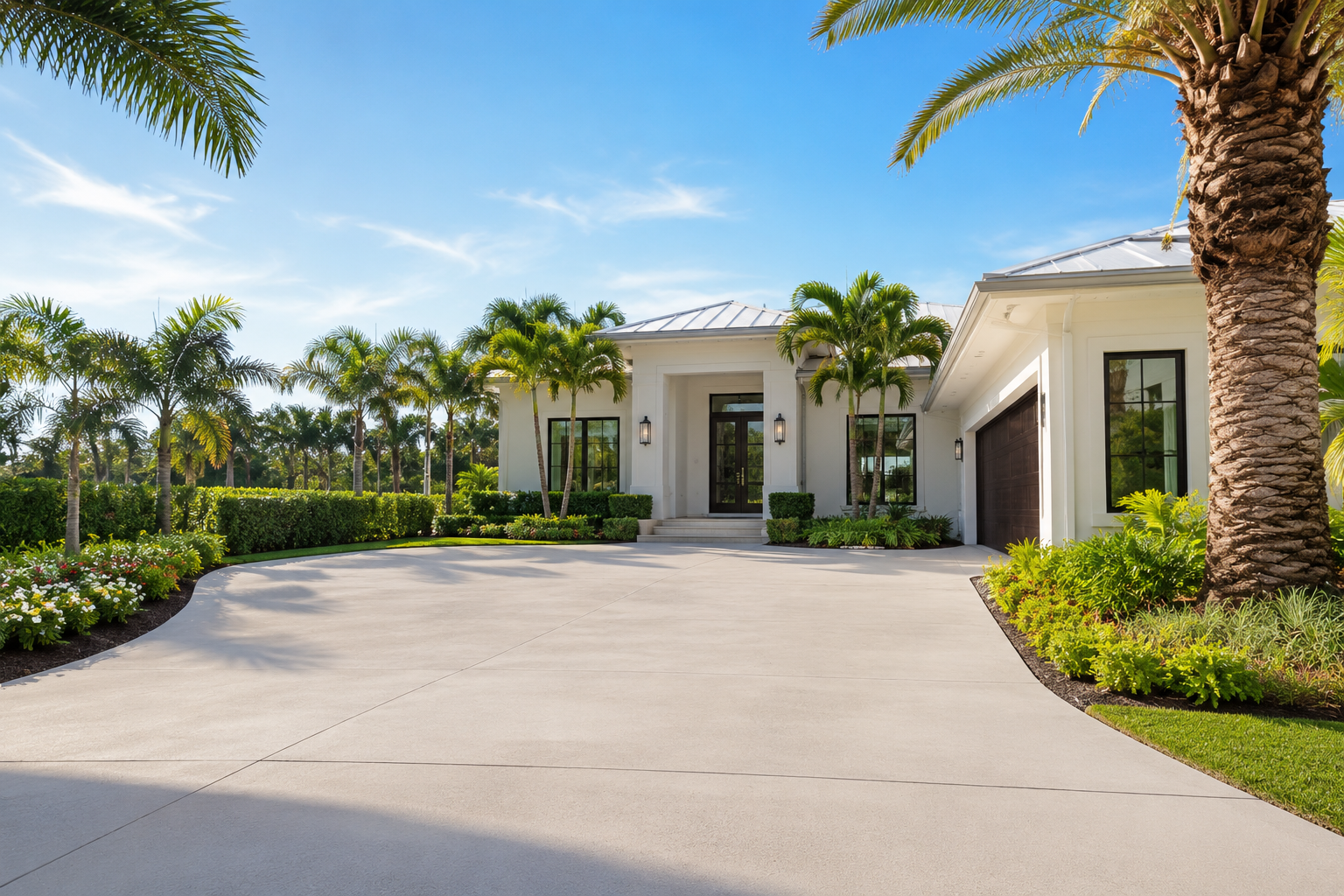
Review concrete driveway installation when comparing poured concrete and pavers for vehicle access, parking, widening, garage transitions, or driveway replacement. The page explains how traffic, drainage, grading, base preparation, thickness, reinforcement, finish selection, and long-term maintenance affect a concrete driveway project.
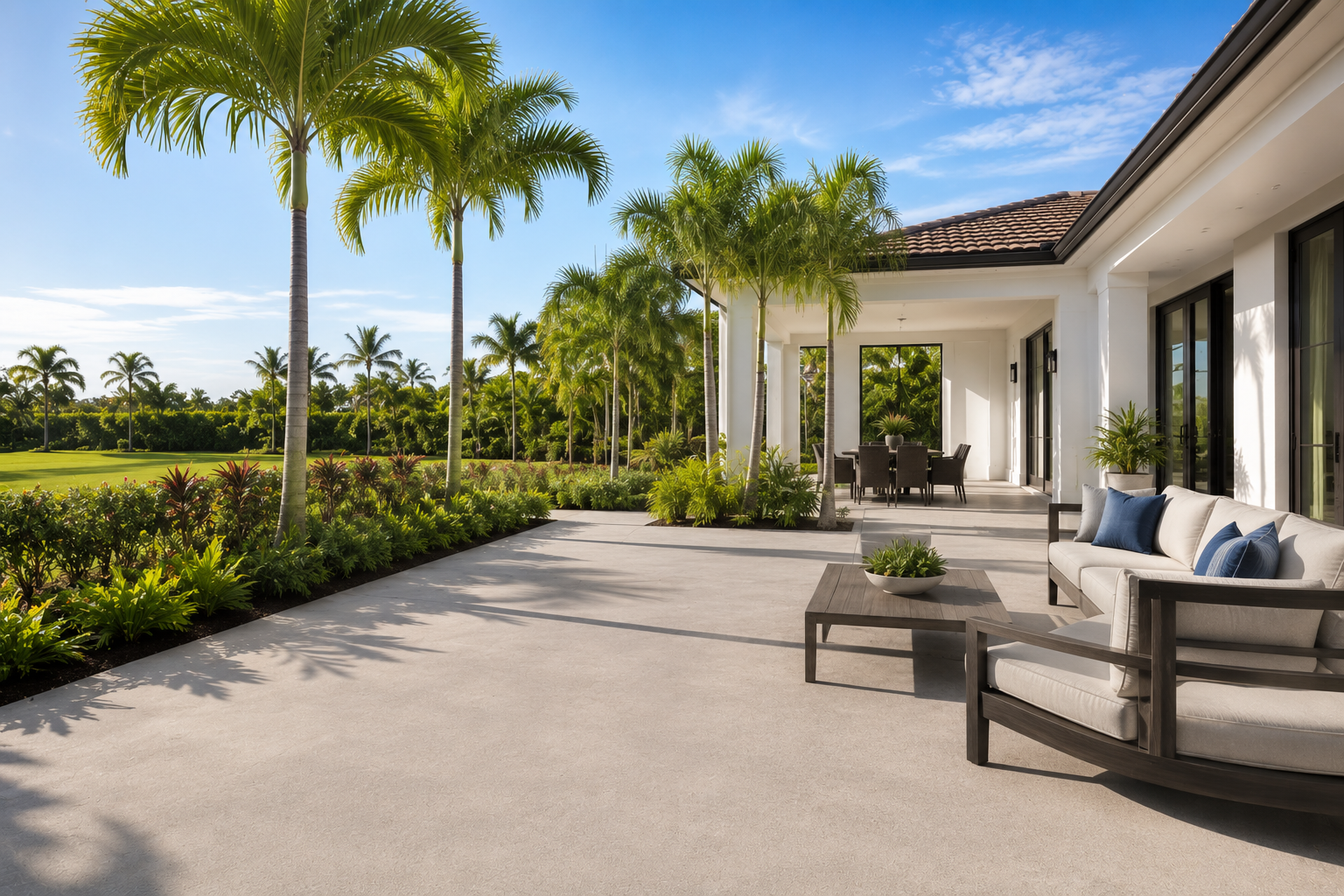
Review concrete patio installation when comparing surface options for outdoor dining, seating, poolside areas, covered patios, outdoor kitchens, or other backyard improvements. The page connects patio layout, drainage, site preparation, furniture use, surrounding hardscape, and standard, stamped, or decorative concrete finishes with everyday outdoor-living needs.
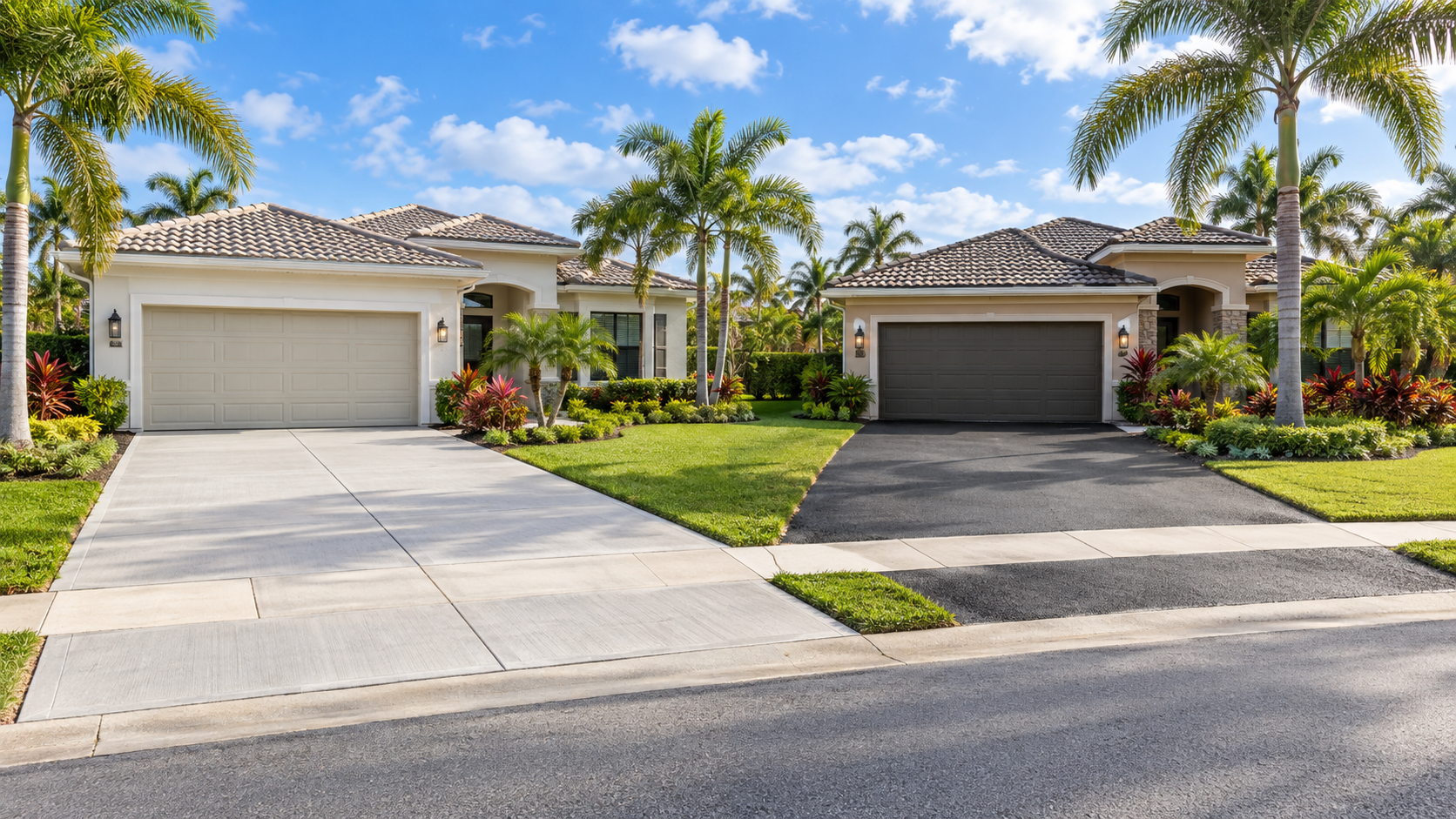
If your surface comparison is specifically for a driveway, asphalt is another common option to evaluate alongside concrete and pavers. Compare concrete and asphalt across cost, maintenance, surface heat, appearance, installation, and long-term use before narrowing the driveway choice.
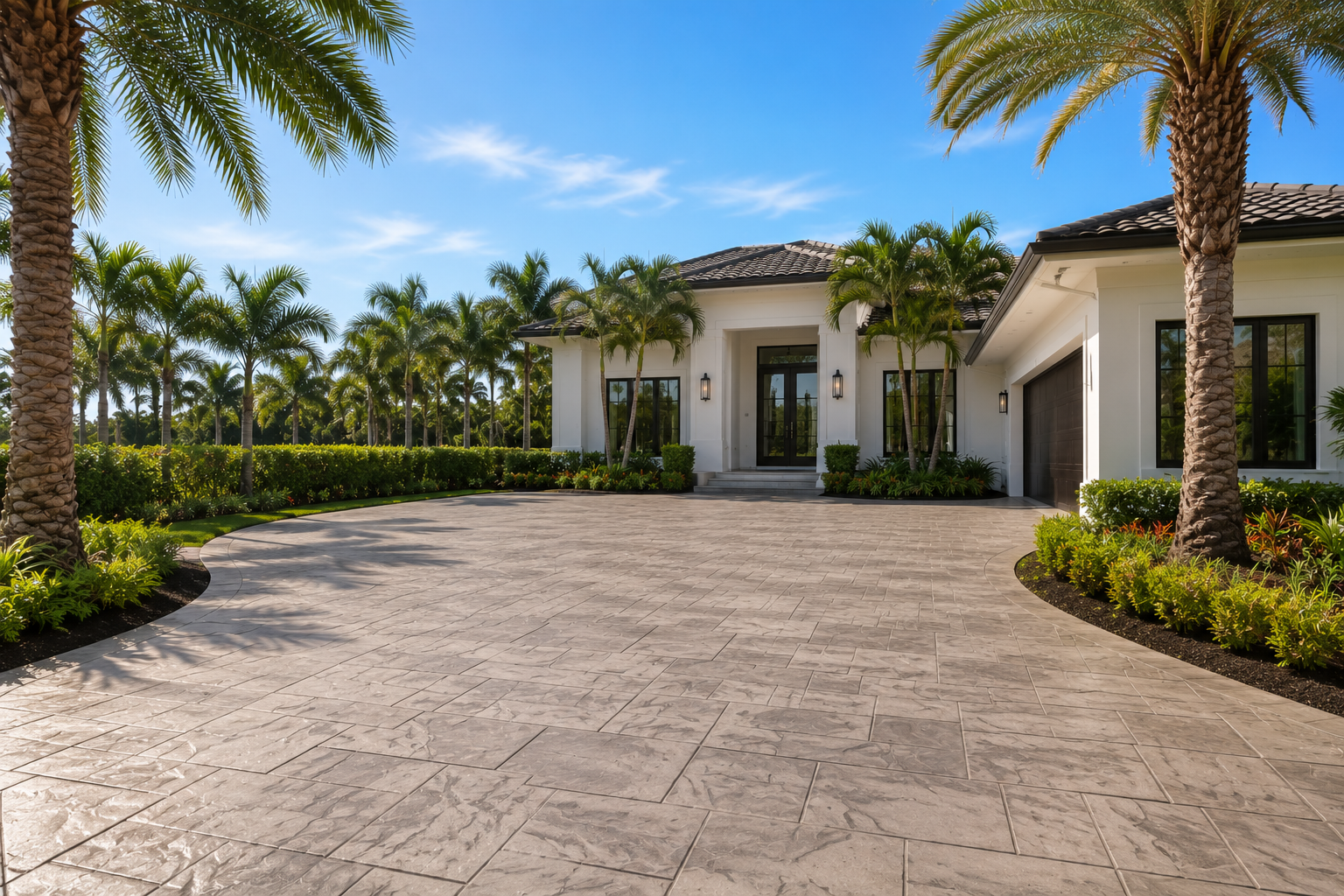
Review stamped concrete when pattern and texture are important to the comparison. Stamped finishes can create stone-, brick-, slate-, or tile-inspired appearances for patios, driveways, walkways, entry areas, and poolside surfaces while remaining part of a poured concrete system. Pattern, traction, drainage, color, sealing, and maintenance should also be considered.
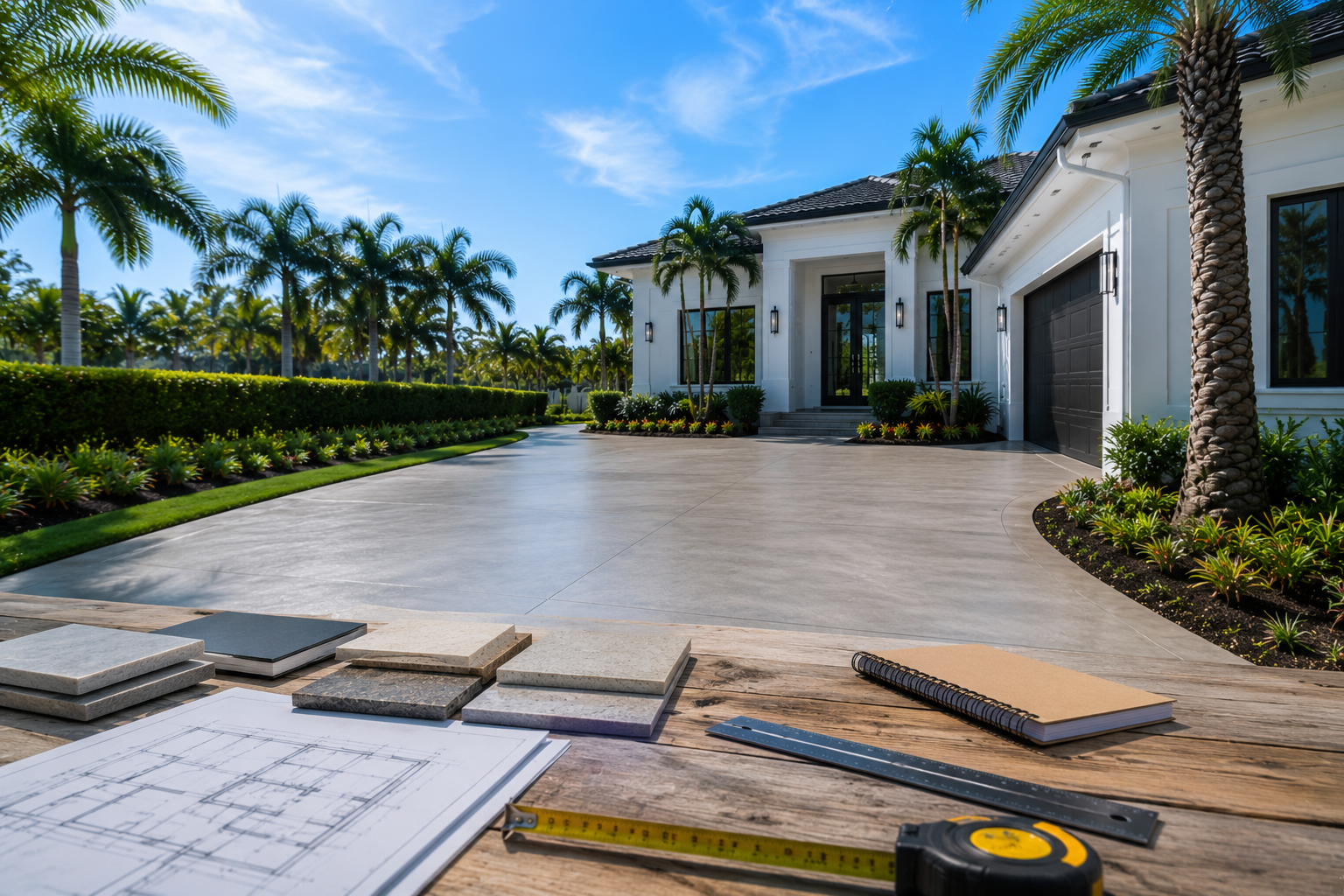
Use the concrete cost guide to understand how project size, demolition, site preparation, drainage, access, thickness, reinforcement, standard or decorative finishes, and other scope factors affect concrete pricing. It provides a more detailed cost framework after the broader concrete-versus-pavers comparison.
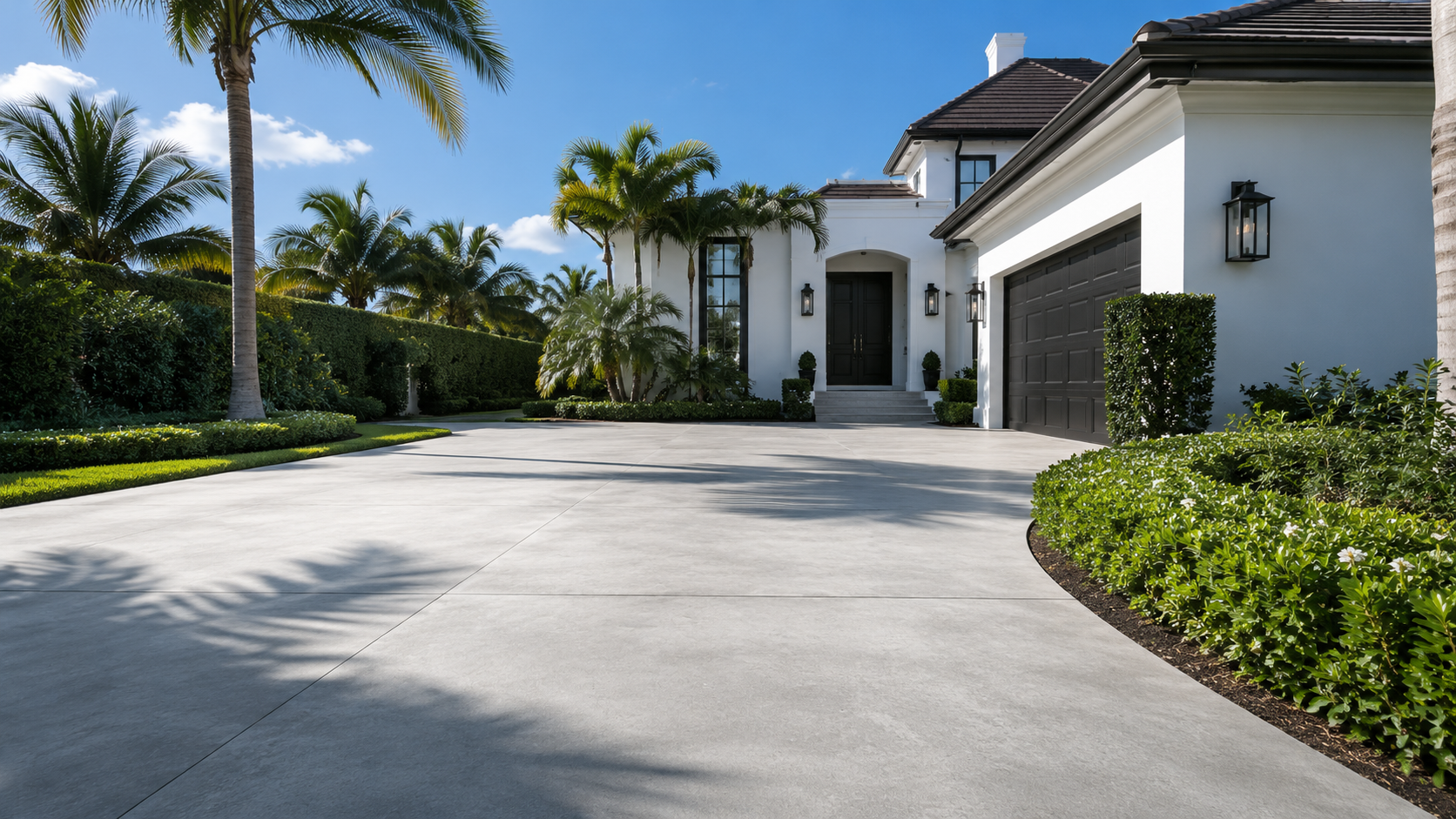
Review the concrete installation process to understand how poured concrete moves from site evaluation and base preparation through forming, placement, finishing, jointing, curing, and final use. This provides useful context for comparing a continuous concrete installation with the excavation, base, unit-placement, joint, and edge-restraint requirements of a paver system.
Request a Concrete Estimate After Comparing Surface Options
Comparing concrete and pavers is most useful when the decision is tied to the actual project. Surface use, existing hardscape, drainage, base conditions, site access, finish preferences, maintenance expectations, and surrounding landscaping can all affect whether poured concrete, stamped concrete, decorative concrete, repair, resurfacing, or replacement should be considered.
Review
concrete services in Boca Raton,
concrete services in Boynton Beach,
concrete services in Delray Beach,
concrete services in Greenacres
,
concrete services in Jupiter,
concrete services in Lake Worth Beach,
concrete services in North Palm Beach,
concrete services in Palm Beach Gardens,
concrete services in Riviera Beach,
concrete services in Royal Palm Beach, concrete services in Wellington, and
concrete services in West Palm Beach, or explore all
Palm Beach County concrete service locations.
If you are considering concrete after comparing surface options, a project-specific estimate can help clarify the preparation requirements, finish choices, drainage considerations, scope, and cost factors for the property.
Submit a request to have your project details routed to an independent local concrete contractor or service provider who may contact you about availability, options, pricing factors, and next steps.
Concrete vs. Pavers FAQs for Palm Beach Properties
Is concrete or pavers better for a driveway?
Both can work well when designed and installed for vehicle use. Concrete is often preferred for a clean, continuous driveway surface and lower routine maintenance, while pavers may appeal to homeowners who want a more decorative, segmented appearance and the ability to replace individual units when necessary.
Are pavers better for drainage than concrete?
Not automatically. Conventional paver installations and permeable interlocking paver systems are different. Standard pavers still depend on appropriate grading, base preparation, joint condition, edge restraint, and site drainage, while a permeable paver system is specifically designed with open joints and aggregate layers that allow water to infiltrate through the pavement assembly.
Poured concrete generally manages water through surface slope, grading, transitions, and runoff direction. The better drainage approach therefore depends on the specific pavement system, soil and base conditions, surrounding hardscape, and how water needs to move across or through the site.
Can concrete provide a similar look to pavers?
Yes. Stamped concrete, decorative borders, scoring, color, and textured finishes can create a more customized appearance. It will not duplicate every feature of individual pavers, but it can provide a design-focused alternative with a continuous poured surface.
Which option requires less maintenance?
Maintenance requirements depend on the surface type, installation, finish, exposure, and use. Standard poured concrete does not have surface-wide paver joints to maintain, but it may still need cleaning, crack or joint attention, drainage monitoring, and sealing where appropriate.
Paver surfaces may require cleaning, joint-material care, edge review, weed or organic-growth control, and occasional resetting of individual units if localized movement occurs. Decorative or stamped concrete can also require finish-specific cleaning and resealing, so the comparison should be based on the actual system rather than assuming either option is maintenance-free.
Can existing pavers or concrete be repaired instead of replaced?
In some cases, yes. Individual pavers can often be lifted and reset if the underlying base is addressed. Concrete repairs may be appropriate for localized wear, chips, cracks, or surface concerns when the existing slab remains suitable for restoration. A site evaluation can help determine whether repair, resurfacing, or replacement is the more practical choice.
Do concrete and paver projects in Palm Beach require permits?
Requirements depend on the project type, location, scope, and jurisdiction. Driveway access, drainage-related changes, structural work, work near property lines, and projects in certain municipalities or HOA communities may require review or approval before work begins.
Is stamped concrete a good alternative to pavers?
Stamped concrete can be a good alternative for property owners who want a patterned or textured surface but prefer the unified look of poured concrete. It can be used for patios, walkways, poolside areas, driveways, and outdoor-living spaces, depending on the project design, surface use, drainage, texture, color, and maintenance expectations.
Pavers may still be preferred when individual unit replacement, modular patterns, or a segmented hardscape appearance are the main priorities. The better choice depends on the property layout, design goals, budget, and long-term care plan.
Should I compare concrete repair or resurfacing before replacing a surface with pavers?
Yes. Before removing an existing concrete surface for pavers, it can be useful to compare concrete repair vs. replacement and determine whether the current concrete may still be suitable for repair, resurfacing, or another restoration approach. If the concrete is still structurally suitable, resurfacing or a decorative finish may provide a more practical update than full removal and replacement.
If the existing surface has major cracking, movement, drainage problems, base failure, or widespread deterioration, replacement may be more appropriate. A property-specific review can help determine whether repair, resurfacing, new concrete, stamped concrete, decorative concrete, or a paver-style option makes the most sense.