Standing Water & Drainage Problems Around Concrete in Palm Beach County
What Standing Water Can Reveal About Slope, Runoff & Concrete Support
Water that repeatedly collects on a driveway, patio, walkway, slab, or along the edge of a concrete surface can have several possible causes. The issue may be as simple as a localized low spot, but recurring ponding can also be connected to settlement, altered grading, roof runoff, irrigation, landscaping changes, blocked drainage paths, or the way adjoining surfaces direct water.
Not every wet area after a heavy Florida rain indicates a concrete problem. What matters is where the water collects, how long it remains, whether the pattern keeps returning, and whether other changes such as cracking, settlement, erosion, staining, or edge deterioration are appearing at the same time.
Palm Beach Concrete helps route concrete-related project requests to independent local concrete contractors or service providers who may review the affected surface, visible drainage pattern, slope, surrounding property conditions, concrete movement, and project goals before discussing available options and next steps.
The first step is to understand how water is reaching the area and why it is not draining away as expected. From there, the surrounding slope, surface condition, and any signs of movement or erosion can help narrow down what may need closer attention.
Request an Estimate
If standing water, poor runoff, low spots, settlement, or recurring drainage problems are affecting a driveway, patio, walkway, slab, or other exterior concrete area, providing photos and project details can help support a more useful review.
Include where the water collects, how long it typically remains after rain or irrigation, whether the drainage pattern appears to be changing, any cracking or uneven concrete nearby, and whether landscaping, roof runoff, or surrounding hardscape may be contributing.
Have photos, drawings, or project notes? You can attach them through the form or send additional details to
We will get back to you as soon as possible.
Please try again later.
Why Does Water Collect Around Concrete?
Standing water usually develops because water is reaching an area faster than it can drain away or because the surface and surrounding grades are directing runoff toward a low point.
Insufficient Surface Slope or Local Low Spots
Exterior concrete is normally planned so water can move toward an appropriate drainage path. A localized low area, uneven transition, or surface that does not shed water effectively can allow puddles to form after rainfall, irrigation, or washing.
A low spot does not automatically mean the entire concrete surface has failed. The location and extent of the ponding should be considered together with the surrounding elevations and drainage route.
Settlement or Uneven Concrete Movement
If one section settles relative to another, the original drainage pattern can change. Water may begin collecting against a joint, slab edge, garage transition, walkway connection, or other area that previously drained correctly.
Settlement accompanied by cracking or widening elevation differences should be evaluated as both a surface condition and a drainage condition.
Roof Runoff and Downspout Discharge
Roof water concentrated near a patio, walkway, driveway edge, or slab can overwhelm a small area even when the concrete itself has reasonable slope.
Downspout discharge, roof valleys, gutter overflow and changes to roof drainage can therefore alter how water reaches concrete and the surrounding soil.
Landscaping, Irrigation & Grade Changes
Landscape beds, soil additions, edging, mulch, irrigation systems and other property improvements can change how water moves alongside concrete.
If surrounding soil or landscaping becomes higher than the slab edge, runoff that once moved away may begin moving back toward the concrete or remaining trapped beside it.
Blocked or Altered Drainage Paths
Leaves, sediment, roots, landscape material or property changes can interfere with drains, swales, channels or other established drainage routes.
The first question is therefore not always whether the concrete needs work. It may be whether the original water path is still functioning as intended.
Adjoining Hardscape & Surface Transitions
Driveways, patios, walkways, poolside areas, pavers, curbs, aprons and other hardscape often meet at different elevations.
When one surface is added, raised, settled or replaced, the transition can redirect water toward another part of the property. Connected surfaces should therefore be considered as one drainage system rather than evaluated in isolation.
Once the likely source of the water is considered, the pattern it creates can provide additional clues. Where water repeatedly collects—and what changes appear around it—can help distinguish an isolated drainage nuisance from a condition that deserves closer review.
Common Standing Water & Drainage Patterns to Look For
Drainage problems are often easier to recognize by their pattern than by a single puddle after rain. Repeated low spots, edge washout, staining, or water moving toward structures can help show how runoff is interacting with the concrete and surrounding property.
Puddles Returning to the Same Low Area
Water that repeatedly collects in the same part of a driveway, patio or walkway can indicate a consistent elevation or runoff pattern rather than a one-time weather event.
Water Collecting Along Concrete Edges
Repeated moisture at slab edges may be related to landscape grade, irrigation, roof runoff or the way water leaves the concrete.
Where soil or base material is also washing away, closer review may be useful.
Runoff Moving Toward a Garage, Entry or Structure
Water should be evaluated more carefully when the visible drainage pattern directs runoff toward a garage threshold, building edge, entry area or another location where ponding creates an ongoing usability concern.
Washed-Out Soil or Exposed Slab Edges
Erosion beside concrete can gradually remove supporting material from slab edges or transitions.
This is different from surface ponding alone because the concern includes what water may be doing to the surrounding support.
Cracking or Settlement Appearing With Drainage Problems
When recurring standing water appears together with cracking, differential settlement, uneven joints or movement, the visible concrete problem and the water movement should be considered together.
Surface repair alone may not address a contributing drainage or support condition.
Staining, Organic Buildup or Persistently Damp Areas
Areas that remain damp can develop discoloration, staining or organic buildup more readily than surrounding concrete.
These signs do not establish structural damage, but they can help identify where moisture repeatedly collects.
These patterns can occur on several types of concrete surfaces, but the likely cause and practical next step can vary depending on where the water is collecting and how that surface connects with the rest of the property.
Where Concrete Drainage Problems Commonly Appear
Driveways can develop ponding near garage transitions, low sections, driveway edges, aprons, widened parking areas or locations where adjoining landscaping changes the runoff path.
Patios frequently connect to the home, lawn, pool area, walkways and landscape beds. Changes in elevation around any of those areas can affect whether water moves away from the patio or remains trapped along an edge.
Walkways can collect water where individual sections settle, landscaping rises along the edges, roof runoff crosses the path, or adjoining driveways and patios drain toward pedestrian areas.
Utility slabs, shed slabs and other concrete pads may need drainage considered around both the slab and whatever structure or equipment the surface supports.
Poolside & Landscape-Adjacent Concrete
Concrete beside pools, planting areas, lawns and irrigation systems receives water from more than rainfall alone. Pool use, irrigation, landscape grading and adjacent hardscape can all influence where moisture collects.
Regardless of the surface, recurring ponding becomes more important when it appears alongside movement, erosion, cracking, or runoff toward a structure. Those combinations are where a closer look at the underlying drainage pattern becomes more useful.
When Should Standing Water Around Concrete Be Looked at More Closely?
A puddle immediately after a heavy storm does not necessarily indicate a failed concrete surface. What matters more is whether water repeatedly collects in the same area, remains after surrounding surfaces have drained, or appears alongside settlement, erosion, cracking, or other changes.
Closer evaluation becomes more useful when the pattern is repeated, localized or changing, particularly when:
- the same puddle remains after surrounding surfaces have drained;
- runoff consistently travels toward a garage, entry or structure;
- concrete has visibly settled or become uneven;
- soil, mulch or base material is washing away from slab edges;
- cracking or joint movement appears in the same area;
- drainage changed after landscaping, irrigation or another hardscape project;
- water repeatedly collects where two surfaces meet;
- an existing drain, swale or outlet no longer appears to move water as expected.
The goal is to identify
why water is remaining there before assuming that sealing, patching or another surface treatment will solve the problem.
How Palm Beach County Conditions Can Influence Concrete Cracking
Palm Beach County drainage problems should be evaluated in the context of the individual property. Heavy seasonal rainfall, relatively flat terrain, surrounding development, landscaping and the way runoff moves between impervious surfaces can all affect where water collects.
Because these factors vary from one property to another, a drainage problem should be considered in the context of the actual site rather than attributed to rainfall or soil conditions alone. Once the likely source is clearer, the next question is whether the correction involves the runoff path, the concrete surface, or a combination of both.
Heavy Seasonal Rainfall
Strong rain can reveal low areas and drainage patterns that are difficult to notice during dry weather.
A surface that appears acceptable during light rainfall may behave differently during a heavier storm when runoff arrives more quickly.
Flat or Low-Gradient Property Conditions
Because many areas have relatively limited natural grade change, small differences in surface elevation can influence where water moves.
This makes transitions between concrete, lawns, landscape beds, driveways and drainage features especially relevant.
Sandy or Variable Soil & Edge Conditions
Palm Beach County does not have one uniform soil condition. Sandy soils occur in portions of the county, while other soil types are also present.
Where loose or erodible material exists next to concrete, concentrated runoff may wash material away from edges or contribute to changing support conditions.
Landscaping, Irrigation & Roof Drainage
Tropical landscaping, irrigation, roof drainage and property improvements can all change the amount and direction of water reaching a concrete surface.
These influences matter because a drainage pattern may change even when the concrete itself has not recently been altered.
Swales, Drains & Property-Level Drainage Systems
Some Palm Beach County properties rely on swales, inlets or other community/property drainage features.
Temporary water after heavy rainfall may be part of how those systems function, while blocked, altered or improperly connected drainage can produce a different problem.
Driveway, Right-of-Way & Approval Considerations
If a drainage correction affects a driveway connection, County right-of-way, drainage connection or similar regulated area, approvals may depend on the actual jurisdiction and scope.
Can Standing Water & Concrete Drainage Problems Be Corrected?
Often, but the appropriate correction depends on why the water is collecting.
Redirecting Concentrated Runoff
Where roof drainage, irrigation or another identifiable source is sending excessive water toward the concrete, correcting that source may be more important than changing the concrete itself.
Restoring a Clear Drainage Path
Blocked or altered drains, swales and landscape drainage routes may need to be cleared or restored so water can continue toward its intended outlet.
Addressing Localized Grade or Surface Problems
If water collects because one concrete section has settled or a localized low spot has developed, the surface condition may need to be evaluated for repair, elevation correction, selective replacement or another property-specific solution.
Repairing Drainage-Related Concrete Damage
Where standing water or runoff has occurred together with cracking, edge deterioration, settlement or surface damage, Concrete Repair & Resurfacing may become the relevant transactional next step.
The repair approach should account for the contributing drainage condition rather than treating only the visible damage.
Considering Replacement When Broader Correction Is Needed
Replacement may deserve consideration where the existing concrete's elevation, slope, layout or widespread movement prevents the drainage problem from being addressed effectively within a localized repair scope.
The appropriate solution depends on whether the water is being caused by a drainage source outside the concrete, a problem with the surface itself, or a combination of both. Addressing the contributing condition also helps reduce the likelihood that the same drainage pattern will continue after corrective work.
How to Reduce Avoidable Drainage Problems Around Concrete
Not every drainage issue can be prevented, particularly after unusually heavy rainfall or changes elsewhere on a property. However, considering how water will leave the area—and watching for changes after installation—can reduce avoidable ponding and make developing problems easier to recognize.
Plan Slope & Runoff Before New Concrete Is Placed
Drainage should be considered during layout and site preparation rather than after a driveway, patio, slab or walkway is completed.
The existing Concrete Installation Process guide explains how grade, drainage, base preparation and surface transitions fit into new concrete planning.
Coordinate Roof Water, Irrigation & Landscaping
Downspouts, sprinklers, planting beds and landscape grades should be considered alongside concrete rather than as completely separate property systems.
Keep Drainage Paths & Edges Clear
Leaves, soil, mulch, roots and landscape debris can affect smaller drainage paths and the edges of concrete surfaces.
Routine property maintenance can make changes in drainage easier to identify.
Watch for New Low Spots or Settlement
A drainage pattern that changes over time may be an early indication that elevations around the surface have changed.
Monitoring recurring ponding alongside cracks, joints and slab edges can help distinguish a stable wet area from a developing concrete condition.
Address the Cause Before Repeating Surface Repairs
Repeated patching, sealing or cosmetic treatment is unlikely to solve a drainage problem if the same water movement, settlement or support issue remains.
The next step should match the actual condition rather than the appearance alone.
Helpful Resources for Understanding Concrete Drainage Problems
Once the drainage pattern is clearer, the next step depends on whether the concern involves cracking, existing concrete damage, installation conditions, ongoing maintenance, or the scope of a possible repair or replacement project. These resources can help narrow down the most relevant next question.
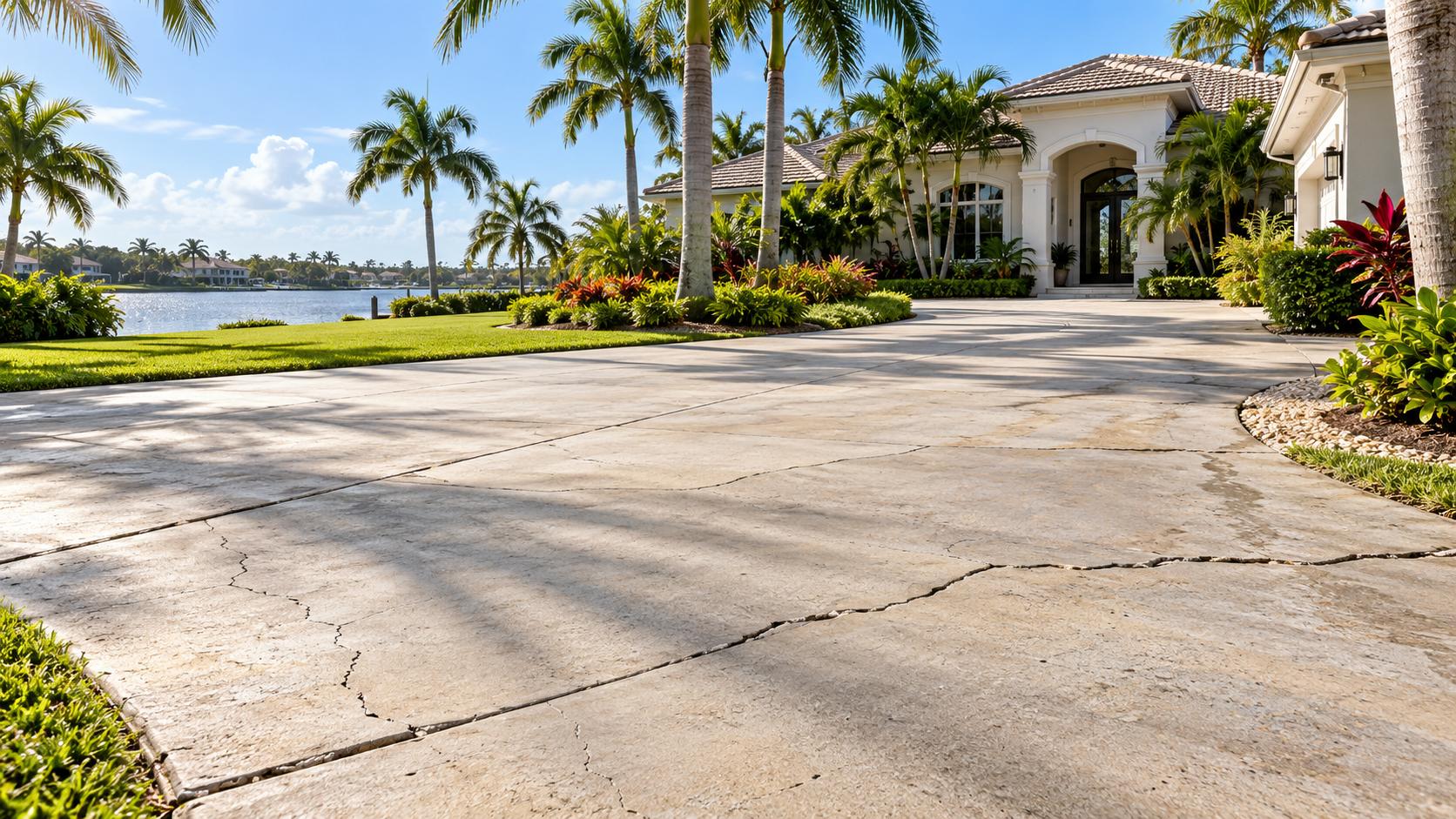
If standing water appears alongside cracking or settlement, understanding the crack pattern can help clarify whether drainage, movement, shrinkage, or another condition may be involved.
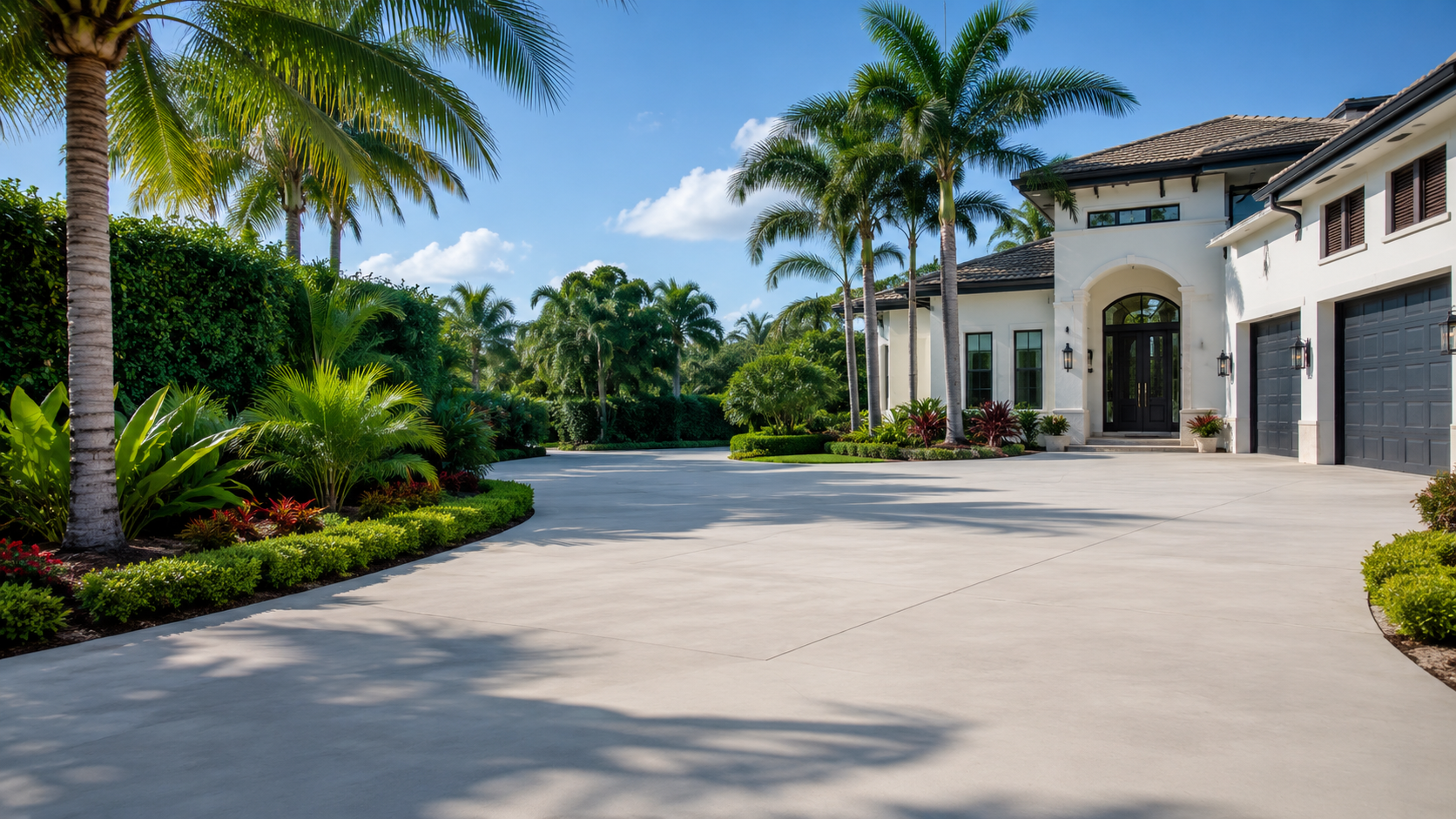
When runoff, settlement or edge deterioration has already affected the concrete, review repair and resurfacing options to understand when localized corrective work may be appropriate.
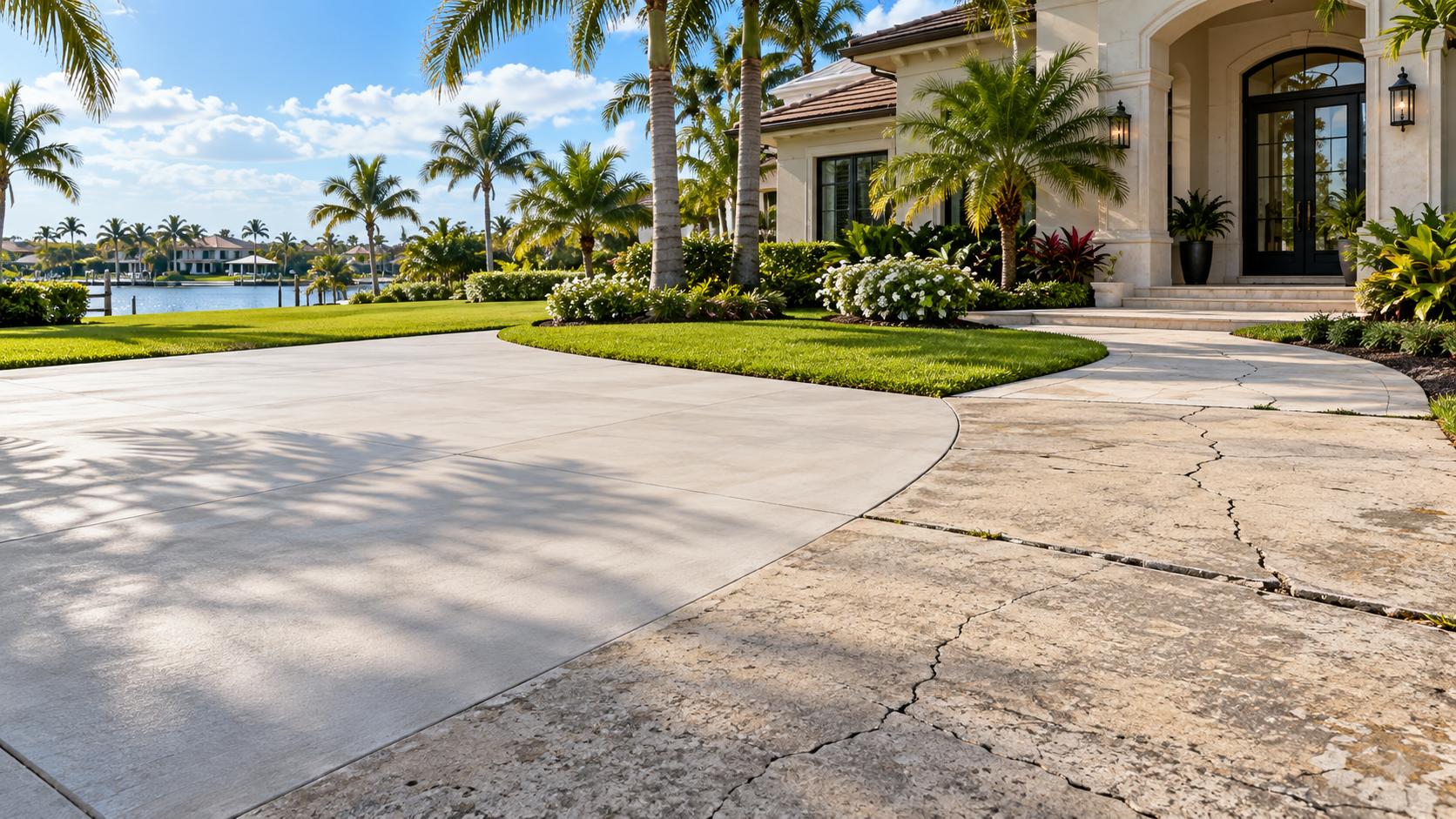
Drainage problems can affect whether damaged concrete can reasonably be preserved or whether slope, elevation, support, or layout needs broader correction. Compare the two project paths before defining the scope.
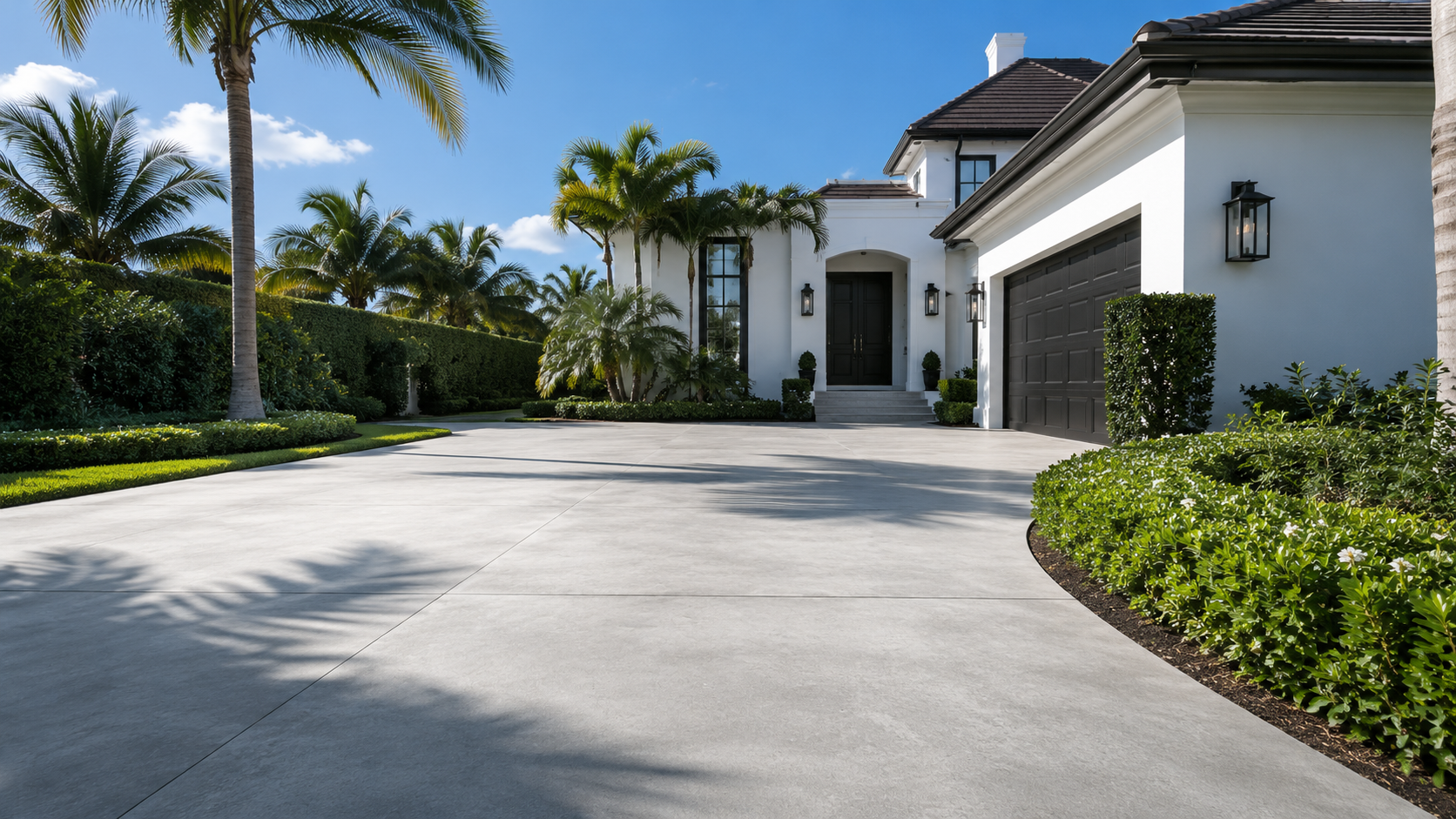
For new or replacement concrete, review how grading, base preparation, slope, surface transitions and runoff planning fit into the installation process before the concrete is placed.
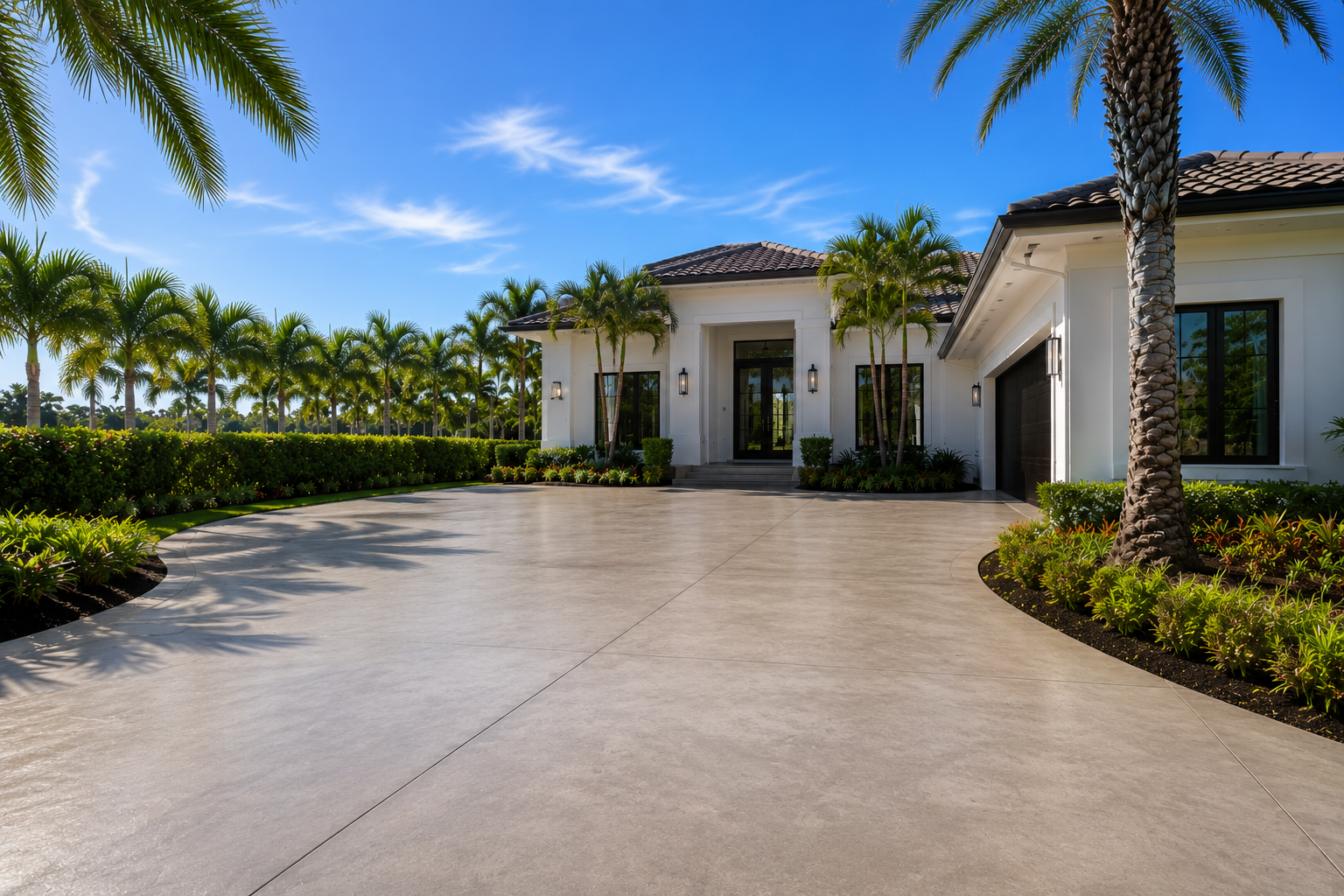
Routine maintenance can help identify blocked drainage paths, joint concerns, staining and recurring wet areas before they become part of a larger surface problem.
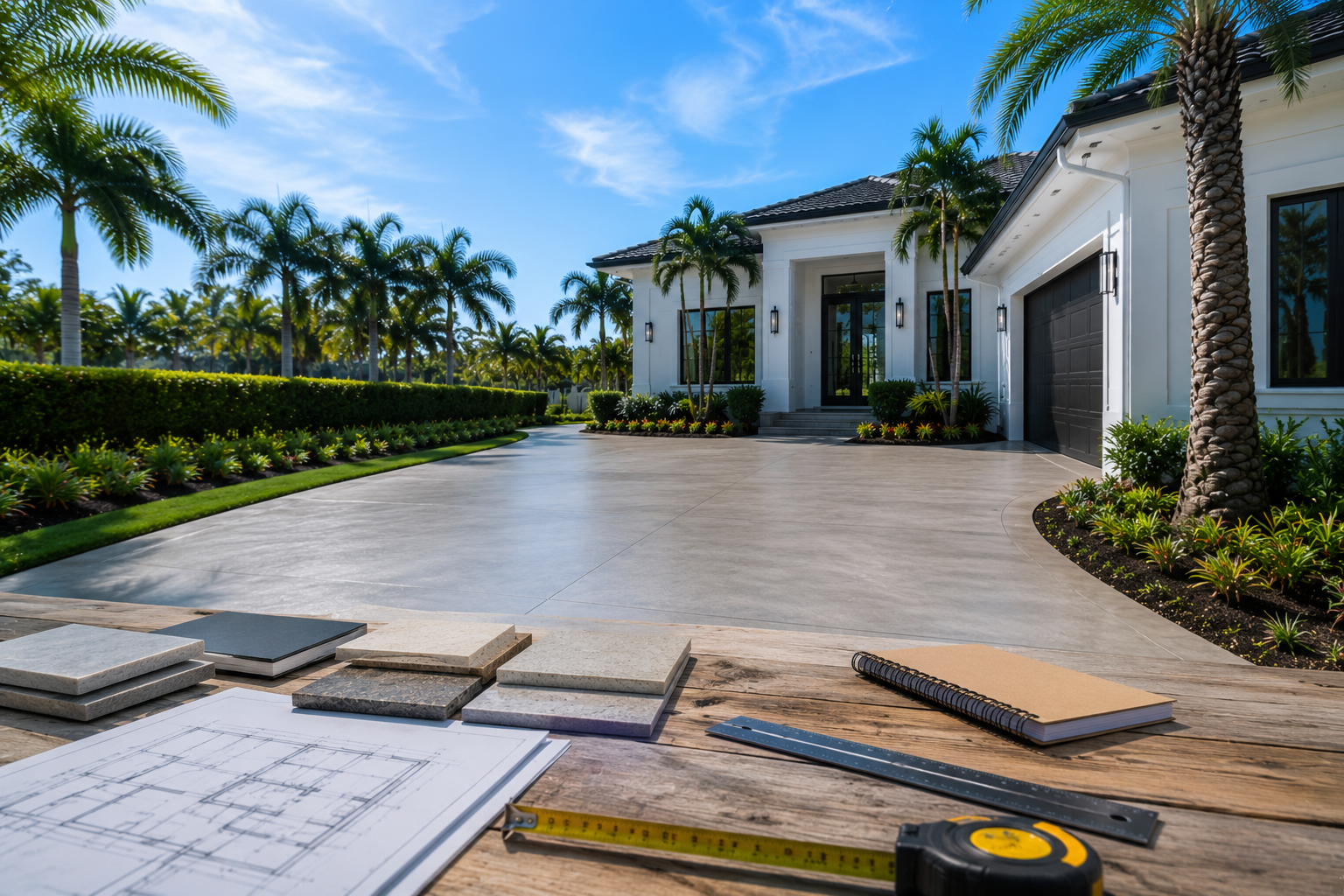
Drainage-related project costs can change substantially depending on whether the scope involves localized repair, grading, removal, base correction, drainage work or partial/full replacement.
Request a Concrete Estimate for Drainage-Affected Concrete in Palm Beach County
If standing water, poor runoff, settlement or drainage-related deterioration is affecting a driveway, patio, walkway, slab or other concrete surface, a project-specific review can help clarify what may be contributing to the problem and which concrete options should be considered.
Include photos of the affected area if possible, along with details about when water collects, how long it remains, whether the concrete has moved or cracked, and whether landscaping, irrigation, roof drainage or nearby hardscape has recently changed.
Submit a request to have your project details routed to an independent local concrete contractor or service provider who may contact you about availability, concrete condition, possible project scope and next steps.
Review concrete services in Boca Raton, concrete services in Boynton Beach, concrete services in Delray Beach, concrete services in Jupiter, concrete services in Lake Worth Beach, concrete services in Palm Beach Gardens, concrete services in Royal Palm Beach, concrete services in Wellington, and concrete services in West Palm Beach, or explore all Palm Beach County concrete service locations.
Concrete Drainage & Standing Water FAQs for Palm Beach County Properties
Is standing water on concrete always a problem?
No. Water can temporarily remain after heavy rainfall, and some drainage features such as driveway swales may intentionally hold water while it drains. The more useful questions are whether water repeatedly collects in the same unintended location, how long it remains, whether the drainage pattern has changed, and whether cracking, settlement, erosion or deterioration is developing nearby.
Why does water keep pooling in the same part of my driveway or patio?
Repeated ponding can be related to a localized low area, insufficient slope, settlement, surrounding landscape grades, adjoining surfaces, roof runoff, irrigation or a blocked drainage path. The surrounding property should be considered together with the concrete.
Can standing water cause concrete to crack?
Standing water does not automatically cause concrete to crack. However, drainage and water movement can contribute to erosion, loss of support, settlement or deterioration under some conditions, and those changes can be associated with cracking. The crack pattern and underlying conditions should be evaluated together.
Can a low spot in concrete be repaired?
Standing water does not automatically cause concrete to crack. However, drainage and water movement can contribute to erosion, loss of support, settlement or deterioration under some conditions, and those changes can be associated with cracking. The crack pattern and underlying conditions should be evaluated together.
Does sealing concrete fix drainage problems?
No. Sealing can be useful for suitable surfaces as part of a maintenance plan, but it does not correct poor slope, settlement, blocked drainage, erosion or an unsuitable runoff path.
Can landscaping or irrigation create drainage problems around concrete?
Yes. Landscape grades, soil or mulch additions, irrigation patterns, planting beds and edging can change where water moves or collects beside concrete. These areas should be considered when a drainage pattern changes.
Do drainage changes around a driveway require a permit?
Sometimes. Requirements depend on the location, scope and jurisdiction. Work involving County-owned rights-of-way, driveway connections or certain drainage connections may require County review, while municipal or private areas may have different requirements.