Concrete Driveway vs. Asphalt in Palm Beach County
If you are unsure whether existing concrete should be repaired, resurfaced, partially replaced, or fully replaced, a project-specific review can help narrow the options.
Provide the surface type, approximate affected area, visible damage, drainage concerns, previous repair history, and any changes you want to make to the layout or finish.
Which Driveway Surface Fits Your Property?
Concrete and asphalt can both provide a functional residential driveway, but they differ in how they are installed, maintained, repaired and used over time. The better fit depends on the property, budget, appearance goals, vehicle use, drainage, maintenance expectations and how long the owner expects to keep and maintain the surface.
Concrete creates a rigid poured surface that can range from a standard broom finish to colored, bordered, decorative or stamped designs. Asphalt creates a darker, flexible pavement surface that is placed and compacted over a prepared base.
Palm Beach Concrete helps route concrete driveway project requests to independent local concrete contractors or service providers who may review the driveway layout, current surface, parking needs, drainage, access, finish preferences and property conditions. This guide is intended to help property owners compare concrete with asphalt before deciding whether a concrete driveway is the right direction for the project.
Understanding the basic differences first makes the later cost and maintenance comparison more useful, because the two materials do not behave or age in exactly the same way.
Request an Estimate
If you are comparing concrete with asphalt and would like to understand the likely scope of the concrete option, include the approximate driveway dimensions, current surface, vehicle and parking needs, drainage concerns, preferred layout and any finish ideas with your request.
Have photos, drawings, or project notes? You can attach them through the form or send additional details to
We will get back to you as soon as possible.
Please try again later.
- Patios and poolside areas
- Walkways and garden paths
- Driveways and parking areas
- Courtyards and entry features
- Outdoor-living and landscape-design projects
What Is a Concrete Driveway?
A concrete driveway is a rigid pavement surface formed by placing concrete over a prepared subgrade or base and finishing it to the required elevation, slope and surface texture. Planned joints help manage movement, while thickness, reinforcement where appropriate, base preparation and drainage should reflect the expected vehicle use and property conditions.
Concrete can be kept relatively simple with a standard broom finish or customized with color, scoring, borders, textures, decorative treatments or stamped patterns. This gives property owners considerably more control over the finished appearance than a standard asphalt surface.
For driveway projects, the surface also needs to work with the garage elevation, street or apron, walkways, landscaping, parking layout and runoff pattern.
What Is an Asphalt Driveway?
An asphalt driveway uses a flexible pavement system made from aggregate combined with asphalt binder. The asphalt surface is placed and compacted over prepared supporting layers rather than functioning as a rigid slab.
Its darker, relatively uniform appearance is familiar on residential driveways, private roads and parking surfaces. Asphalt is often considered when the property owner prioritizes a straightforward paved surface, initial budget and relatively quick return to driveway use after installation.
The supporting base, drainage, pavement thickness, compaction and existing site conditions remain important. A flexible surface does not eliminate the need for stable support or appropriate runoff.
Side-by-Side Comparison
| Feature | Concrete Driveway | Asphalt Driveway |
|---|---|---|
| Surface System | Rigid poured surface with planned joints | Flexible compacted asphalt surface over supporting layers |
| Appearance | Standard, broom-finished, colored, scored, decorative or stamped options | Typically dark and relatively uniform |
| Installation | Base preparation, forming, placement, finishing, jointing and curing | Base preparation, asphalt placement and compaction |
| Return to Regular Vehicle Use | Requires an appropriate curing period before regular vehicle loading | Usually allows a shorter return-to-use period after placement and cooling, subject to installer guidance |
| Surface Heat | Typical light concrete generally reflects more solar energy than fresh dark asphalt | Dark asphalt generally absorbs more solar energy under direct sun |
| Maintenance | Cleaning, drainage awareness, joint/crack monitoring and sealing where appropriate | Cleaning, crack care, patching and surface sealing/treatment when condition warrants |
| Cracking & Movement | Cracking can occur from shrinkage, movement, settlement, loading or support conditions; joints are used to manage movement | Cracking, oxidation, depressions or other distress can develop as the pavement ages or support conditions change |
| Localized Repair | Repairs are possible, although color or finish matching may be noticeable | Patches and crack repairs are possible, although repaired areas may remain visible |
| Drainage | Relies on appropriate grade, slope, runoff direction and transitions | Also requires appropriate grade, drainage and stable supporting layers |
| Design Flexibility | Broad range of colors, textures, borders and decorative finishes | More limited surface-design range |
| Initial Cost Pattern | Often involves a larger upfront scope than basic asphalt | Often considered where lower initial paving cost is an important priority |
| Long-Term Planning | Maintenance depends on joints, cracks, drainage, finish and surface condition | Maintenance may include recurring crack treatment, surface treatment, patching or later resurfacing |
The table provides a general comparison rather than a universal performance ranking. Site preparation, installation quality, drainage, pavement design, traffic, exposure and maintenance can change how either surface performs.
Benefits and Considerations of Concrete and Asphalt Driveways
Benefits of a Concrete Driveway
Concrete may appeal to property owners who value:
- A clean, continuous driveway surface
- Broad finish and design choices
- Standard, colored, bordered, decorative or stamped options
- A lighter surface than conventional dark asphalt
- Strong suitability for regular residential vehicle use when appropriately designed
- Integration with concrete walkways, patios, entries and other hardscape
- A maintenance plan that does not normally depend on routine surface-wide asphalt sealcoating
Concrete Driveway Considerations
Concrete also involves several practical considerations
- Initial installation can involve a larger upfront investment than a basic asphalt driveway
- The surface requires an appropriate curing period before regular vehicle use
- Joint layout, drainage, base preparation and installation quality matter
- Concrete can crack as the surface and supporting conditions change
- Repairs or partial replacements may remain more visually noticeable
- Decorative surfaces can require finish-specific care and sealing
Benefits of an Asphalt Driveway
Asphalt may appeal to property owners who prioritize:
- A straightforward paved driveway surface
- Lower initial project cost in many conventional residential applications
- A relatively short installation and return-to-use process
- A dark, uniform appearance
- Patch, crack-repair and resurfacing options as the pavement ages
- A flexible pavement system rather than a rigid slab
Asphalt Driveway Considerations
Asphalt also brings different long-term considerations:
- The dark surface can absorb substantial heat in direct sun
- Crack treatment and other surface maintenance may become part of ownership
- Surface sealing should be based on actual pavement condition rather than treated as an automatic schedule
- Appearance and decorative design choices are more limited than concrete
- The base and supporting layers remain important to long-term performance
- Patches, cracks, depressions, oxidation or resurfaced areas may become visible as the driveway ages
Neither material is automatically the right choice for every property. The useful comparison is how the surface characteristics align with the actual driveway, budget and long-term expectations.
How Concrete and Asphalt Driveway Installation Differ
Although both surfaces need appropriate grading, drainage and support, the installation sequence is different.
The installation comparison is therefore not simply about which surface can be installed faster. Preparation, drainage, base conditions and the quality of the completed pavement remain more important to long-term performance.
A concrete driveway typically involves site evaluation, removal of an existing surface where necessary, grading, base preparation, forming, reinforcement where appropriate, concrete placement, finishing, joint planning and curing.
Slope and elevations should also be coordinated with the garage, street, apron, walkways, landscaping and runoff direction.
Asphalt Driveway Installation
An asphalt installation typically involves preparing and grading the area, establishing suitable supporting layers, placing the asphalt material and compacting it to create the finished pavement.
Because asphalt is a flexible pavement, the quality and stability of the layers below the surface remain an important part of the installation.
Curing, Cooling & Driveway Access
Concrete needs time to develop sufficient strength before regular vehicle traffic is introduced. Asphalt does not go through the same cement-hydration curing process and can typically return to use sooner after placement and cooling.
Actual access timing should follow the installer’s project-specific instructions for either material.
How Palm Beach County Conditions Affect Concrete and Asphalt Driveways
Palm Beach County driveway decisions should be considered in the context of the actual property. Strong sun, seasonal rainfall, drainage, base conditions, parking use, existing hardscape and local approval requirements can influence either surface.
Strong Sun & Surface Heat
Driveways receive long periods of direct sunlight on many South Florida properties.
Dark asphalt generally absorbs more solar energy than typical lighter concrete, so surface heat can be a meaningful consideration where the driveway is exposed throughout the day or connects closely with pedestrian areas, garages or outdoor spaces.
Surface color, age, shade and specific materials can all influence the actual result.
Heavy Rainfall, Slope & Drainage
Neither concrete nor asphalt corrects poor property drainage simply by changing the surface material.
The driveway still needs an appropriate runoff path, useful slope and coordinated transitions at the garage, street, walkways, landscape edges and adjoining hardscape.
Low spots, settlement, altered grades or concentrated roof and landscape runoff can create ponding problems regardless of which pavement is selected.
Variable Soil, Base Support & Settlement
Palm Beach County properties do not all have the same underlying soil or fill conditions.
The driveway should therefore be planned around the actual subgrade and support conditions. Concrete and asphalt distribute loads differently, but both depend on appropriate preparation beneath the finished surface.
Where an old driveway has settled, cracked or developed depressions, the underlying condition should be considered before simply covering or replacing the visible surface.
Parking, Turning & Vehicle Use
Driveway length, width, turning areas, regular parking locations and expected vehicle loads can affect both pavement systems.
A driveway used mainly for passenger vehicles may have different preparation requirements from a large parking area, widened driveway or property regularly accommodating heavier vehicles.
The material decision should therefore be made together with the actual driveway layout and use.
HOA, Municipal & Right-of-Way Requirements
Driveway modifications can involve HOA standards, municipal review, driveway-width requirements, drainage considerations, right-of-way coordination, culverts or other location-specific requirements.
Concrete and asphalt should not be assumed to follow identical approval requirements at every Palm Beach County property. The applicable jurisdiction and project scope should be confirmed before work begins.
Once the property conditions and intended use are understood, the next comparison is usually financial: not only what each driveway costs initially, but what preparation and maintenance may follow.
Cost Differences Between Concrete and Asphalt Driveways
Concrete and asphalt pricing can vary substantially with driveway size, existing-surface removal, site access, grading, drainage, base correction, layout and local requirements.
Concrete Driveway Cost Factors
Concrete pricing can be affected by:
- Driveway size and shape
- Existing-surface demolition and disposal
- Grading and drainage
- Base preparation
- Concrete thickness
- Reinforcement where appropriate
- Vehicle use
- Garage and street transitions
- Widening or added parking
- Standard versus decorative finish
- Equipment access
- Permit or HOA requirements
Concrete can involve a higher initial project cost than a basic asphalt installation, particularly where decorative finishes or substantial preparation are included.
For current concrete planning ranges and site-specific cost factors, review the Cost of Concrete Services in Palm Beach.
Asphalt Driveway Cost Factors
Asphalt pricing can also depend on:
- Total paved area
- Existing-surface removal
- Excavation and grading
- Base condition and preparation
- Asphalt thickness and pavement design
- Drainage
- Access
- Edges and transitions
- Parking and vehicle use
- Future resurfacing or maintenance needs
A lower initial quote should therefore be compared on equivalent project scope. One estimate may include more demolition, drainage correction or base work than another.
Maintenance Is Part of the Cost Comparison
The initial installation price is only one part of driveway ownership.
Concrete may require cleaning, joint and crack monitoring, drainage attention and sealing where appropriate.
Asphalt may require crack treatment, patching, surface treatment or resurfacing as conditions develop.
The useful comparison is the anticipated total scope of installation and future care, rather than assuming that the surface with the lower initial quote will necessarily cost less over the full period of ownership.
Comparing Long-Term Cost, Maintenance & Performance
A driveway should be evaluated as a long-term property surface rather than only as a one-time installation.
Useful factors to compare include:
- Initial project cost
- Demolition and preparation
- Base and drainage conditions
- Vehicle and parking use
- Surface heat and sun exposure
- Crack and joint maintenance
- Surface sealing or treatment
- Repair and patch visibility
- Resurfacing or replacement options
- Appearance over time
- Decorative flexibility
- Compatibility with the home and surrounding hardscape
- Planned property improvements
Concrete may be the stronger fit for a property where appearance, finish options, integration with other concrete surfaces and reduced reliance on asphalt-style surface treatments are important.
Asphalt may fit a project where initial paving cost, a simple dark surface and relatively rapid return to driveway use carry more weight.
Neither conclusion should be reached from one characteristic alone. The better comparison is whether the installation, maintenance, appearance, cost and site requirements of the surface match how the driveway will actually be used.
Helpful Resources for Comparing Driveway Options
Once the surface comparison is clearer, these resources can help define the concrete side of the decision more precisely.
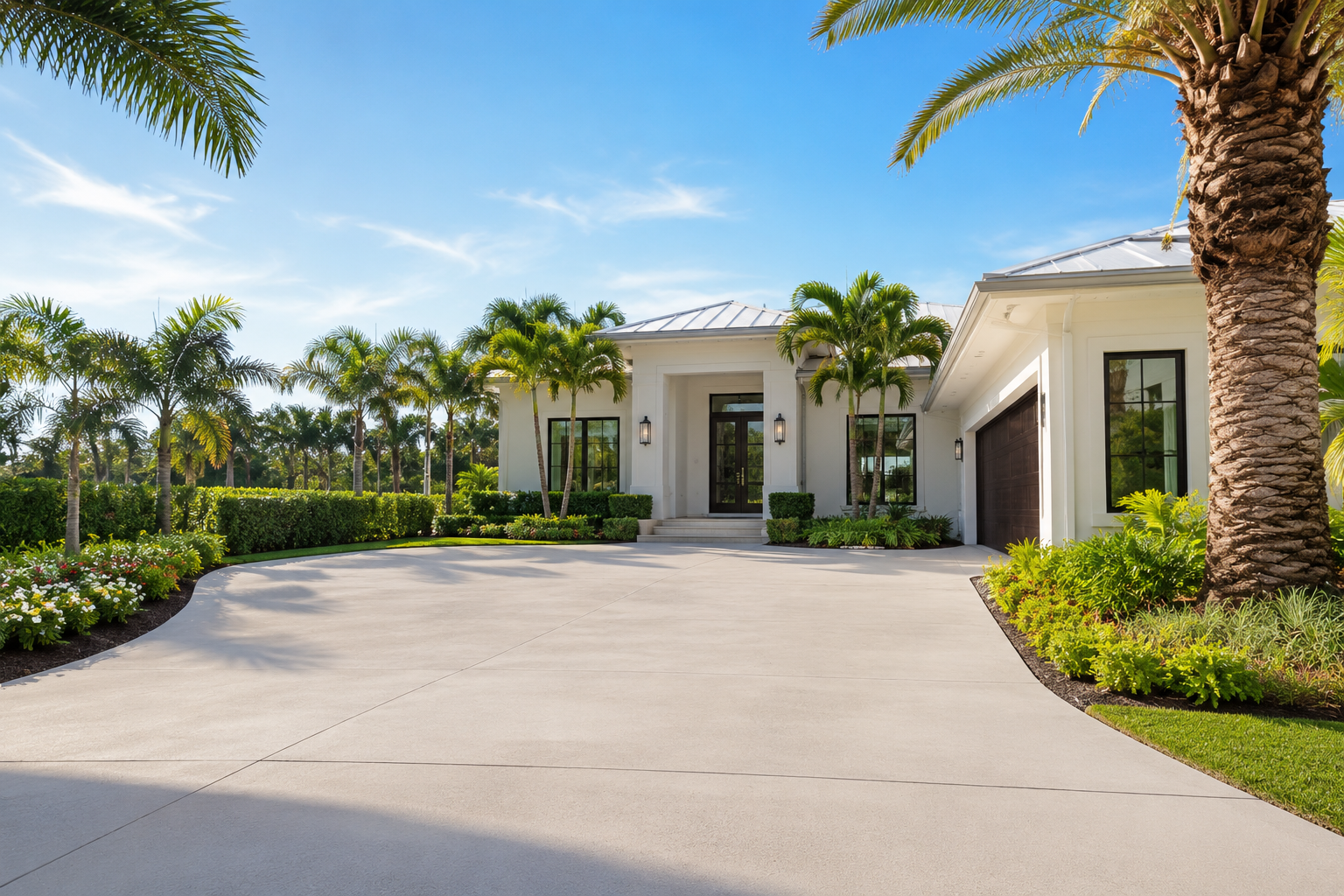
If concrete remains under consideration, review the driveway service page for vehicle access, parking, widening, drainage, garage and street transitions, finish options, replacement scope and property-specific planning.

After comparing concrete and asphalt conceptually, use the concrete cost guide to review current planning ranges and the factors that can change a concrete driveway estimate, including demolition, grading, drainage, base work, thickness and finish.
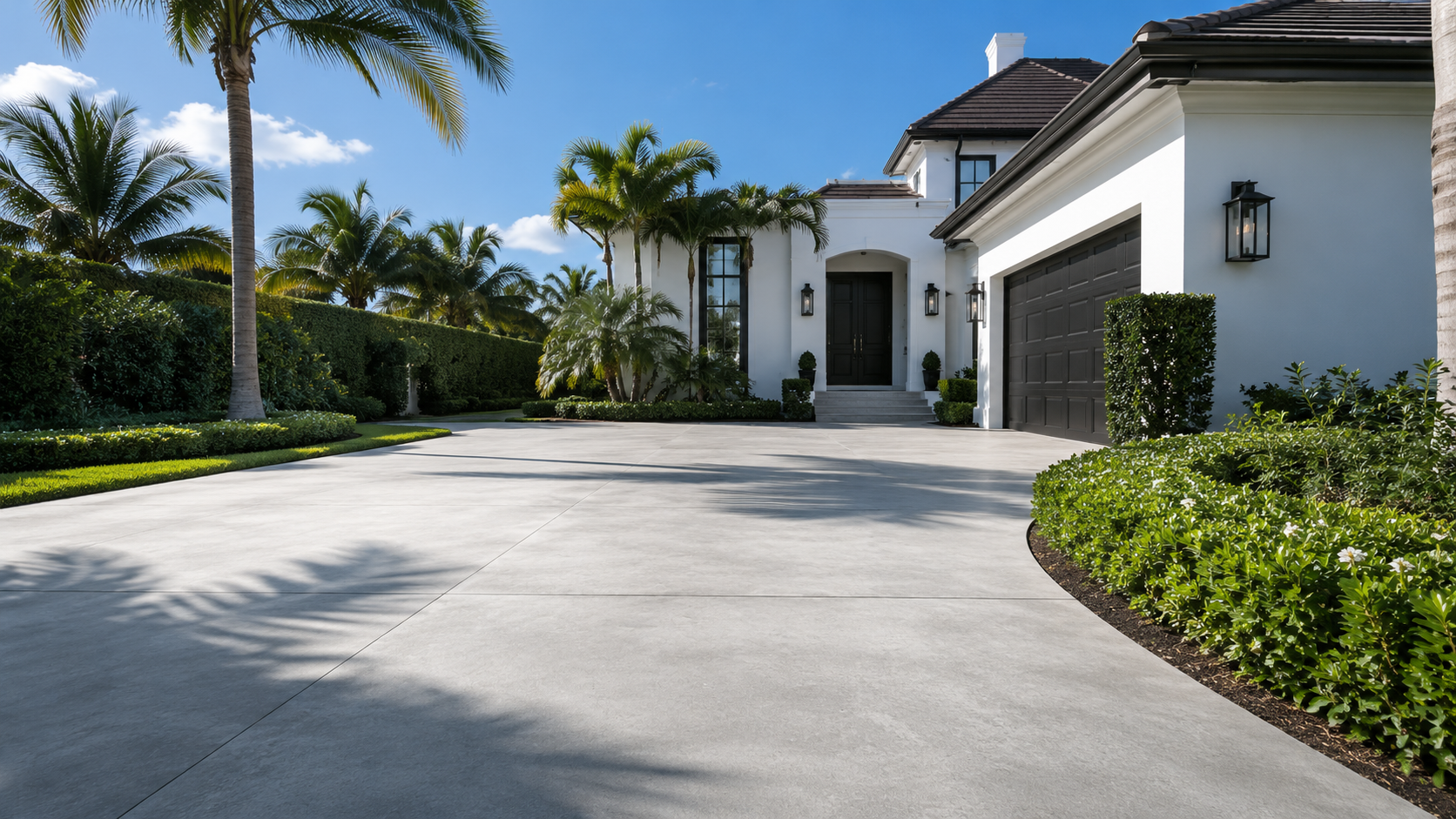
Review how a concrete project moves through site evaluation, preparation, grading, base work, forming, placement, finishing, jointing and curing when you want more detail about how the concrete option differs from asphalt installation.
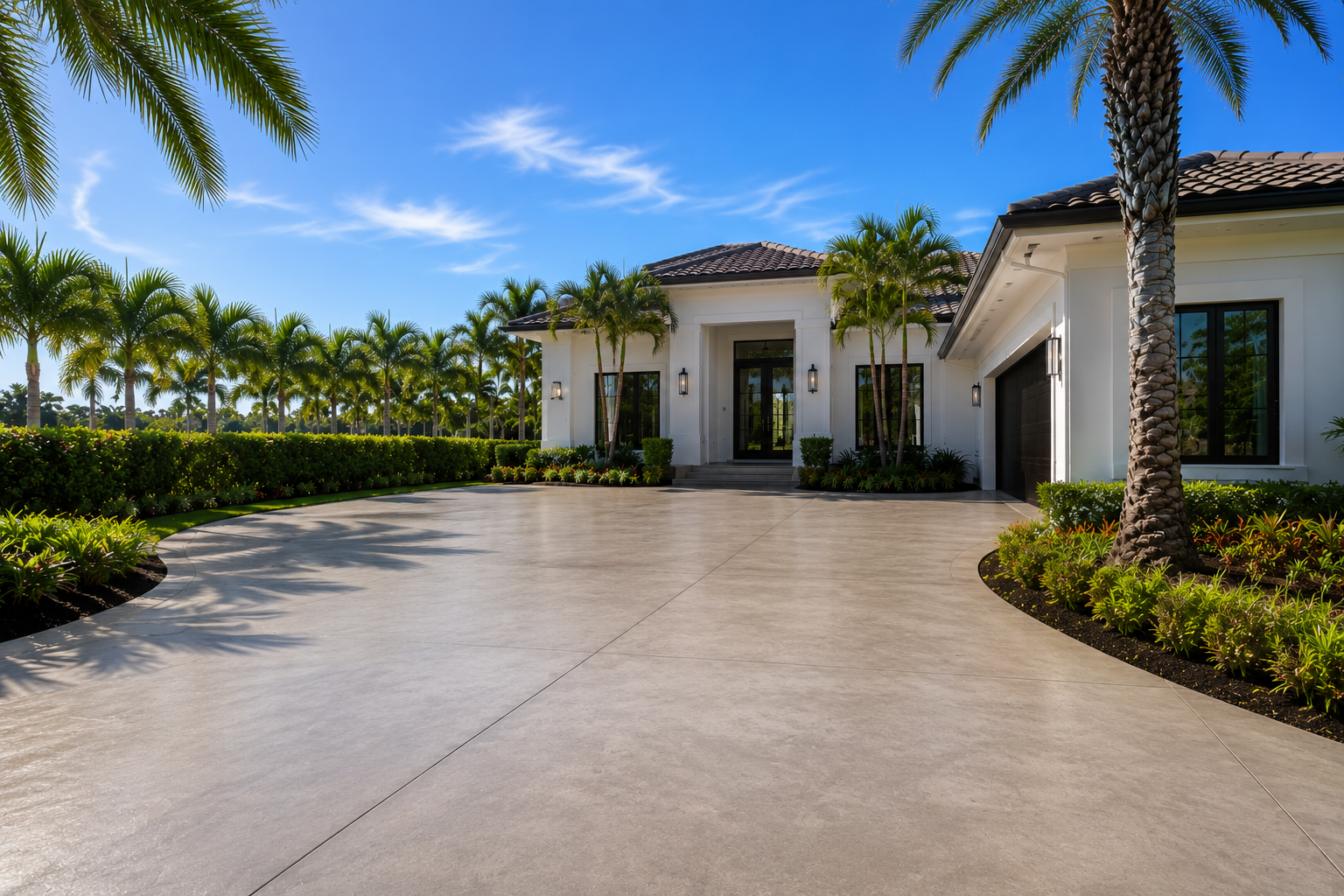
Compare the long-term care side of the decision by reviewing cleaning, joint and crack care, drainage awareness, sealing where appropriate and other maintenance considerations for a completed concrete driveway.
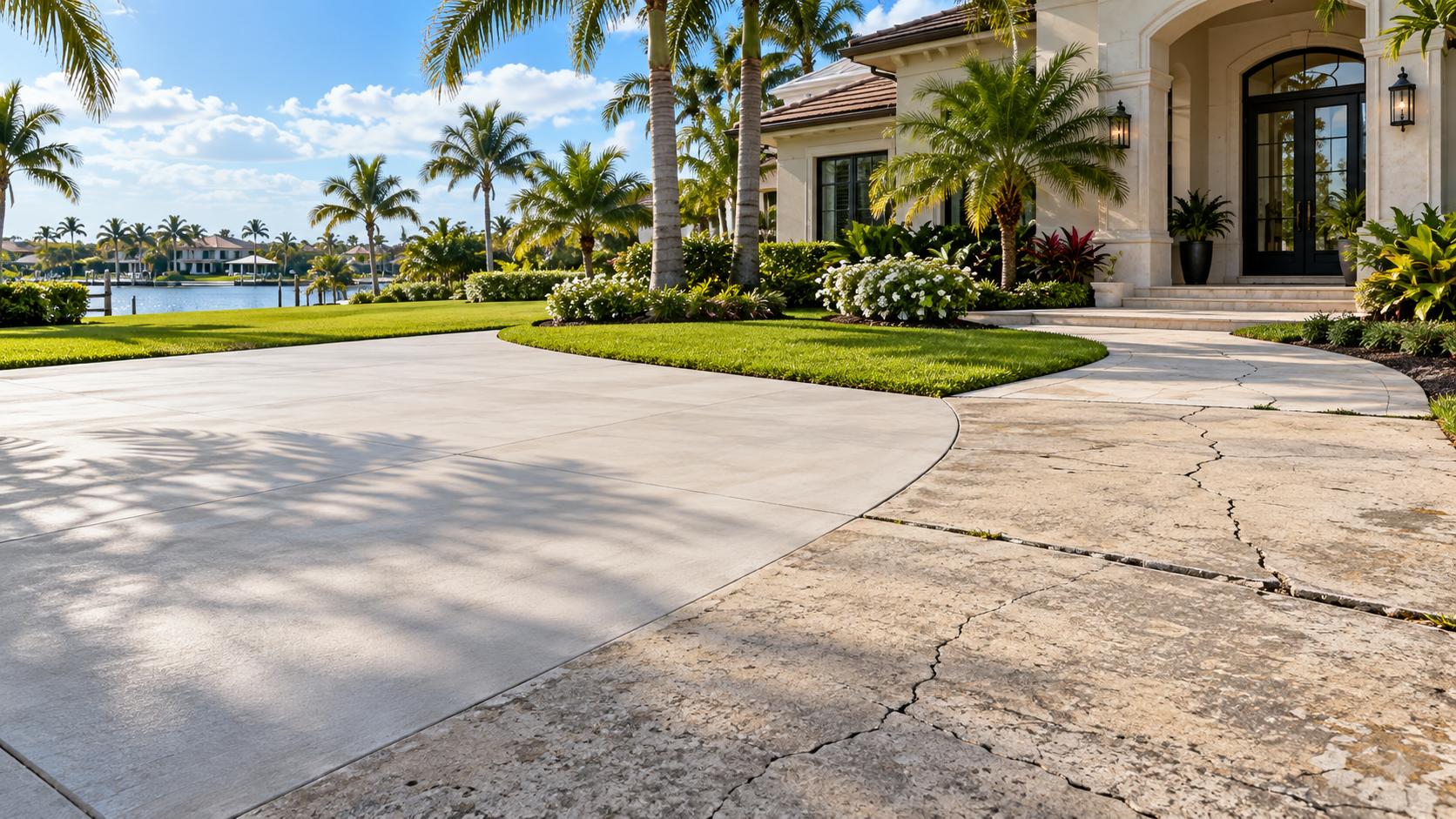
If the current driveway is already concrete, first determine whether enough of the existing surface remains suitable for repair or resurfacing before assuming that a full replacement—and a new material choice—is necessary.
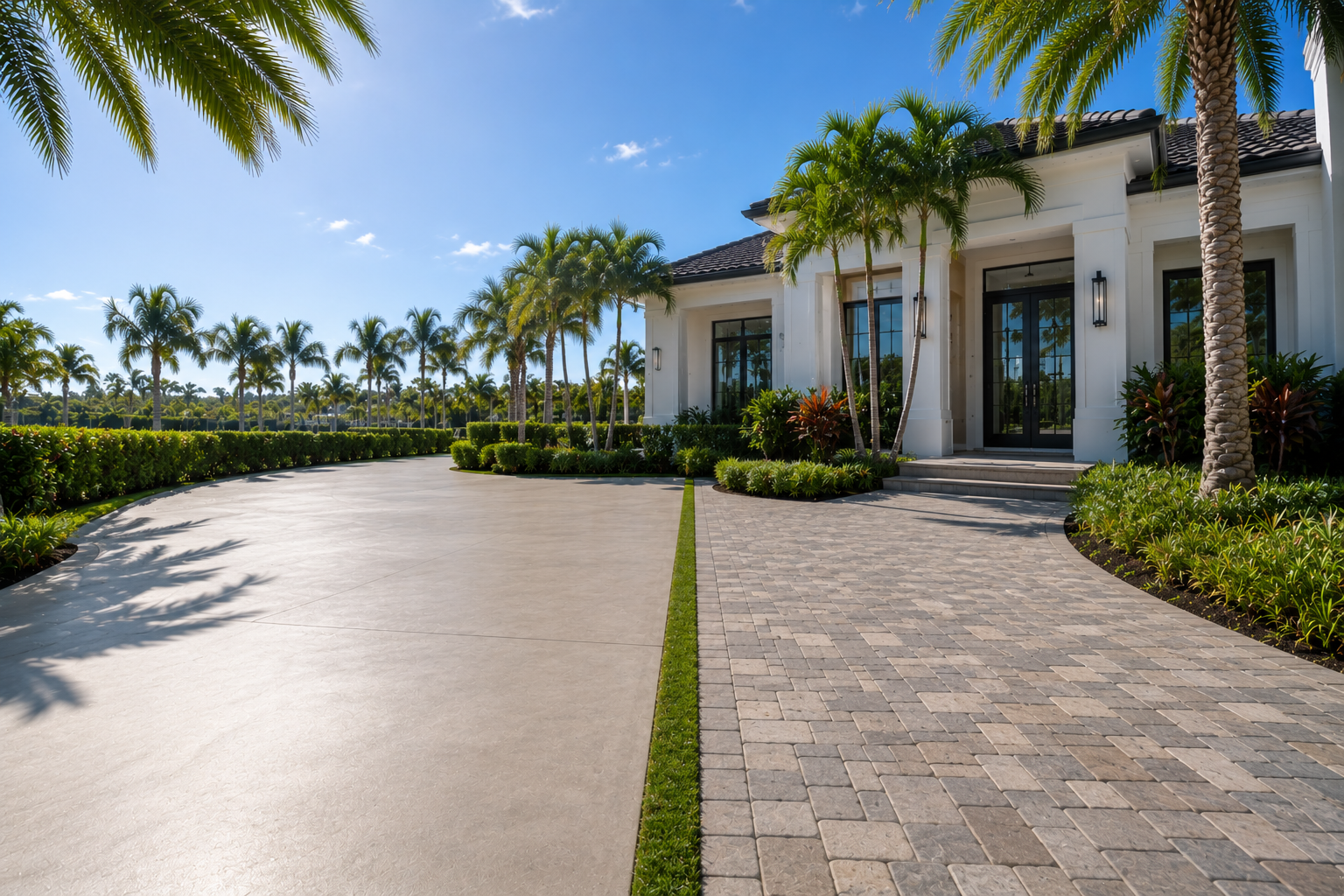
If asphalt is not the only alternative under consideration, compare poured concrete with pavers for differences in installation, appearance, maintenance, drainage, repairability and design flexibility.
Request a Concrete Driveway Estimate After Comparing Surface Options
Comparing concrete with asphalt is most useful when the decision is tied to the actual driveway. Existing pavement, driveway dimensions, parking needs, drainage, base conditions, street and garage transitions, finish preferences, access and local requirements can all affect the concrete scope.
Review concrete services in Boca Raton, concrete services in Boynton Beach, concrete services in Delray Beach, concrete services in Jupiter, concrete services in Lake Worth Beach, concrete services in Palm Beach Gardens, concrete services in Royal Palm Beach, concrete services in Wellington, and concrete services in West Palm Beach, or explore all Palm Beach County concrete service locations.
If concrete appears to fit the property after comparing surface options, a project-specific estimate can help clarify preparation requirements, driveway layout, drainage, finish choices, project scope and concrete pricing factors.
Submit a request to have your project details routed to an independent local concrete contractor or service provider who may contact you about availability, concrete driveway options, property conditions, pricing factors and next steps.
Concrete vs. Asphalt Driveway FAQs for Palm Beach County Properties
Is concrete or asphalt better for a driveway in Palm Beach County?
Neither material is automatically better for every property. Concrete may appeal to homeowners who value finish options, lighter surface color and a rigid paved surface, while asphalt may appeal where initial budget, a simple dark appearance and relatively quick return to driveway use are stronger priorities. Drainage, base conditions, parking use, maintenance expectations and local requirements should also be considered.
Which usually costs less upfront, concrete or asphalt?
Basic asphalt is often considered the lower-initial-cost option, while concrete commonly involves a larger upfront installation investment. Actual pricing can change significantly with driveway size, demolition, grading, drainage, base preparation, access and finish selection, so comparable estimates should include equivalent scope.
Does an asphalt driveway get hotter than concrete?
Dark asphalt generally absorbs more solar energy than typical light-colored concrete, so asphalt can become hotter under direct sunlight. Actual surface temperature varies with material, age, color, shade, weather and surface treatment.
Which driveway requires more maintenance?
The type of maintenance differs. Concrete generally requires attention to cleaning, joints, cracks, drainage and sealing where appropriate, while asphalt may require crack care, patching, condition-based surface sealing and eventual resurfacing. Neither material should be treated as maintenance-free.
Does asphalt last as long as concrete?
There is no useful universal lifespan that applies to every residential driveway. Performance depends on pavement design, material quality, thickness, base preparation, drainage, vehicle use, climate, installation quality and maintenance. Comparing the actual project specification is more useful than relying on a single advertised lifespan.
Can an existing asphalt driveway be replaced with concrete?
Yes. The asphalt can be removed and the site evaluated for grading, drainage, base preparation, driveway layout and transitions before a concrete driveway is installed. Existing problems such as settlement or poor runoff should be considered during preparation rather than simply covered by the new surface.
Do concrete and asphalt driveways require permits in Palm Beach County?
Requirements depend on the project, location and jurisdiction. New driveways, driveway modifications, work involving County-maintained roads, culverts, drainage or right-of-way areas can require additional review, while individual municipalities and HOA communities may have their own requirements.